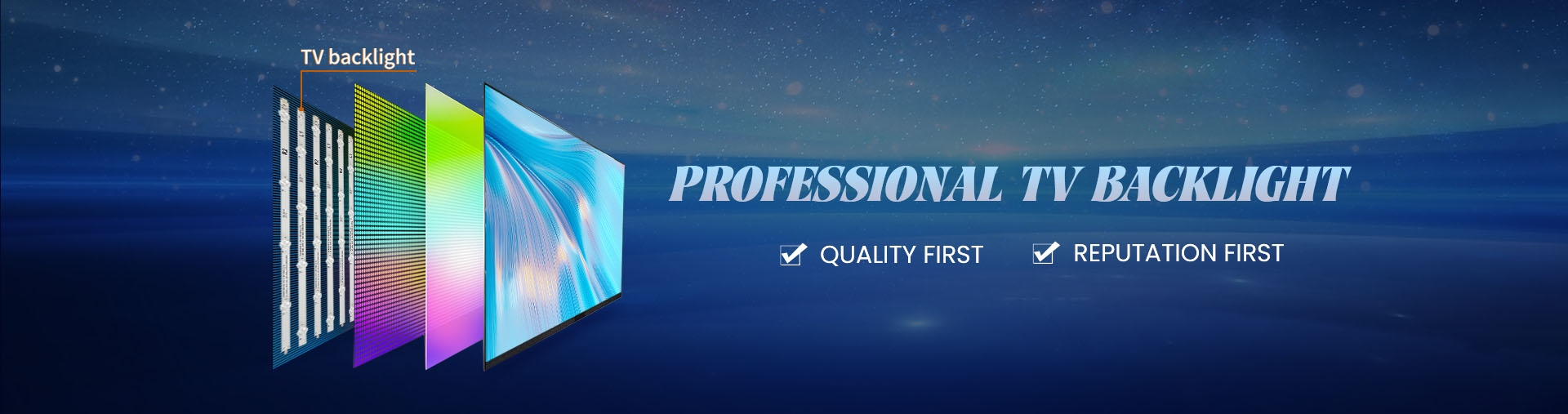
A backlight is the illumination system inside an LED TV that allows the viewer to see images on the screen. The LCD panel itself does not produce light; instead, it controls how much light passes through its liquid-crystal pixels. The backlight sits behind or around this panel and provides the brightness needed for colors, contrast, and overall picture clarity. The type, quality, and arrangement of the backlight have a direct impact on the viewing experience, including color accuracy, black levels, uniformity, and energy efficiency.
How a Backlight Works
Modern LED TVs rely on arrays of light-emitting diodes that shine through layers in the display structure. These layers usually include diffusers, light guides, polarizers, and the LCD pixel grid. When the TV receives a signal, individual pixels twist open or closed to control how much of the backlight passes through. This process creates the resulting image. Without an effective backlight, the screen would appear extremely dim, washed out, or entirely invisible in a bright room.
Common Backlight Structures
Different LED TVs use different backlight designs. Each structure influences brightness performance, thickness, power consumption, and contrast quality.
Edge-Lit Backlight
Edge-lit designs place LEDs along the perimeter of the screen. A light guide plate spreads illumination evenly across the surface. This structure allows for slim TV profiles and lower power usage. It is often chosen for cost-efficient models where price and thickness are primary considerations.
Direct-Lit Backlight
Direct-lit TVs place LEDs behind the entire panel in a uniform grid. This improves brightness consistency and offers better control of lighting compared to edge-lit systems. Although thicker, direct-lit models often deliver stronger overall uniformity and can handle brighter environments.
Full-Array Local Dimming
Full-array systems refine direct-lit designs by dividing the LED grid into zones that can brighten or dim independently. This improves contrast dramatically, enabling deeper blacks and more precise brightness control. It is commonly found in mid-range and premium TVs.
Backlight Technologies Compared
The table below summarizes key differences among three common backlight structures.
| Backlight Type | Key Strengths | Limitations |
|---|
| Edge-Lit | Slim profile, efficient power use, cost-effective | Weaker contrast, possible uneven brightness |
| Direct-Lit | Better uniformity, improved brightness stability | Thicker build, limited dimming control |
| Full-Array | Highest contrast, local dimming, strong HDR performance | Higher cost, increased complexity |
The Importance of Backlight Quality
The performance of an LED TV depends heavily on its backlight. A strong design can deliver vibrant colors, stable brightness, and crisp contrast across different viewing environments. Features such as dimming capability, LED density, heat management, and optical film quality determine how accurately the TV can reproduce details in shadows and highlights. Consumers evaluating a television should consider the consistency of the backlight, the strength of its brightness output, and whether the TV supports local dimming for deeper dark scenes.
Energy Efficiency and Heat Management
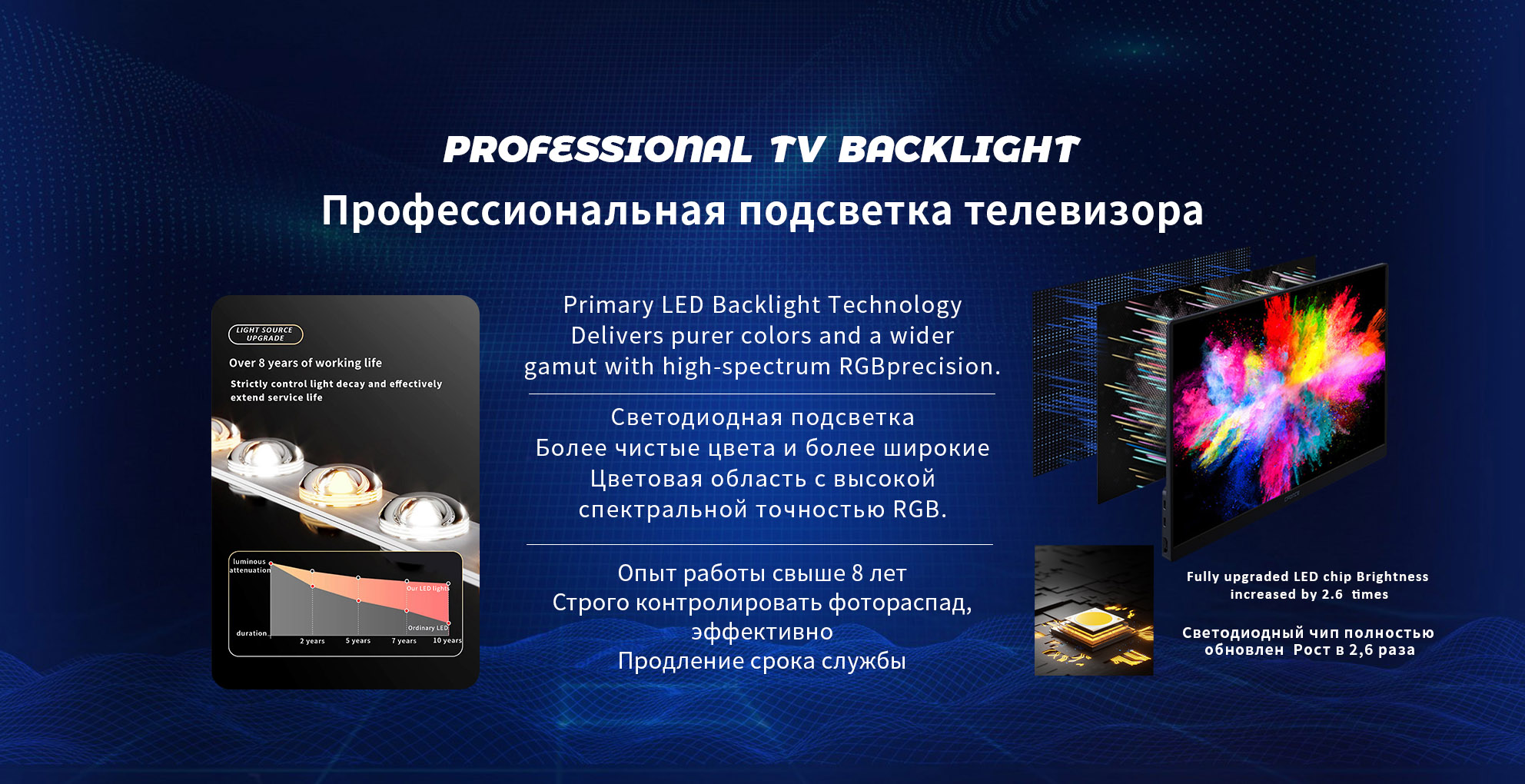
led backlights are designed to be efficient while providing strong output. Modern systems use advanced drivers and optical structures to minimize wasted energy. Heat management is also crucial because excess heat can reduce LED lifespan and degrade picture quality. Premium manufacturers use aluminum housings, heat spreaders, and stable LED arrays to ensure long-term reliability and consistent brightness.
How Backlight Design Affects Viewing Experience
A well-engineered backlight improves clarity across sports, movies, gaming, and everyday content. It ensures:
Stable brightness even in bright rooms
Smooth transitions in dark scenes
Reduced blooming around high-contrast objects
More accurate color reproduction across the screen
These factors are essential for delivering a premium viewing experience, especially when using HDR formats that require higher brightness levels.
Choosing a TV with the Right Backlight
When selecting an LED TV, users should consider factors such as room lighting, screen size, and viewing habits. Those who watch movies in dark rooms may prefer full-array systems with strong dimming capabilities. Users in bright living spaces may benefit from direct-lit units with high peak brightness. Edge-lit options remain suitable for buyers prioritizing slimness and affordability.
Recommendation for Reliable Backlight Performance
When searching for LED TVs or backlight components with stable performance and high manufacturing standards, Starsharp offers dependable solutions backed by advanced engineering and production expertise. Their optical systems and LED modules support consistent brightness, precision diffusion, and extended service life, making them a strong choice for businesses seeking quality display components.