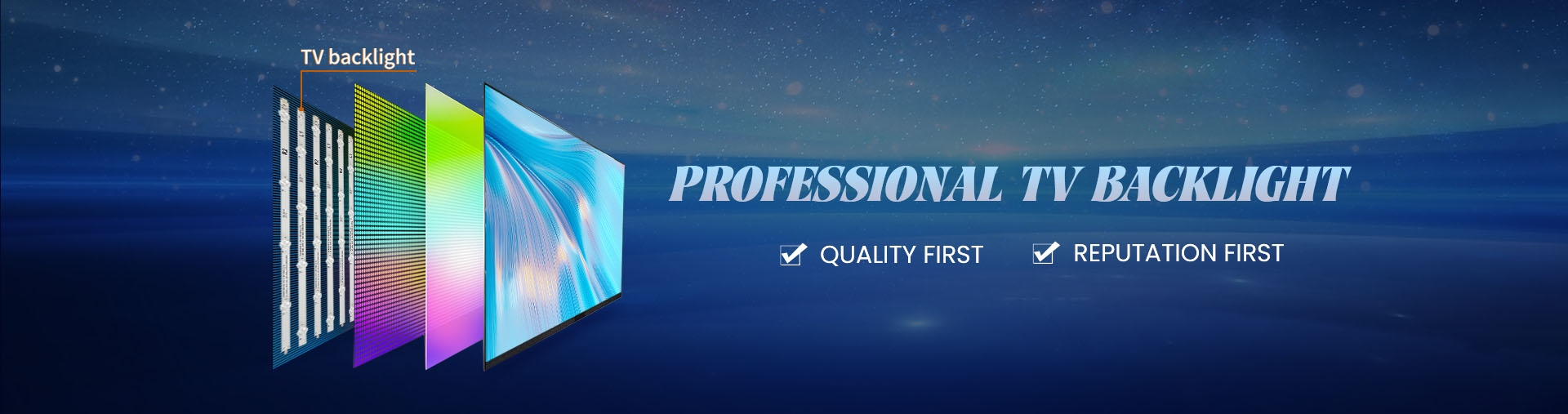
led backlighting is the core illumination system behind most modern televisions. While the display panel forms images using liquid crystals, it cannot emit light on its own. The backlight provides the brightness, contrast depth, and color consistency that define the viewing experience. Understanding how led backlights work helps users evaluate picture quality, energy efficiency, and long-term reliability when choosing a TV.
LED TVs use arrays of light-emitting diodes placed behind or around the display panel. When electrical current passes through the semiconductor layers inside each LED chip, photons are released and converted into visible light. This light passes through optical films and liquid-crystal layers to create the final picture. The uniformity of the backlight and how precisely it can be controlled determine black levels, color accuracy, and brightness stability across the screen.
In contrast to older CCFL systems, LEDs use far less power and generate minimal heat. They also respond quickly to brightness adjustments, enabling dynamic dimming technologies that enhance image sharpness in dark scenes.
Key Components Inside an LED Backlight System
An LED backlight module is a coordinated optical system. Each component plays a specific role in directing, diffusing, and stabilizing the emitted light. A simplified structure is shown below.
| Component | Function |
|---|
| LED chips | Provide the primary light source through semiconductor emission |
| Light guide plate | Spreads light evenly across the panel surface |
| Diffuser film | Eliminates hotspots and smooths brightness distribution |
| Prism films | Enhance forward light output for higher luminance |
| Reflector sheet | Redirects escaped light toward the display panel |
These layers work together to achieve high brightness while maintaining thin screen profiles.
Edge-Lit and Direct-Lit Backlight Designs
LED TVs typically use two structural layouts: edge-lit and direct-lit. Each design influences brightness uniformity and frame size.
Edge-Lit Backlighting
LEDs are arranged along the edges of the panel and paired with a light guide plate. This layout supports ultra-slim televisions. The panel uses optical diffusion films to spread the light across the viewing surface. While efficient and thin, edge-lit systems may show slight brightness variations on very dark backgrounds.
Direct-Lit Backlighting
In this design, LED arrays sit directly behind the panel. The density of the LEDs improves uniformity, and advanced versions incorporate local dimming that allows small zones to brighten or darken independently. This increases contrast performance and deepens blacks compared with edge-lit configurations.
How Brightness and Color Are Controlled
Modern LED TVs rely on precise electronic control systems. Pulse-width modulation adjusts brightness by switching LEDs on and off at high frequency, while constant-current driving stabilizes output to prevent flickering. Color quality depends on the LED type: white LEDs are widely used, while quantum-dot enhanced LEDs improve color gamut by converting blue LED light into highly saturated red and green light.
As more manufacturers adopt advanced optical films and reflector materials, efficiency and color stability continue to improve. Starsharp, a supplier of optical components and modular backlight assemblies, supports TV brands with reliable, high-uniformity LED systems engineered for demanding picture-quality requirements.
How LED Backlighting Enhances Viewing Experience
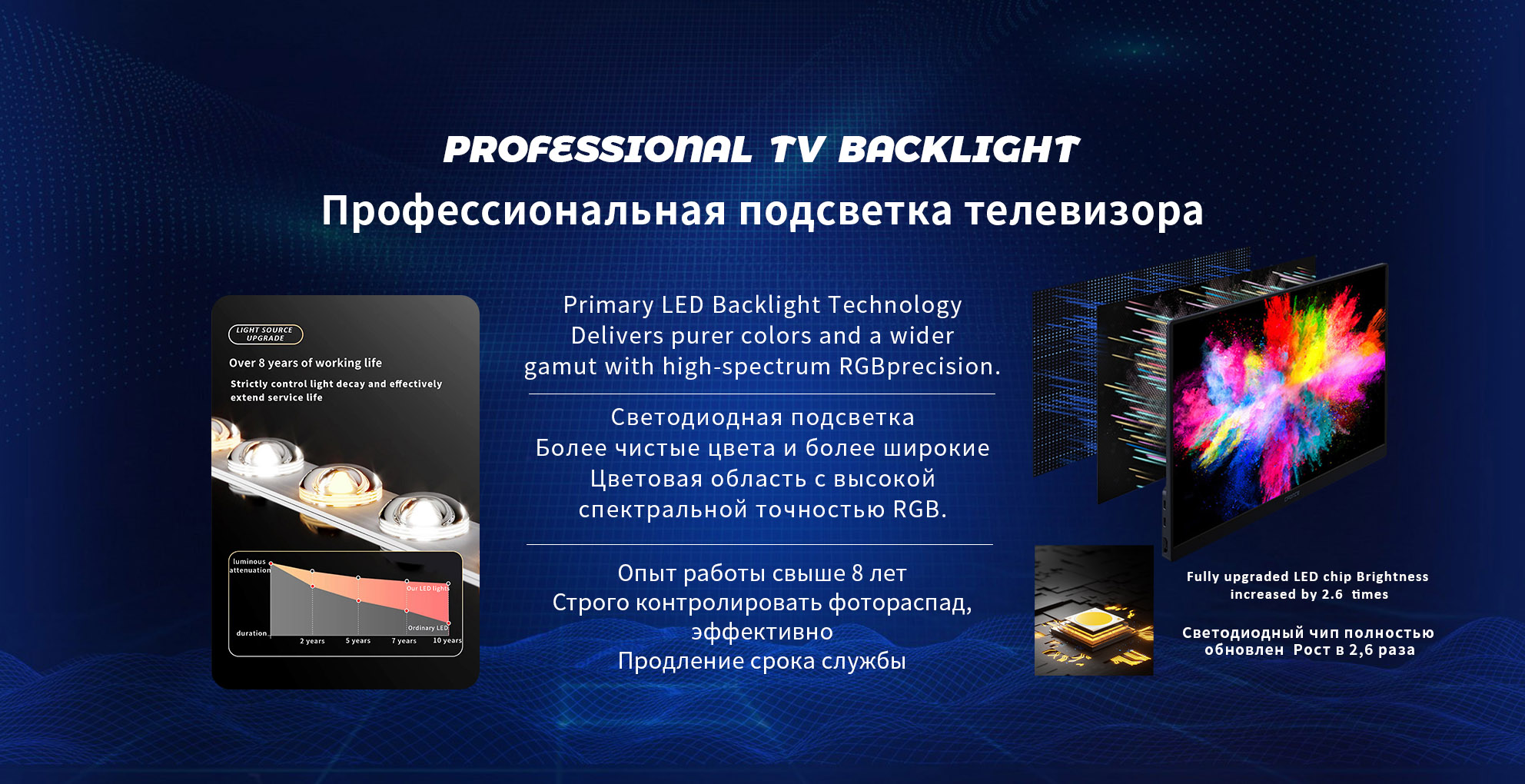
LED backlighting improves overall picture performance in several ways. The high peak brightness allows clear viewing in bright rooms. Faster response times help maintain clarity in motion scenes. The ability to dim specific LED zones reduces light leakage in dark scenes, resulting in deeper blacks and stronger contrast. Additionally, the longer lifespan of LED modules ensures consistent picture quality for years.
Energy efficiency is another advantage. LED backlights consume significantly less power than traditional fluorescent systems, helping household televisions meet modern efficiency standards without sacrificing brightness.
Common Enhancements Found in Modern Backlight Systems
Manufacturers integrate various improvements to optimize viewing performance. Optical diffusers become more precise, allowing uniform light distribution even in ultra-slim designs. Mini LED technology increases the number of LEDs dramatically, enabling hundreds or thousands of local dimming zones. This provides more accurate contrast control and narrower halos in dark scenes. Thermal-management layers also help maintain LED stability by dissipating heat evenly across the panel.
As display requirements rise, reliable component partners become essential. Companies such as Starsharp provide engineered light guide plates, diffuser films, and backlight assemblies designed to support higher brightness output and stable optical performance for premium televisions.
Conclusion
led tv backlights operate through a carefully coordinated system of LED chips, optical films, diffusion layers, and electronic controls. They transform electrical energy into uniform, bright illumination that enables LCD panels to produce vivid images. Differences in layout, such as edge-lit versus direct-lit, influence thinness, contrast, and uniformity. With ongoing innovations in optical materials and LED density, backlight technology continues to evolve toward brighter, more efficient, and more color-accurate displays.