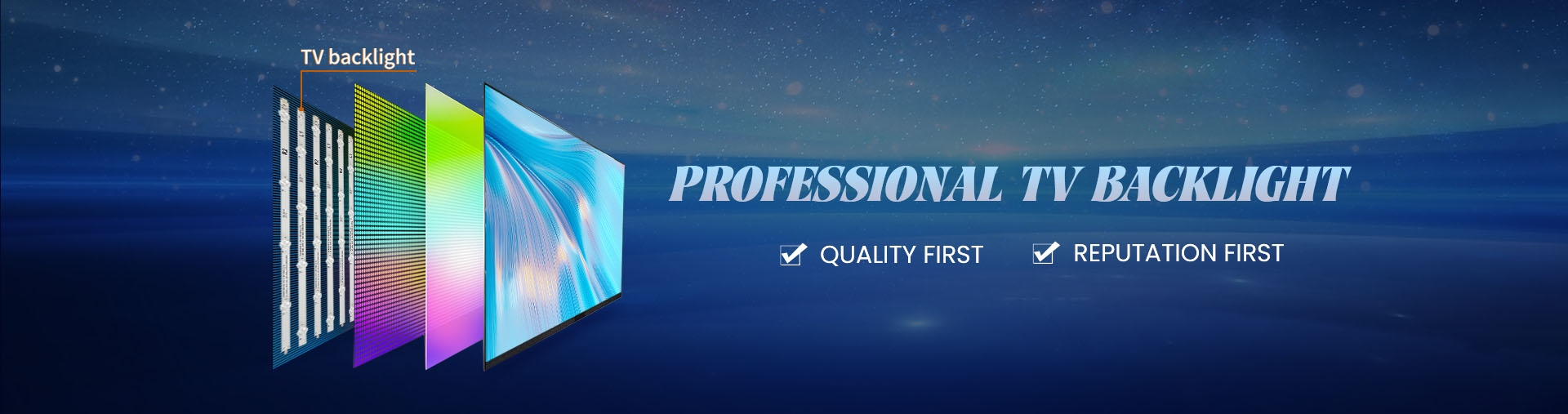
Liquid crystal displays do not emit light by themselves. They rely on a backlighting system placed behind the LCD panel to illuminate images. For many years, CCFL backlighting was the standard solution. Today, LED-backlit LCD technology has become the dominant choice across consumer electronics, commercial displays, and industrial screens. Understanding how led backlighting works and how it differs from CCFL helps buyers and engineers make informed decisions when selecting display solutions.
Understanding LED-Backlit LCD Technology
An LED-backlit LCD uses light-emitting diodes as the light source behind the liquid crystal layer. These LEDs produce white light or blue light converted through phosphors, which then passes through the LCD matrix and color filters to form images.
Unlike emissive display technologies, the LCD layer itself only controls how much light passes through each pixel. The backlight determines brightness, uniformity, contrast perception, and overall energy efficiency. led backlighting allows manufacturers to design thinner displays, improve brightness control, and achieve more stable long-term performance.
Modern LED-backlit LCDs are widely used in televisions, monitors, digital signage, medical displays, control panels, and portable devices because they balance visual quality, durability, and production scalability.
What Is CCFL Backlighting?
CCFL stands for cold cathode fluorescent lamp. In CCFL-backlit LCDs, thin fluorescent tubes are mounted behind or along the edges of the panel. These lamps emit ultraviolet light, which excites phosphor coatings inside the tube to produce visible white light.
CCFL technology played a critical role in the growth of flat-panel displays during the early LCD era. It provided sufficient brightness and color consistency for desktop monitors and early televisions. However, CCFL systems require high-voltage inverters, generate more heat, and contain small amounts of mercury, which complicates environmental compliance and disposal.
As display requirements evolved toward thinner profiles, lower power consumption, and better control over brightness, CCFL gradually gave way to led backlighting.
Structural Differences Between LED and CCFL Backlighting
The physical structure of LED and CCFL backlighting systems differs significantly.
LED backlighting uses compact semiconductor diodes that can be arranged along the edges of the panel or distributed evenly behind it. This modular structure supports precise light placement and flexible design layouts. CCFL systems rely on long glass tubes that limit how thin a display can be and restrict internal layout options.
Because LEDs operate at lower voltages and produce less heat, LED-backlit LCDs simplify internal circuitry and thermal management. CCFL designs require additional components such as inverters and insulation, increasing overall system complexity.
Performance Comparison: LED vs CCFL Backlighting
The differences between LED and CCFL backlighting become clear when comparing performance factors that matter in real-world use.
| Aspect | LED Backlighting | CCFL Backlighting |
|---|
| Energy efficiency | High, low power consumption | Lower, higher energy demand |
| Thickness | Ultra-thin display designs | Thicker panel structure |
| Brightness control | Precise dimming capability | Limited brightness adjustment |
| Startup time | Instant illumination | Slower warm-up |
| Lifespan | Long operational life | Shorter lifespan |
| Environmental impact | Mercury-free | Contains mercury |
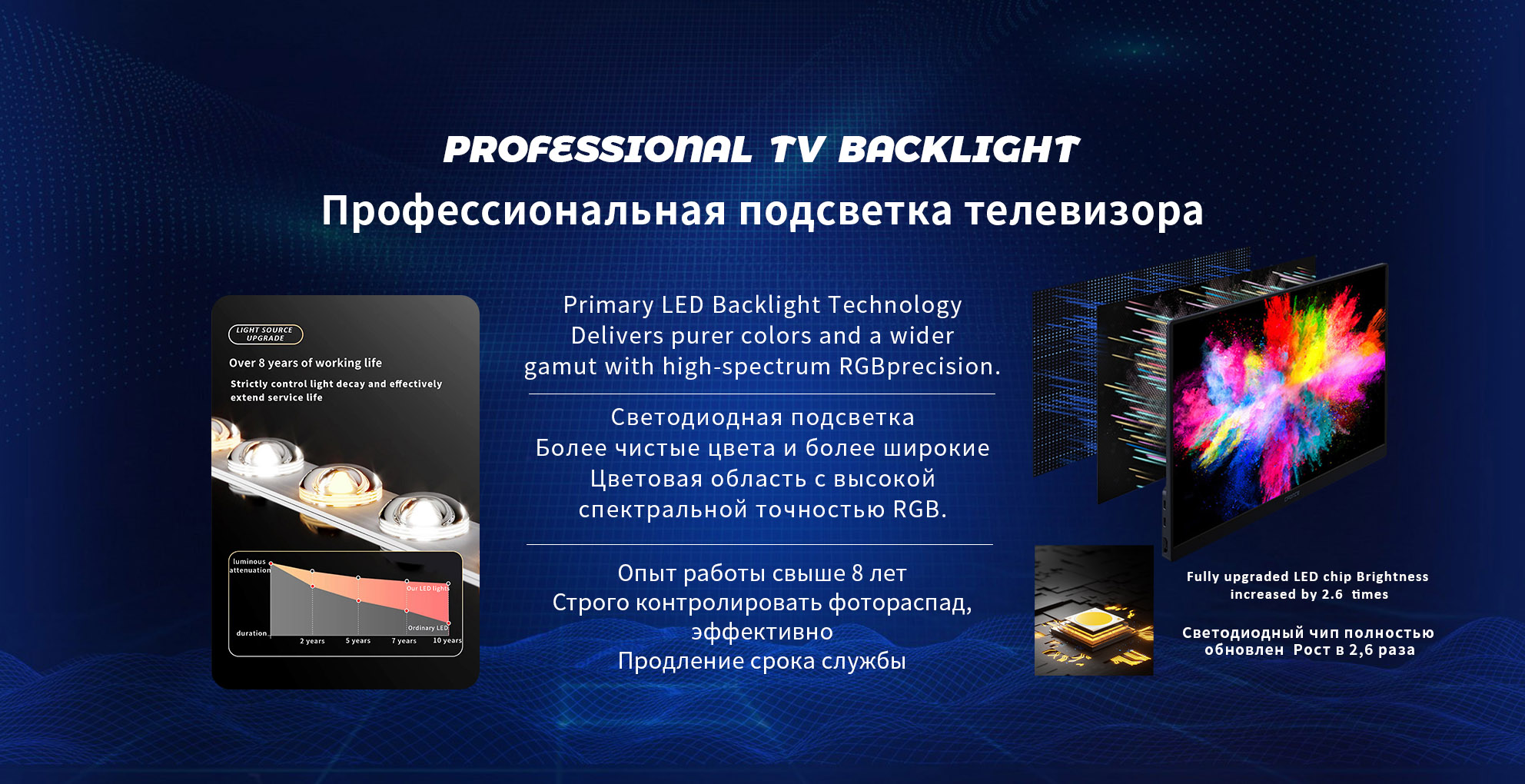
LED backlighting delivers faster response, better brightness stability over time, and reduced maintenance needs. These advantages explain why LED-backlit LCDs are now the industry standard for both consumer and professional displays.
Types of LED Backlighting in LCD Displays
LED-backlit LCDs are commonly divided into two configurations.
Edge-lit LED designs place LEDs along one or more edges of the screen. Light is distributed across the panel using a light guide plate. This approach supports slim profiles and lower production costs.
Full-array LED designs position LEDs directly behind the entire LCD panel. This structure allows more uniform illumination and advanced brightness control across different screen areas. Full-array designs are often used in high-performance displays where image consistency and contrast stability are priorities.
Both configurations outperform CCFL systems in efficiency and adaptability.
Applications and Manufacturing Advantages
LED-backlit LCD technology supports a wide range of applications, from consumer electronics to industrial equipment. Its scalability allows manufacturers to tailor brightness levels, color performance, and form factors according to specific use environments.
For buyers seeking reliable LCD solutions, working with experienced display manufacturers ensures consistent quality and customization capability. Companies such as Starsharp provide LED-backlit LCD products designed for stable performance, efficient power usage, and long service life, supporting applications across commercial, industrial, and specialized display markets.
Conclusion
LED-backlit LCD technology represents a major advancement over traditional CCFL backlighting. By replacing fluorescent lamps with efficient, compact LEDs, modern LCDs achieve thinner designs, lower energy consumption, longer lifespan, and improved brightness control.
While CCFL backlighting played an important historical role in flat-panel displays, LED backlighting has become the preferred solution for today’s display requirements. For businesses and projects that demand reliable performance and modern display standards, LED-backlit LCDs offer a practical and future-ready choice.