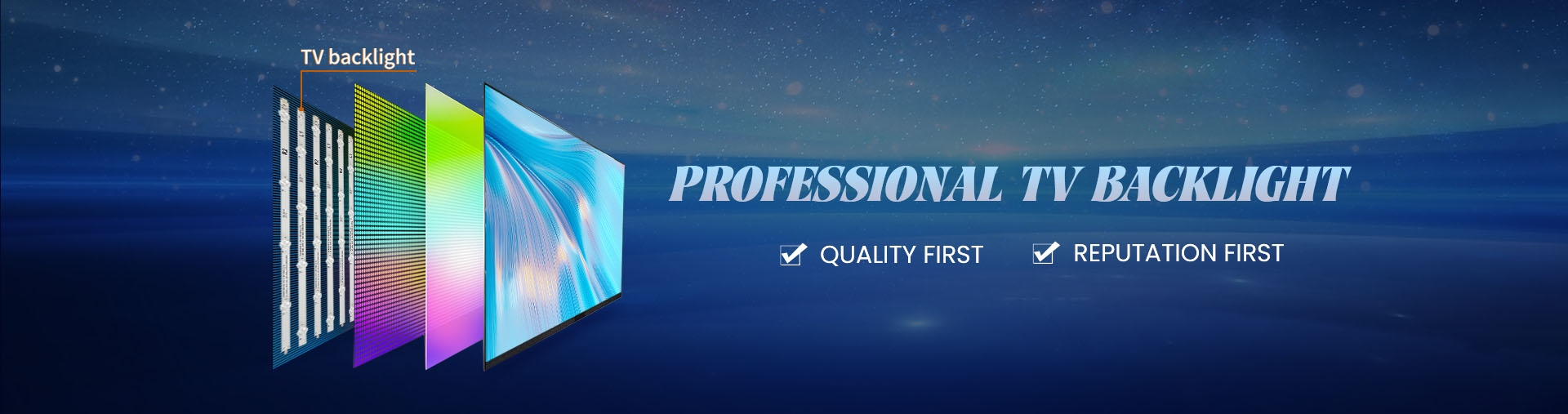
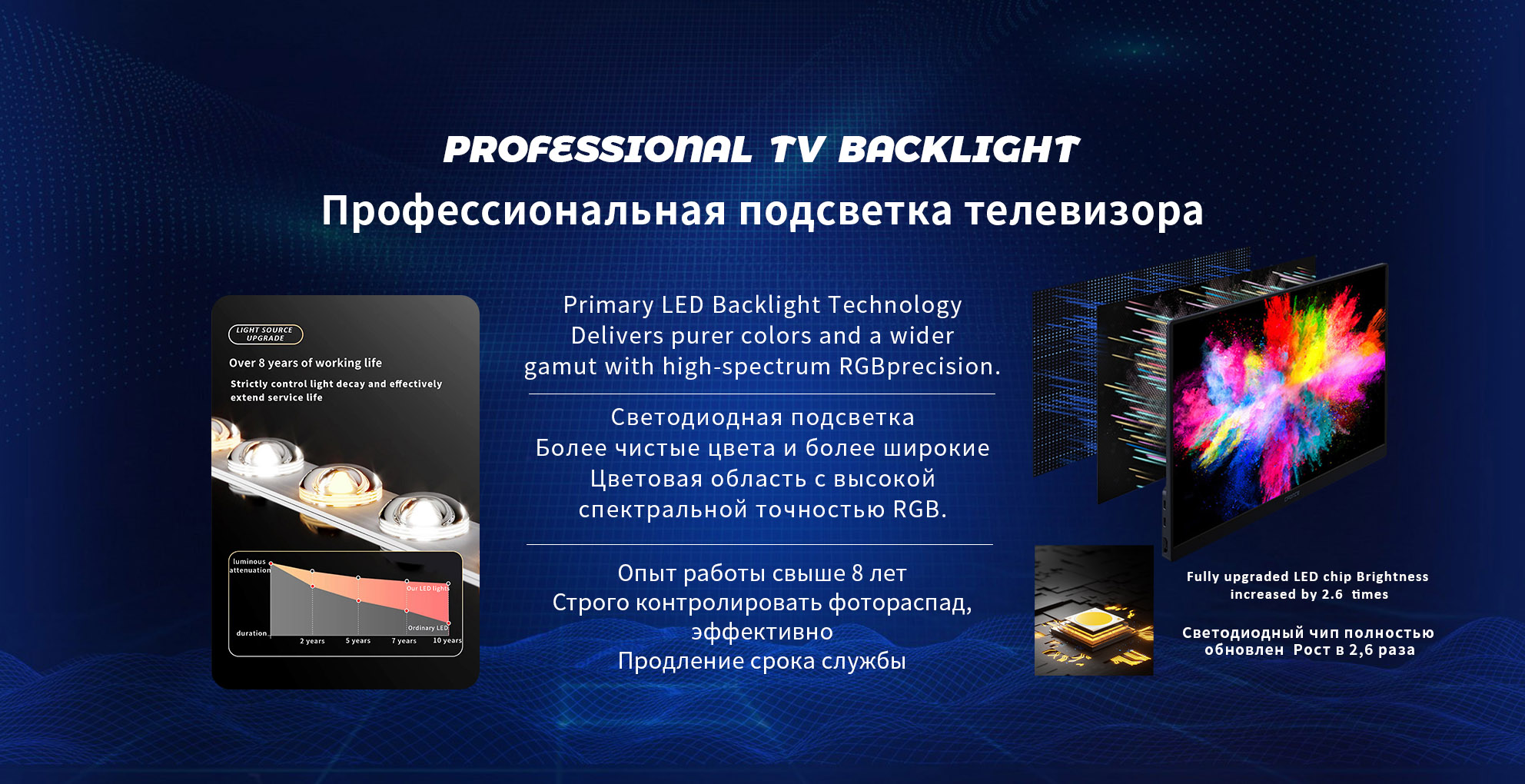
led backlighting refers to a lighting method that uses light-emitting diodes to illuminate display panels from behind. It is widely applied in LCD screens for televisions, monitors, laptops, digital signage, and industrial control panels. Since LCD pixels do not emit light on their own, a stable and uniform backlight is essential to make images visible, vivid, and readable under different lighting conditions.
Compared with traditional cold cathode fluorescent lamps, led backlighting has become the mainstream solution due to its compact size, high efficiency, and long operational life. It allows manufacturers to design thinner, lighter, and more energy-efficient display products while maintaining consistent brightness and color performance.
In an LED-backlit display, light generated by LED sources is distributed evenly across the back of the panel. This light passes through several optical layers, including diffusion sheets, prism films, and light guide plates, before reaching the LCD layer. The liquid crystal layer then modulates the light to create images, text, and video content.
The quality of LED backlighting directly affects brightness uniformity, contrast, color accuracy, and overall visual comfort. Precision in optical design and material selection is critical to ensure stable performance over long periods of use.
Main Types of LED Backlighting
LED backlighting can be classified based on how the LEDs are arranged within the display structure.
| Type | Structural Characteristics | Typical Applications |
|---|
| Edge-lit LED | LEDs placed along one or more edges of the panel | Slim TVs, monitors, laptops |
| Direct-lit LED | LEDs positioned directly behind the panel | Large displays, TVs, commercial screens |
| Full-array LED | Dense LED array with local dimming capability | High-end TVs, professional monitors |
Each structure offers different advantages in terms of thickness, brightness control, and contrast performance, allowing manufacturers to choose suitable solutions for specific product requirements.
Key Performance Advantages of LED Backlighting
LED backlighting delivers multiple technical benefits that support its widespread adoption across consumer and industrial markets.
First, it offers high energy efficiency, reducing power consumption while maintaining strong brightness output. This makes it suitable for both portable devices and large-scale installations.
Second, LEDs provide excellent lifespan stability. Many LED backlight systems are designed to operate for tens of thousands of hours with minimal brightness degradation, supporting long-term reliability.
Third, LED backlighting enables better brightness control and uniformity. Advanced optical structures help eliminate dark spots, hotspots, and uneven illumination, improving visual quality.
Finally, LED systems support flexible design options, including ultra-thin structures and modular configurations that adapt to different screen sizes and shapes.
Applications Across Multiple Industries
LED backlighting is not limited to consumer electronics. Its application scope continues to expand across professional and industrial sectors.
In commercial displays, LED backlighting ensures high brightness and visibility in retail, advertising, and information signage. In industrial environments, it supports stable operation in control panels and machine interfaces where clarity and durability are critical. In medical and imaging equipment, consistent backlighting contributes to accurate image interpretation and reduced eye fatigue.
Role of Optical Components in Backlighting Systems
The performance of LED backlighting depends not only on the LEDs themselves but also on the supporting optical components. Light guide plates, diffusion films, reflective sheets, and prism films work together to control light direction and distribution.
Manufacturers with strong optical engineering capabilities can optimize these components to achieve higher efficiency and better uniformity. Companies such as Starsharp focus on precision optical solutions and backlighting technologies, supporting customized designs for various display applications across different industries.
Trends in LED Backlighting Development
As display technology continues to evolve, LED backlighting is moving toward higher efficiency, thinner profiles, and smarter control. Integration with advanced dimming technologies and improved optical materials allows displays to deliver enhanced contrast and reduced energy consumption.
At the same time, growing demand for large-format displays, smart terminals, and industrial visualization systems is driving continuous innovation in backlight structures and manufacturing processes.
Conclusion
LED backlighting is a foundational technology that enables modern display performance across consumer, commercial, and industrial markets. By providing efficient, reliable, and adaptable illumination, it supports clearer visuals, longer service life, and flexible product design. With ongoing advancements in optical engineering and system integration, LED backlighting will continue to play a central role in the future of display technology.