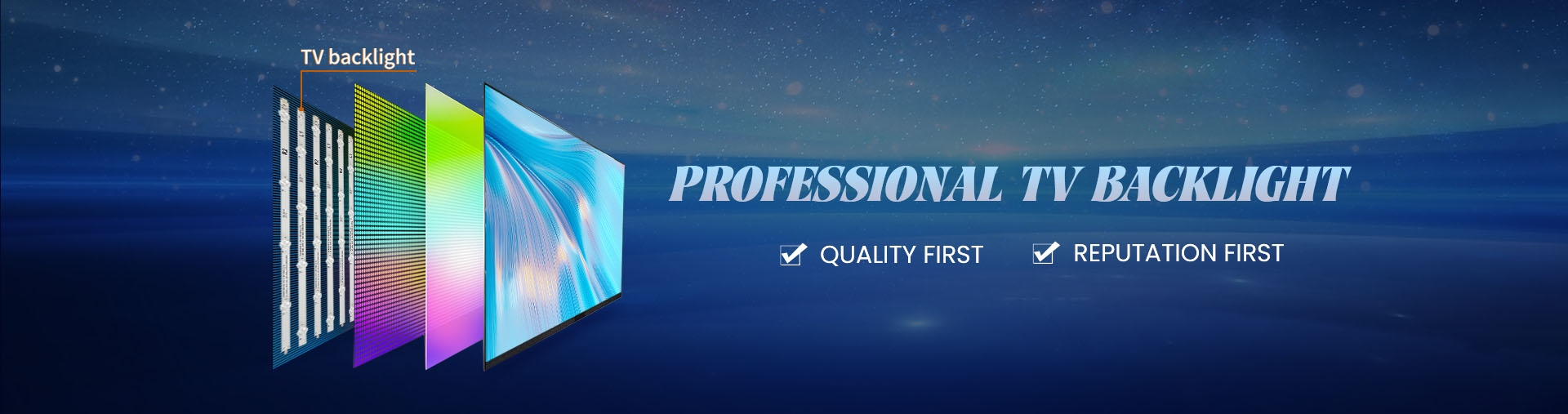
Modern LCD TVs do not create light by themselves. The picture you see is produced when an LCD panel modulates a separate light source behind it. That light source is the LED backlight system, and in many designs it is built around Led Backlight Strips plus an optical stack that turns many small point lights into a bright, uniform sheet of light.
From a manufacturing perspective, understanding how backlight strips work helps buyers evaluate brightness targets, uniformity risk, lifetime expectations, and repair strategy before committing to a TV platform or replacement program.
1) The Core Idea: LEDs Provide Light, the LCD Shapes the Image
An LCD panel is essentially a controllable “light valve.” It needs a stable, evenly distributed backlight to:
reach the required screen brightness
maintain consistent color and contrast across the panel
avoid visible defects such as bright corners, hotspots, or banding
LED backlight strips are long PCBs populated with LED packages and driven by a constant-current power stage. The strips generate light; the LCD layer and color filters create the final image.
2) Main Backlight Architectures Used with LED Strips
tv backlighting typically follows two architectures, both relying on strip assemblies:
Edge-Lit (EDGELIT)
LED strips sit along one or more edges of the panel. Light enters a light guide plate that spreads it across the screen.
Advantages: slimmer TV profile, fewer LEDs, lower power and cost
Trade-offs: more sensitivity to uniformity, corner brightness, and light leakage
Direct-Lit / Full-Array
LED strips are arranged behind the panel in a grid. Light goes forward through diffusers.
Advantages: better uniformity potential, higher brightness headroom
Trade-offs: thicker structure, more LEDs and higher thermal load
Mini-LED Full-Array
Mini-LED uses many smaller LEDs and more zones for dimming.
Advantages: higher contrast, better HDR peak brightness, finer local control
Trade-offs: more complex drivers, higher component count, tighter binning needs
3) What Happens Electrically: Driver, Current Control, and Dimming
LEDs must be driven by controlled current, not simply “voltage applied.” A typical TV backlight system includes:
Power conversion (AC to DC, then regulated output for the backlight)
LED driver providing constant current to one or multiple LED strings
Protection and diagnostics for open/short strings, over-voltage, and thermal events
Dimming approaches:
Global dimming: the whole backlight changes together
Local dimming: sections of the backlight dim independently to boost contrast
PWM dimming and current dimming: used alone or combined to balance flicker, efficiency, and color stability
Good driver design keeps brightness stable across voltage variation, temperature drift, and LED aging.
4) What Happens Optically: Turning Points of Light into a Uniform Panel
LEDs are point sources. TVs need a smooth plane of light, so the backlight stack typically includes:
Light Guide Plate (edge-lit) to distribute light across the screen
Diffuser films to remove hotspots and smooth patterns
Prism/BEF films to improve forward brightness and efficiency
Reflector sheet behind the strips to recycle light and reduce losses
Uniformity is a system outcome. Strip layout, LED lens type, spacing, optical film selection, and assembly tolerance all influence whether the screen looks clean in dark scenes and on solid colors.
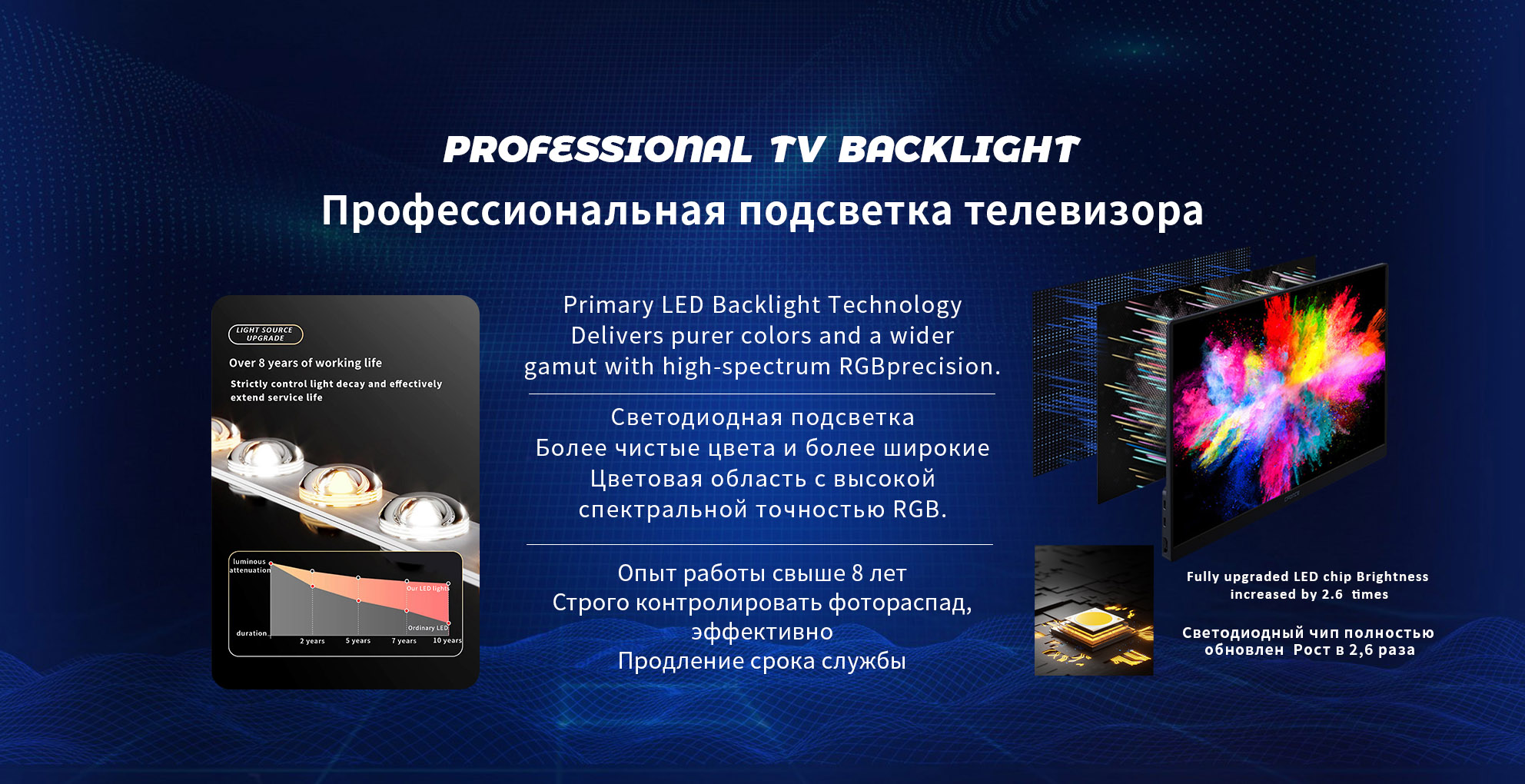
5) Thermal Management: The Hidden Factor Behind Lifetime
Heat is the primary driver of backlight degradation. A TV backlight design usually relies on:
aluminum base plates or heat-spreading structures
thermal interface materials between strip PCB and metal
controlled operating current that respects junction temperature limits
When thermal paths are weak, the system may show:
For long-life designs, strip materials, solder quality, and heat dissipation strategy should be validated together rather than evaluated as separate parts.
6) Common Failure Modes and What They Mean in the Field
Typical backlight-related issues include:
Open LED in a series string: the whole string turns off, creating large dark regions
Intermittent solder joints: flicker or brightness instability
Optical aging: diffuser yellowing or lens degradation causing uneven tint
Driver stress: repeated surges or poor protection causing over-current events
A robust strip program focuses on consistent LED binning, stable driver current, strong thermal design, and production testing that catches marginal assemblies early.
7) Practical Comparison Table for Decision-Making
| Item | Edge-Lit LED Strips | Direct-Lit / Full-Array LED Strips | Mini-LED Backlight |
|---|
| TV thickness target | Very thin | Medium | Medium to thicker |
| Uniformity sensitivity | Higher | Lower | Lower (but complex) |
| HDR peak brightness | Moderate | High | Very high |
| Local dimming capability | Limited | Good (zone-based) | Excellent (more zones) |
| Cost and complexity | Lower | Medium | Higher |
| Typical risk focus | Light leakage, hotspots | Thermal load, assembly tolerance | Driver complexity, tighter bin control |
8) What to Ask a Backlight Strip Manufacturer Before Production
To reduce risk and shorten iteration cycles, align on:
target brightness and efficiency at the intended current and temperature
LED binning strategy for color and flux consistency
thermal design assumptions and allowable strip temperature range
reliability data expectations, including aging and stress testing
driver compatibility and protection requirements
traceability and process controls for PCB, SMT, and final inspection
If you are sourcing replacement strips or building a long-running TV platform, consistency over time is just as important as first-sample brightness.
9) A Manufacturer Partner for Backlight Strip Programs
A capable backlight strip supplier should support more than basic BOM fulfillment: engineering alignment on current, thermal paths, uniformity targets, and stable production control is what keeps yields predictable.
If you are evaluating a supplier for LED backlight strip development, validation, or replacement supply, you can review Starsharp as a manufacturer option with experience in LED backlight strip products and related components for display backlighting programs.
Conclusion
LED backlight strips work by providing a controlled, thermally managed, and optically engineered light source behind an LCD panel. The electrical driver defines stability and dimming behavior, while the optical stack defines uniformity and perceived quality. When these elements are designed and validated as a single system, LED backlight strips can deliver the brightness, contrast, and lifetime expectations required for modern TV displays.