Backlight strip size is a key design factor in 55-inch LCD TVs because it directly affects brightness, uniformity, power efficiency, and overall reliability. Unlike panel resolution or interface standards, backlight strip dimensions are not fully standardized across the industry. They are determined by TV structure, backlight architecture, and manufacturer design strategy. Understanding the typical sizes and layouts used in 55-inch TVs helps buyers, engineers, and integrators evaluate compatibility, performance expectations, and replacement feasibility.
Common Backlight Architectures in 55-Inch TVs
Before discussing strip size, it is important to understand the two main backlight structures used in 55-inch TVs.
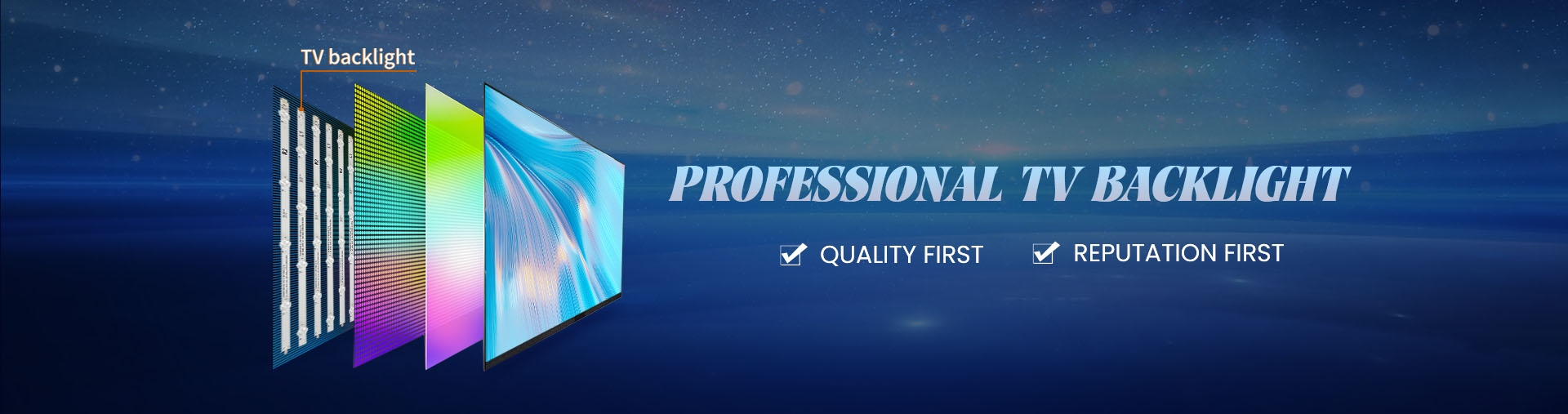
Edge-lit backlight systems place LED strips along one or more edges of the panel, usually the bottom or sides. Light is spread across the screen using a light guide plate. This design emphasizes thin profiles and lower material cost.
Direct-lit or full-array backlight systems place multiple LED strips directly behind the panel. These systems focus on higher brightness and better uniformity, and in advanced models, support local dimming.
The chosen architecture determines both the physical length and the quantity of backlight strips.
Typical Backlight Strip Length for 55-Inch TVs
For a standard 55-inch TV with a 16:9 aspect ratio, the panel width is approximately 1210–1230 mm. Backlight strip length is usually designed slightly shorter than the panel width to allow for mechanical margins and connectors.
In real production, commonly used strip lengths include:
1100–1150 mm for direct-lit horizontal strips
1120–1180 mm for edge-lit bottom strips
550–600 mm for vertical side-edge strips in dual-edge designs
The exact length depends on bezel design, internal frame structure, and connector orientation.
Width and Thickness of Backlight Strips
While length is the most visible dimension, strip width and thickness are equally important for thermal performance and optical stability.
Most 55-inch tv backlight strips fall into these ranges:
Width: 8–14 mm
Thickness: 1.0–1.6 mm
Wider strips allow better heat dissipation and more stable current distribution, while ultra-narrow strips are often used in slim edge-lit designs where space is limited. Thickness is closely tied to mechanical rigidity and long-term flatness during thermal cycling.
LED Quantity Per Strip in 55-Inch TVs
Strip size also determines how many LEDs are mounted on each strip. This influences brightness, power density, and redundancy.
Typical configurations include:
6–8 LEDs per strip in edge-lit designs
8–12 LEDs per strip in standard direct-lit designs
Higher-density layouts in high-brightness or HDR-oriented models
LED spacing is optimized to balance uniform light mixing and electrical efficiency, rather than simply maximizing LED count.
How Many Backlight Strips Are Used
The total number of strips varies widely depending on performance targets.
Common layouts for 55-inch TVs include:
1–2 strips for bottom or dual-edge edge-lit TVs
6–10 strips for basic direct-lit TVs
12 or more strips for high-uniformity or premium models
Increasing strip count generally improves uniformity and reduces hot spots, but also raises material and assembly cost.
Relationship Between Strip Size and Brightness
Backlight strip size is not selected in isolation. It must support the target brightness without overstressing LEDs.
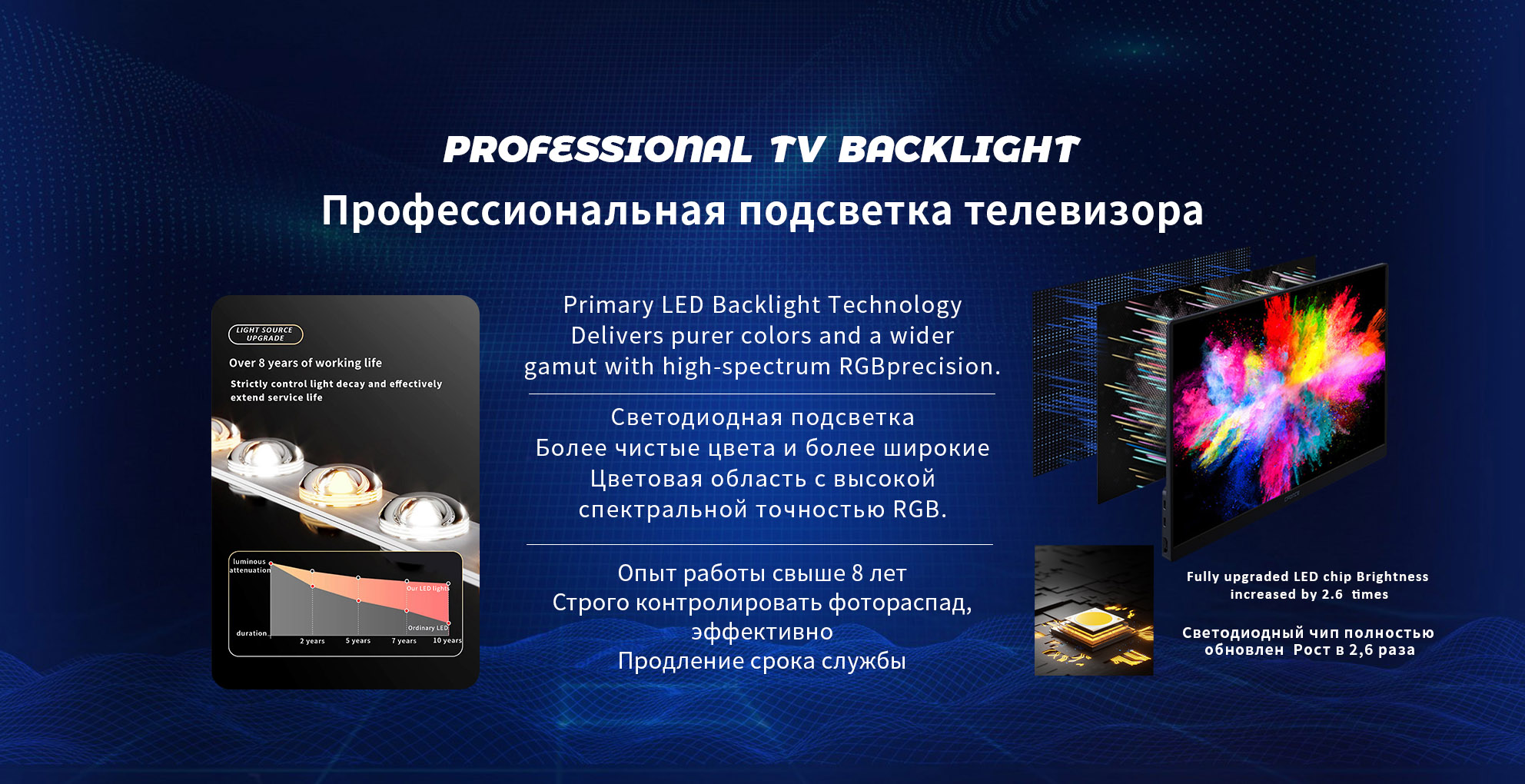
Longer strips with fewer LEDs per strip require higher drive current, which can increase heat and shorten lifespan. Shorter or multiple strips distribute power more evenly, improving stability. This is why higher-quality 55-inch TVs often use more strips rather than pushing a single strip harder.
Replacement and Compatibility Considerations
When sourcing replacement or customized backlight strips for 55-inch TVs, size compatibility is critical. Even small differences in length or connector position can prevent proper installation.
Key points to confirm include:
Exact strip length and mounting hole positions
LED type, voltage, and current rating
Connector orientation and polarity
Optical lens type and beam angle
Using mismatched strip sizes often leads to uneven brightness, flicker, or premature failure.
Manufacturing Perspective on Strip Customization
From a manufacturing standpoint, backlight strip size for 55-inch TVs is often semi-custom rather than off-the-shelf. Adjustments are made to fit different panel suppliers, cabinet depths, and brightness classes while keeping core materials consistent.
A manufacturer with strong backlight engineering capability can fine-tune strip length, LED spacing, and thermal layout to match specific TV models rather than forcing a generic solution.
A Practical Supplier Option: Starsharp
For projects involving 55-inch TV backlight development or replacement, working with an experienced backlight manufacturer can reduce risk. Starsharp provides customized Led Backlight Strips designed around panel size, brightness targets, and structural constraints. By focusing on strip-level consistency, optical matching, and production stability, Starsharp supports reliable performance across different 55-inch TV designs.
Conclusion
There is no single universal backlight strip size for 55-inch TVs. Most designs use strips around 1100–1180 mm in length, with widths of 8–14 mm and carefully planned LED counts. The final configuration depends on whether the TV is edge-lit or direct-lit, the desired brightness level, and long-term reliability goals. Understanding these dimensions helps ensure better design decisions, smoother replacement processes, and more stable display performance over time.