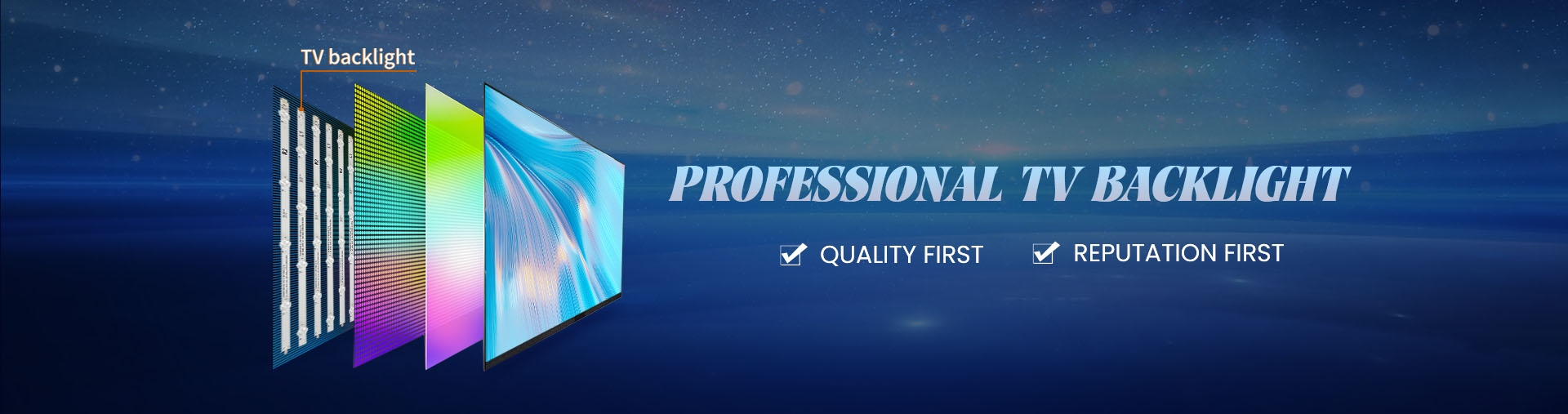
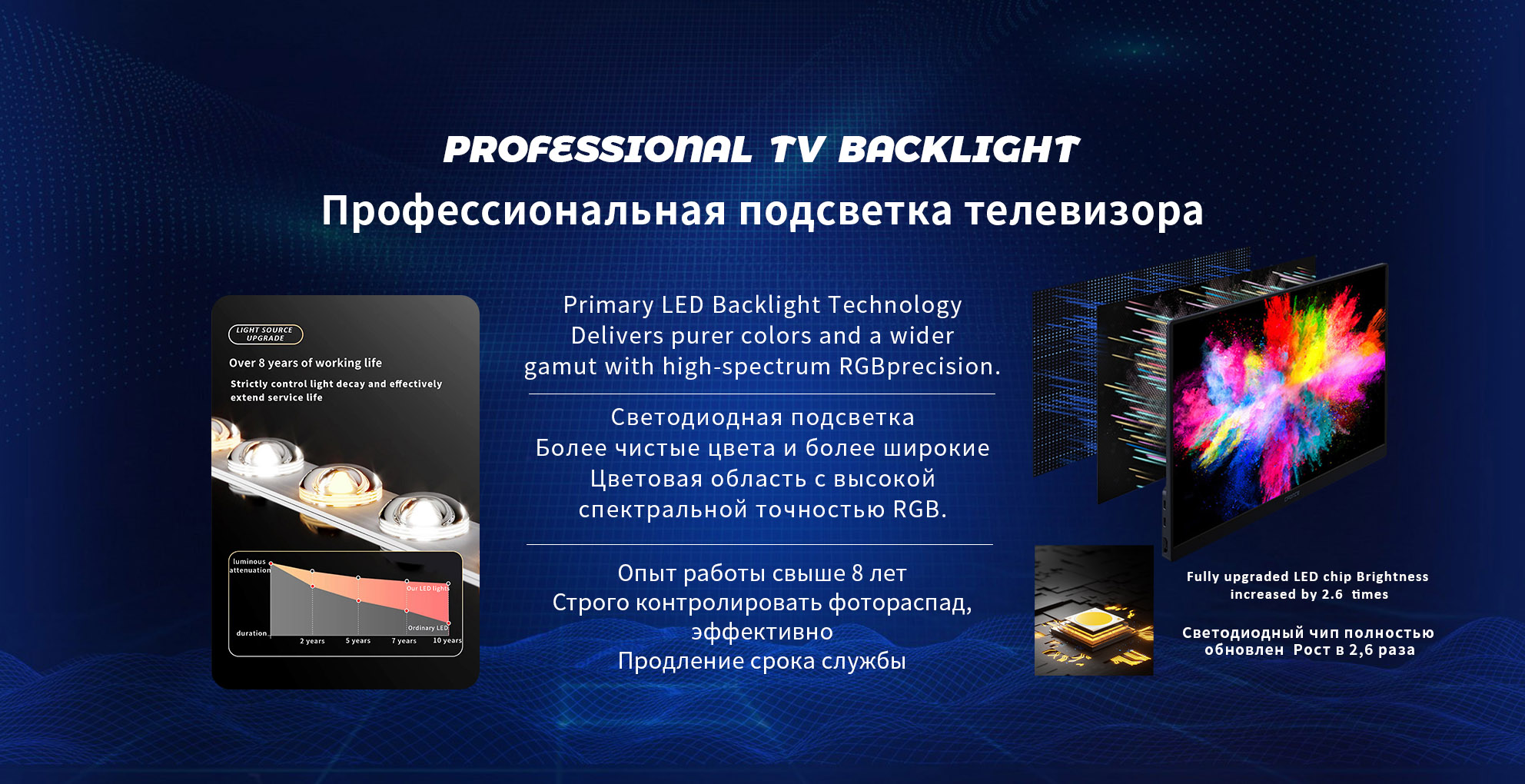
TV backlight failure is one of the most common reasons an LCD TV develops a dark screen, uneven brightness, or visible shadow areas while still producing sound. This often leads to a practical question: can tv backlight strips be replaced at home? The short answer is yes, but only under certain conditions. The real answer depends on skill level, tools, TV structure, and expectations for reliability after replacement.
backlight strips sit behind the LCD panel, diffuser sheets, and optical films. Reaching them requires nearly full disassembly of the TV. This is not comparable to replacing a remote control or power cable.
A typical replacement process includes:
Removing the rear cover and internal shielding
Disconnecting speakers, power boards, and control boards
Lifting out the LCD panel without bending or cracking it
Carefully removing multiple diffuser and prism sheets in order
Accessing and replacing the Led Backlight Strips
Reassembling everything with correct alignment and cleanliness
Each step introduces risk, especially for large screens where the panel is thin and fragile.
When Home Replacement Is Realistically Possible
Home replacement can be feasible when conditions are favorable.
It is more realistic if:
The TV size is moderate and easy to handle safely
The failure is clearly identified as backlight-related
The user has experience repairing electronics
Proper tools are available, including anti-static protection
Exact replacement backlight strips are sourced
In these cases, replacing the strips can restore brightness at a lower cost than replacing the entire TV.
Risks and Common Problems in DIY Replacement
Even experienced users face challenges. The LCD panel itself is the most expensive and fragile part of the TV. Any pressure point, dust particle, or misalignment can permanently damage image quality.
Common risks include:
Cracking the LCD panel during lifting or placement
Introducing dust that becomes visible as dark spots
Incorrect diffuser sheet order causing uneven brightness
Using mismatched strips that change brightness or color tone
Damaging connectors or driver boards during reassembly
Once the panel is damaged, repair is usually no longer economical.
Compatibility Is More Than Just Strip Length
Many people assume that backlight strips only need to match the physical length. In reality, electrical and optical compatibility are equally important.
Key factors include:
LED voltage and current ratings
LED chip type and bin consistency
Lens shape and beam angle
Connector type and polarity
Strip thickness and mounting position
Using incorrect strips may result in flicker, color shift, overheating, or rapid failure, even if the TV initially turns on.
Brightness Balance After Replacement
Replacing only failed strips in a TV that has aged can lead to brightness imbalance. New LEDs are often brighter than older ones, which can cause visible banding or uneven areas across the screen.
For this reason, many technicians recommend replacing all backlight strips at the same time to maintain uniform brightness and color consistency across the panel.
Safety and Electrical Considerations
Backlight systems operate at relatively high voltages. Improper handling can cause electric shock or damage to the driver board.
Important safety considerations include:
Always unplug the TV and discharge capacitors
Avoid testing backlight strips directly without proper equipment
Do not power the TV without diffuser sheets correctly installed
Ensure connectors are firmly seated before power-on
Skipping safety steps can lead to personal injury or further hardware damage.
Professional Repair vs Home Replacement
Home replacement can save money, but professional repair offers advantages in consistency and reliability.
Professional service typically provides:
Proper lifting tools for large LCD panels
Clean environments that reduce dust contamination
Correct strip selection based on panel model
Brightness calibration checks after repair
Lower risk of secondary damage
For larger TVs or premium models, professional repair often delivers better long-term results.
Choosing the Right Backlight Strip Supplier
If home replacement is attempted, sourcing high-quality backlight strips is critical. Poor-quality strips may fail quickly or introduce new visual defects.
A manufacturer-focused supplier like Starsharp can provide backlight strips designed to match panel structure, brightness targets, and electrical characteristics. Consistent LED binning, stable thermal design, and accurate optical matching help reduce post-repair issues and extend service life.
When Replacement May Not Be Worth It
There are situations where replacing backlight strips at home is not practical.
Replacement may not be recommended if:
The TV panel already shows cracks or lines
The screen size makes safe handling difficult
Replacement strips are unavailable or uncertain
Labor time outweighs the TV’s remaining value
In these cases, replacement may introduce more risk than benefit.
Conclusion
TV backlight strips can be replaced at home, but it is not a simple repair. Success depends on technical skill, correct parts, careful handling, and realistic expectations. For those with experience and the right setup, home replacement can restore a TV effectively. For others, professional repair or using high-quality, well-matched backlight strips from a reliable manufacturer offers a safer path to stable brightness and long-term performance.