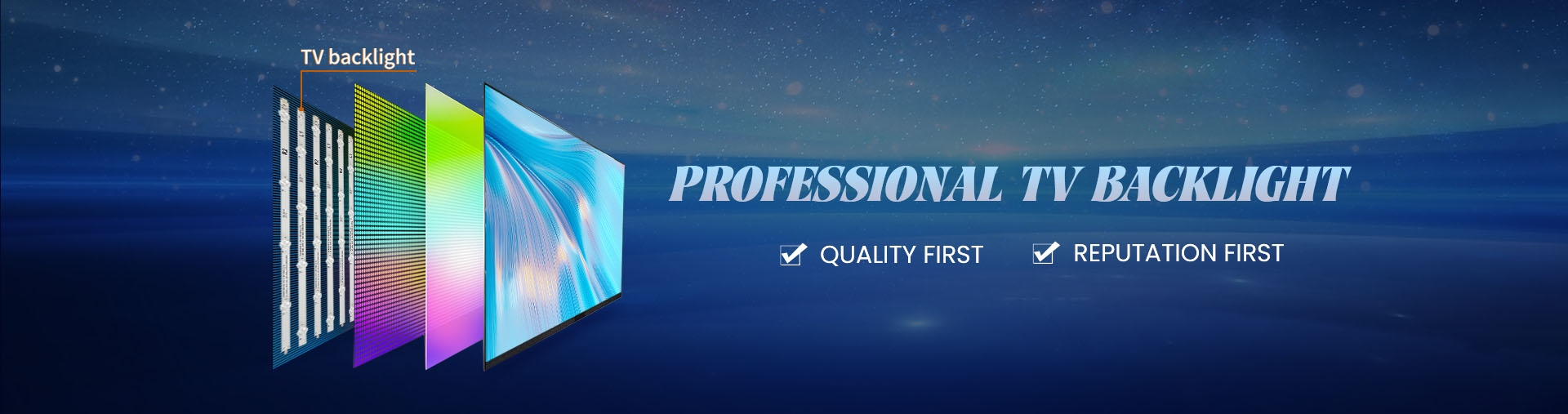
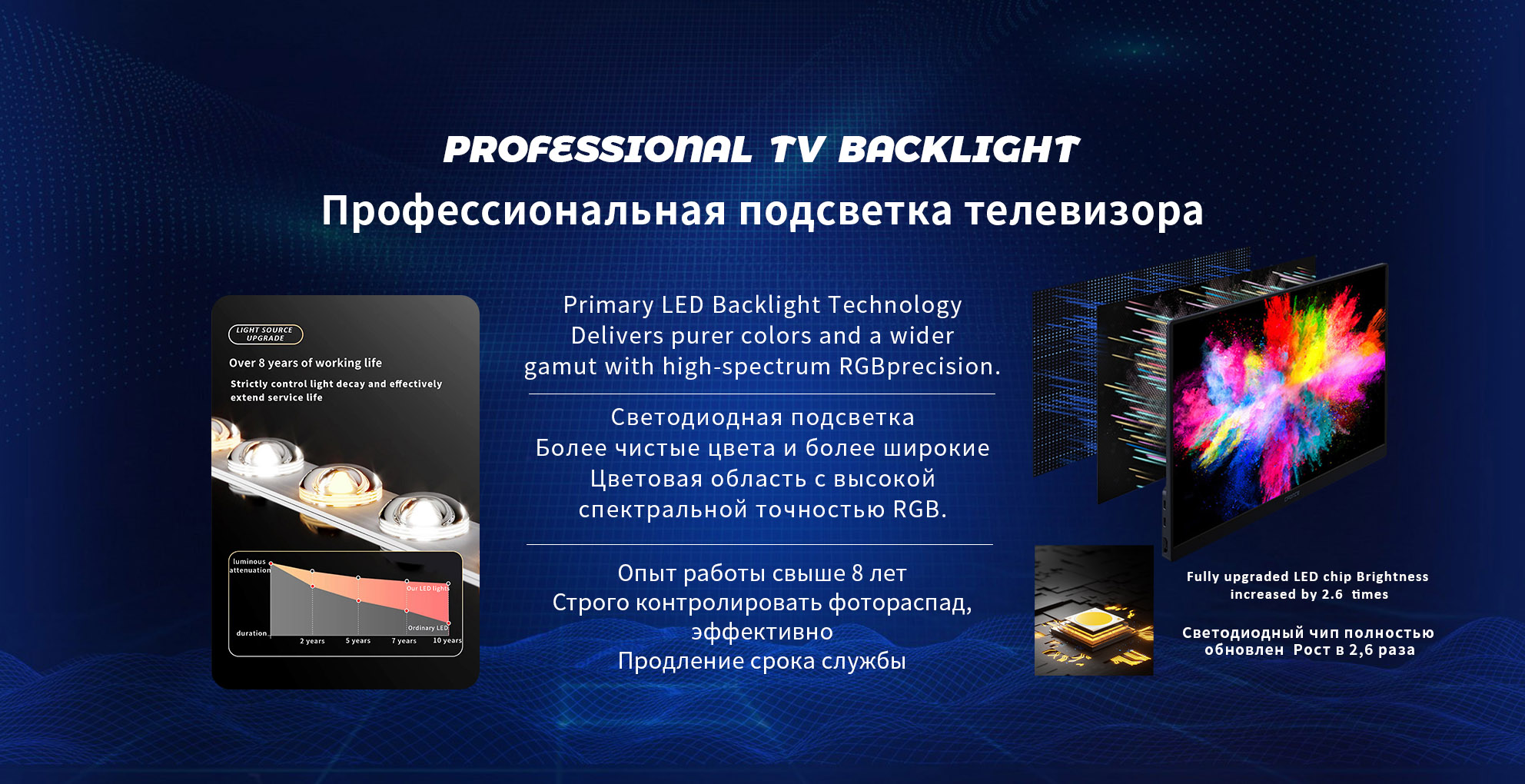
Backlight strip failure is one of the most frequent hardware issues in LCD TVs. When a TV still has sound but shows a dark screen, uneven brightness, flashing, or shadowed areas, the backlight system is often the root cause. Understanding why backlight strips fail is essential for improving product reliability, reducing after-sales issues, and making better decisions during design, sourcing, or maintenance.
Excessive Drive Current and Overdriving
One of the primary causes of backlight strip failure is overdriving the LEDs. To achieve higher brightness levels at lower material cost, some designs push LED chips close to or beyond their optimal current range. While this may deliver strong initial brightness, it significantly accelerates LED degradation.
Overdriving leads to:
Rapid lumen depreciation
Increased junction temperature
Early color shift or brightness drop
Sudden open-circuit LED failure
Once one LED fails in a series circuit, the entire strip or section can go dark.
Poor Heat Dissipation and Thermal Accumulation
Heat is the biggest enemy of LED longevity. backlight strips operate continuously for long periods, and insufficient thermal management causes internal temperatures to rise beyond safe limits.
Common thermal issues include:
Thin aluminum substrates with limited heat spreading
Inadequate contact between strip and metal chassis
Poor ventilation inside ultra-slim TV cabinets
Uneven heat distribution along long strips
Chronic overheating shortens LED lifespan and increases the risk of sudden failure during extended viewing sessions.
Inconsistent LED Quality and Binning
Not all LED chips age at the same rate. If backlight strips are assembled using LEDs from mixed bins or inconsistent suppliers, electrical and thermal imbalance occurs across the strip.
This can result in:
Uneven brightness from the start
Localized overheating in higher-current LEDs
Accelerated failure of weaker chips
Visible banding or patchy light output
Consistent LED binning is critical for stable long-term performance.
Driver Circuit Instability
The backlight driver controls current and voltage delivered to the led strips. If the driver design is unstable or poorly matched to the strip configuration, it can cause stress on the LEDs.
Typical driver-related problems include:
Current spikes during power-on
Poor dimming control at low brightness
Voltage overshoot when LEDs age
Flicker caused by unstable PWM control
Even high-quality LED strips can fail prematurely if driven by an unsuitable or poorly tuned driver circuit.
Power Supply Fluctuations
Unstable power input can accelerate backlight damage. Voltage fluctuations, poor filtering, or sudden surges place additional stress on the LED driver and the LEDs themselves.
Long-term exposure to unstable power may cause:
This is especially relevant in regions with inconsistent power quality or frequent on-off cycling.
Mechanical Stress and Assembly Issues
Backlight strips are thin and rigid. Improper assembly can introduce mechanical stress that weakens solder joints or damages LED packages over time.
Common mechanical causes include:
Over-tightened screws deforming the strip
Uneven mounting surfaces causing bending
Poor adhesive bonding leading to vibration damage
Thermal expansion mismatch between materials
Mechanical stress often leads to intermittent failures that worsen with heat and time.
Aging of Optical Materials
Although LEDs may still function electrically, degradation of optical components can mimic backlight failure. Yellowing lenses, warped diffusers, or degraded reflectors reduce effective brightness and create uneven illumination.
This type of failure is often mistaken for LED burnout but is actually a system-level aging issue.
Environmental Factors
External conditions also influence backlight lifespan. High ambient temperatures, poor ventilation, and extended daily usage accelerate aging.
Risk factors include:
Continuous operation for many hours per day
Installation in enclosed or poorly ventilated spaces
High-humidity environments affecting connectors and solder joints
Environmental stress compounds internal design weaknesses.
Partial Replacement and Brightness Imbalance
Replacing only failed strips in an aged TV can create imbalance. New strips run cooler and brighter, while older ones continue degrading. This imbalance increases stress on remaining aged strips and may trigger cascading failures.
Uniform replacement and proper current recalibration help reduce this risk.
How Manufacturing Quality Reduces Failure Rates
Backlight strip reliability is strongly tied to manufacturing discipline. Stable suppliers focus on system-level design rather than isolated components.
Key reliability practices include:
Conservative current design with thermal margin
High-quality aluminum substrates
Tight LED binning control
Driver and strip co-design
Aging tests under elevated temperature
A manufacturer like Starsharp applies these principles to produce backlight strips with controlled brightness, stable thermal behavior, and longer service life, helping reduce premature failures in LCD TV applications.
Conclusion
Backlight strip failure in LCD TVs is rarely caused by a single factor. It usually results from a combination of electrical stress, heat accumulation, material quality, driver design, and environmental conditions. By understanding these causes and addressing them through better design, component selection, and manufacturing control, backlight reliability can be significantly improved, extending TV lifespan and maintaining consistent display quality over time.