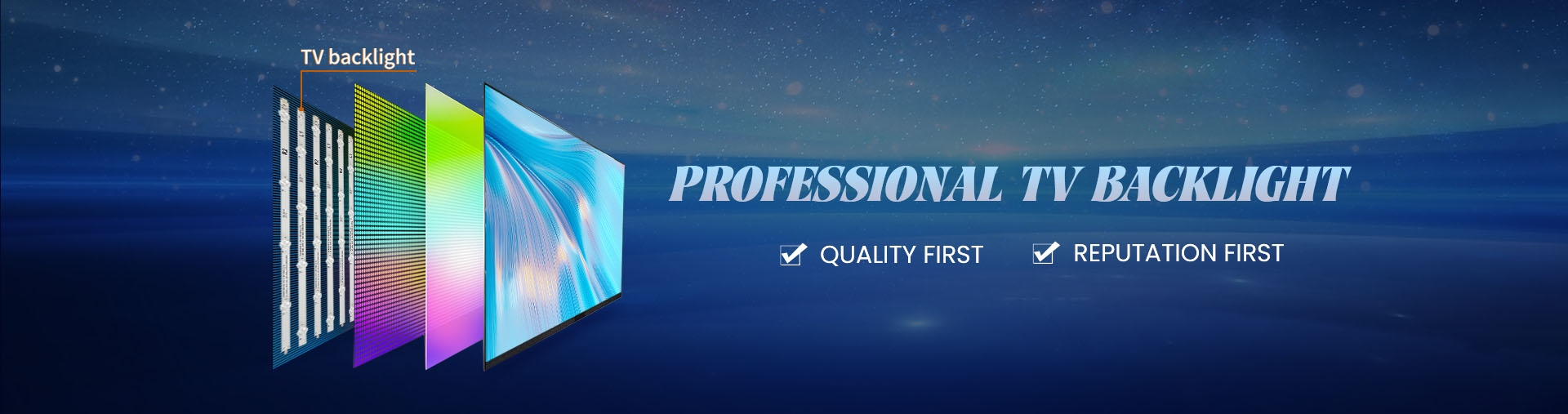
A backlight strip is not a decorative light strip. It is a precision illumination component that directly affects screen brightness uniformity, color appearance, viewing comfort, and long-term stability. In mass production, a “good-looking” strip on day one can still become a warranty problem if it drifts in brightness, develops hotspots, or fails early under heat and vibration. A high-quality backlight strip is engineered as a system: LED selection, optical design, thermal path, electrical margins, and factory testing all have to work together.
Starsharp focuses on television backlight solutions, including direct-lit strips and edge-lit strips, with a large catalog of specifications and the capacity to support high-volume supply.
1) Brightness uniformity that stays consistent over time
Uniformity is the first thing end users notice. A high-quality backlight strip is designed to reduce visible banding, corner falloff, and “dirty screen” effects by controlling:
LED spacing and placement accuracy
Lens or reflector geometry for wide, even diffusion
Tight LED binning for brightness and color, so adjacent LEDs do not look mismatched
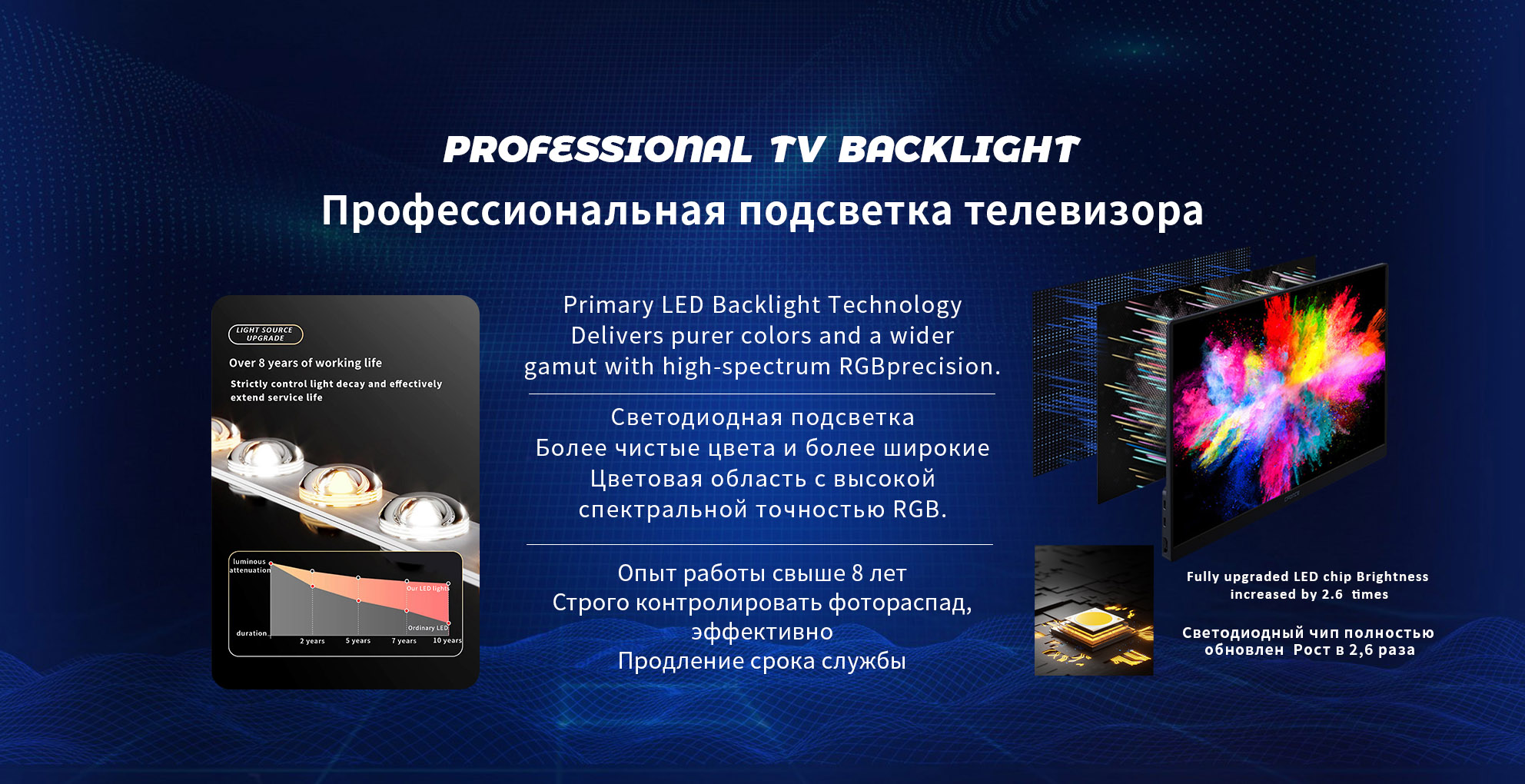
Uniformity must also remain stable after aging. That means the strip should be built with consistent thermal behavior and current control so that LED output does not diverge across the bar after thousands of hours.
2) LED selection and bin control for predictable color
Color stability is not only about choosing a CCT. It is about keeping color consistent unit-to-unit and within the same screen. High-quality backlight strips typically require:
Stable chromaticity control through LED binning
Consistent forward voltage range to reduce current imbalance
Materials that resist yellowing or optical drift under heat and blue light exposure
When you qualify a strip, request bin definitions and the manufacturer’s internal acceptance criteria for color and voltage consistency across a production lot.
3) Thermal design that protects lumen maintenance
Heat is the silent killer of backlight reliability. A high-quality strip prioritizes a low thermal resistance path from LED junction to the environment, commonly through:
Proper metal-core PCB or optimized FR-4 stack-up
High-quality thermal interface materials
Controlled drive current and derating rules
For longevity validation, many professional programs reference LED lumen maintenance testing practices such as LM-80 and projection approaches like TM-21 to estimate long-term behavior from measured data.
4) Electrical robustness and safe operating margins
Backlight strips must survive real TV conditions: unstable mains, driver tolerances, temperature swings, and repeated on-off cycles. High-quality designs usually show their strength in details:
Well-defined operating current and voltage window
Protection strategy at system level against overcurrent or abnormal conditions
Stable connectors and solder quality to avoid intermittent faults
For edge-lit and direct-lit designs, consistent forward voltage distribution is especially important to prevent local overdrive, which can create hotspots and early failures.
5) Photobiological safety and comfort considerations
Backlights are viewed for hours at close distances. Beyond brightness and color, a responsible design considers photobiological safety evaluation. IEC/EN 62471 is widely used as the framework for classifying photobiological hazards of lamps and lamp systems, including LED-based products.
In practical terms, this encourages manufacturers to validate optical risk classification and maintain traceable test records for compliance discussions.
6) Factory testing that catches problems before shipment
A strong backlight supplier treats QC as a measurable gate, not a slogan. Typical high-value tests include:
Electrical tests for voltage, current, and power consistency
Visual and optical inspection for lens alignment and light uniformity
Aging or burn-in screening to reduce early-life failures
Lot traceability for LEDs, PCBs, optics, and assembly parameters
Starsharp positions itself as a TV backlight manufacturer with standardized production and quality control, plus scale advantages that support consistent output across many specifications.
7) Customization readiness without sacrificing consistency
A backlight strip often needs to match a specific panel size, mounting structure, or driver strategy. High-quality suppliers support customization while keeping the design controllable, such as:
LED count and spacing matched to diffuser structure
Bar length and mounting holes aligned to chassis
Connector orientation and cable routing optimized for assembly
Direct-lit and edge-lit options for different TV architectures
Starsharp highlights broad model coverage and a large number of specifications, which is useful when you need to match existing TV platforms or manage multi-model service inventory.
Quick evaluation checklist
| What to check | What “high-quality” looks like | Why it matters |
|---|
| Uniformity design | Controlled optics and tight placement tolerances | Reduces banding and hotspots |
| LED bin control | Defined bins for brightness, color, and voltage | Keeps screens consistent |
| Thermal path | Clear thermal strategy and derating guidance | Protects lumen maintenance |
| Electrical margins | Stable current window and robust interconnect | Prevents early failures |
| Safety validation | IEC/EN 62471 evaluation records | Supports compliance and comfort |
| QC depth | Electrical + optical checks, aging, traceability | Lowers defect escape risk |
| Custom capability | Fit-for-model design with controlled change process | Faster integration, fewer surprises |
Why Starsharp is a practical choice for backlight strip supply
If you are selecting a manufacturing partner, the goal is repeatable performance at scale, not just a single approved sample. Starsharp is positioned as a dedicated television backlight manufacturer, covering direct-lit and edge-lit strips, supporting many specifications, and shipping at high annual volume—useful for OEM/ODM programs that need stable supply and consistent quality across multiple screen sizes.
Conclusion
A high-quality backlight strip is defined by system-level control: uniform light output, stable color, strong thermal design, robust electrical margins, safety-oriented evaluation, and disciplined factory testing. When these elements are present, you get fewer field failures, more consistent screen appearance, and smoother mass production. Choosing a specialized manufacturer like Starsharp helps you align performance, scalability, and customization under one supply chain.