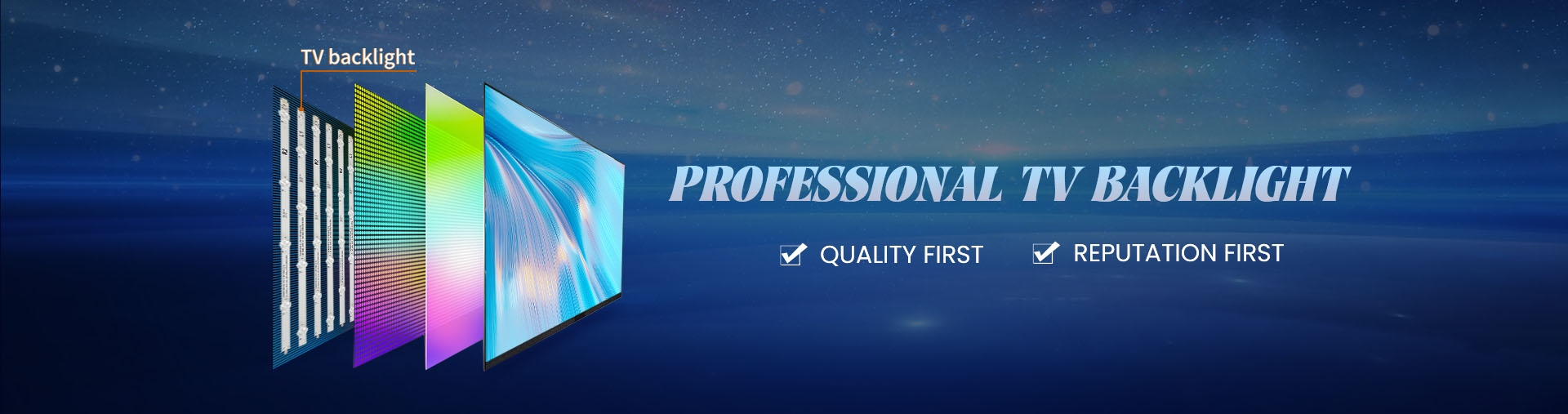
In today's competitive television market, display performance is a critical differentiator. At the heart of an outstanding visual experience lies a precisely engineered component: the Led Backlight Strip. Determining the optimal brightness for these strips is not a matter of guesswork but a sophisticated balance of electrical engineering, human physiology, and application-specific requirements. As a manufacturer with a decade of expertise in designing and producing over 5,000 specifications of backlight strips, we understand that the correct luminance level is foundational to achieving superior picture quality, energy efficiency, and product longevity.
This guide delves into the technical parameters, standards, and practical considerations that define how bright a tv backlight strip should be, providing actionable insights for developing top-tier television products.
Understanding Core Brightness Metrics
The performance of an LED backlight strip is quantified through several interrelated metrics. Luminance, measured in nits (cd/m²), is the primary measure of perceived brightness emitted from the screen. This is distinct from the luminous flux of the individual LEDs, measured in lumens (lm), which is the total visible light output. For a complete picture, one must also consider illuminance uniformity, which ensures consistent brightness across the entire panel without distracting bright or dark spots.
A common misconception is that higher brightness is always better. While high dynamic range (HDR) content benefits from peak brightness levels reaching 1,000 nits or more for stunning highlights, the average picture level (APL) for standard content is typically calibrated much lower to ensure viewer comfort and contrast perception. The industry challenge is to engineer a backlight system capable of dynamic range—delivering intense peaks when needed while maintaining deep blacks and uniformity across all content types.
Key Factors Determining Optimal Backlight Brightness
1. Television Panel Technology and Size
The type of LCD panel directly dictates backlight requirements.
| Panel Type | Typical Brightness Requirement | Key Consideration for Backlight Design |
|---|
| VA (Vertical Alignment) | Higher (500-1000+ nits) | Requires powerful backlight to achieve target luminance through its high native contrast but lower transmittance. |
| IPS (In-Plane Switching) | Moderate to High (400-700 nits) | Needs uniform, high-quality light due to wider viewing angles and higher transmittance than VA, but lower native contrast. |
| Direct-Lit vs. Edge-Lit | Varies by design | Direct-lit designs allow for local dimming zones and can achieve higher peak brightness. Edge-lit designs require extremely bright and uniform strips at the panel's periphery. |
Larger screen sizes, such as 75-inch models, naturally require a backlight system with greater total luminous output to maintain the same level of screen luminance as a smaller screen. Our production of over 26 million units annually across a vast range of models allows us to precisely tailor the LED count, power, and optical design for any panel size and technology.
2. Target Market and Content Standards
Brightness specifications are heavily influenced by the primary use case and regional standards.
HDR Content (HDR10, Dolby Vision): To faithfully reproduce HDR metadata, the backlight system must support high peak brightness, often requiring specialized high-output LED components and robust thermal management.
Commercial/Public Displays: These units operate in high-ambient-light environments (airports, retail) and necessitate very high brightness levels (700-2,000+ nits) to ensure visibility, alongside designs focused on maximum reliability and longevity.
Consumer Home Televisions: For typical living room viewing, a balanced brightness range of 300-600 nits is often optimal, prioritizing eye comfort, contrast ratio, and energy consumption.
3. Human Factors and Viewing Environment
The science of visual ergonomics is paramount. Excessive brightness in a dark room causes eye strain and fatigue, diminishing the viewing experience. The ideal backlight system is not static; it incorporates ambient light sensors that automatically adjust the screen's brightness to suit the room's lighting conditions. This dynamic adjustment is crucial for maintaining optimal contrast and readability—whether in a dark home theater or a sunlit family room—while also conserving energy.
The Manufacturer's Role: Delivering Precision and Consistency
Achieving the targeted brightness specification is only half the battle. The true mark of quality is delivering that performance consistently across every single unit, day after day. This is where manufacturing excellence separates superior products from the rest.
At StarSharp, we ensure optimal and reliable brightness through a vertically controlled process:
Component Precision: We utilize industry-leading automated assembly equipment. This ensures each LED is placed with micron-level accuracy, which is fundamental for achieving perfect optical alignment and uniformity—a prerequisite for consistent brightness.
Rigorous Quality Gates: Every backlight strip undergoes comprehensive testing that simulates real-world conditions. We verify not just initial luminance output but also color temperature stability and performance under thermal stress. Our certifications, including ISO9001 and ROHS, formalize this commitment to quality and environmental responsibility.
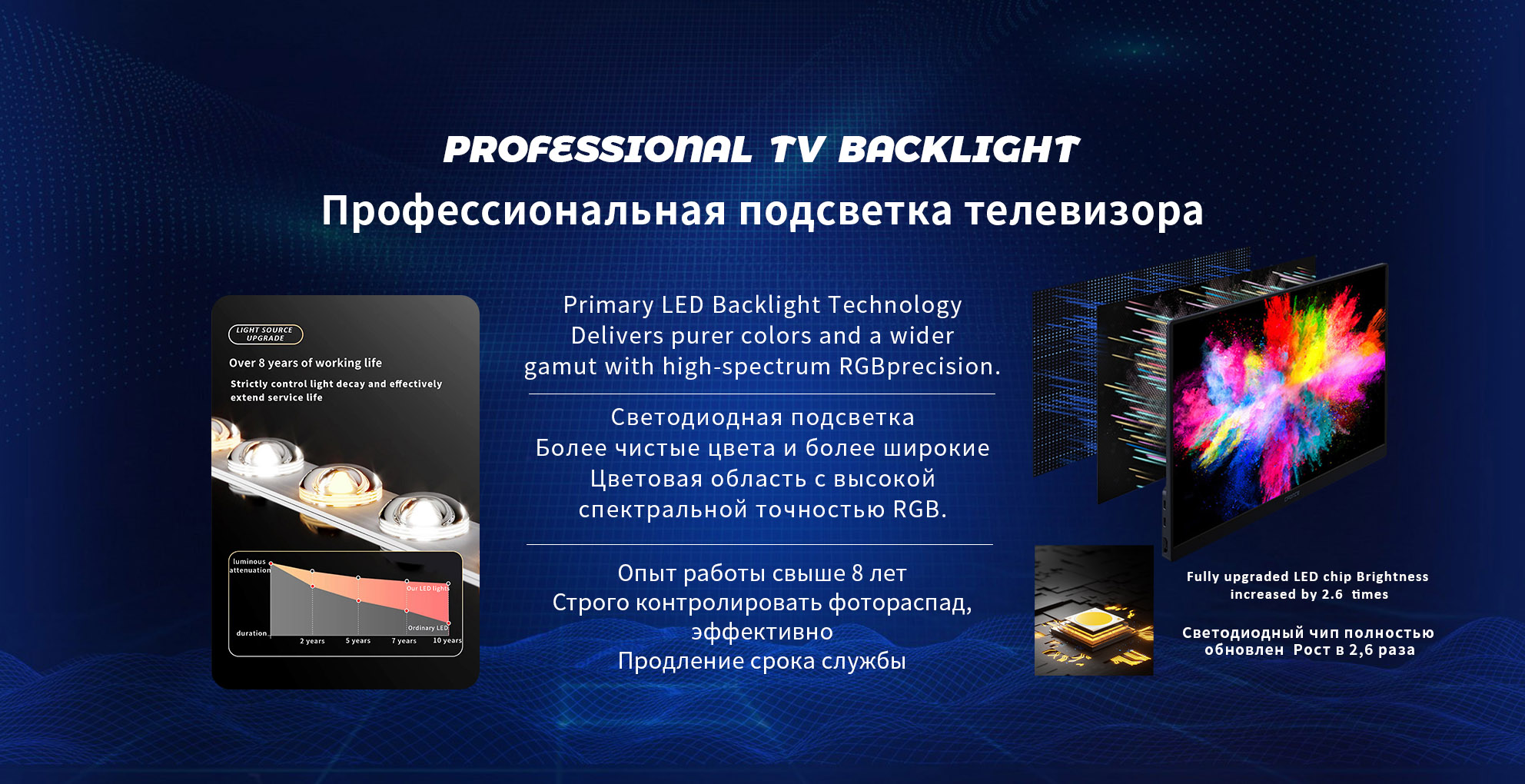
Thermal Management Expertise: LED brightness and lifespan are inversely related to operating temperature. Our engineering incorporates advanced materials and circuit designs for efficient heat dissipation. This prevents brightness degradation over time and ensures the product maintains its specification throughout its entire service life, supporting the long-term reliability of the television.
Proven Global Scalability: With our products exported to over 60 countries and serving numerous international brands, our manufacturing processes are proven to meet diverse global standards and deliver reliability at scale, with a daily production capacity reaching 100,000 strips.
Conclusion: Brightness as a Symphony of Engineering
Determining the correct brightness for a tv backlight strip is a multifaceted engineering decision. It balances the technical demands of panel technology and content with the physiological needs of the viewer. The goal is not merely a bright screen, but a visually comfortable, contrast-rich, and immersive picture that performs reliably over years of use.
Success hinges on partnering with a manufacturer that possesses the technical depth to design to exacting specifications and the operational excellence to produce with unwavering consistency. It requires a partner that views the backlight not as a commodity, but as the core engine of the visual experience. With a decade of focused innovation, a portfolio of thousands of validated specifications, and a commitment to precision manufacturing, we are dedicated to providing that essential partnership, enabling the creation of televisions that truly captivate audiences.