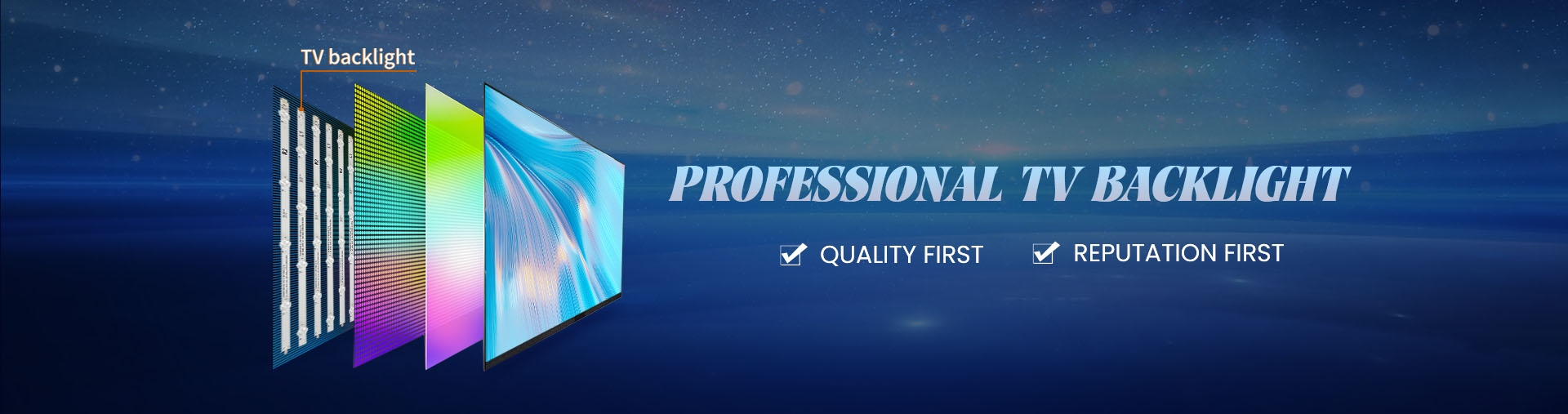
A tv backlight strip is the core optical component that powers light emission for liquid crystal display televisions, as LCD panels themselves do not produce light. This component is responsible for delivering uniform, stable brightness across the entire screen, directly determining the display effect, color accuracy and service life of a television. In the global display industry, the demand for high-performance TV backlight strips continues to rise with the upgrade of display technologies, and the tv Led Backlight Strip has become the mainstream choice for mainstream television production due to its energy efficiency and durability.
The structure of a TV backlight strip is highly precise, consisting of LED lamp beads, a circuit board, optical lenses, heat conduction materials and protective coatings. Each part works in synergy: LED lamp beads provide the primary light source, the circuit board ensures stable current transmission, optical lenses optimize light diffusion and uniformity, and heat conduction materials reduce light decay caused by high temperatures. For high-quality TV backlight strip production, the assembly tolerance of lamp beads must be controlled within ±0.05mm, a standard that directly affects the overall light emission consistency of the strip.
Main types of TV backlight strips
TV backlight strips are mainly divided into two categories according to the light emission method, each with unique application scenarios and technical characteristics, and both types are core product lines of professional manufacturing enterprises.
Direct-lit TV backlight strips Installed directly behind the LCD panel, this type uses a dense array of lamp beads to achieve full-screen light coverage. It features high brightness and excellent uniformity, and is the preferred solution for large-size and high-resolution televisions. The direct-lit design can effectively reduce screen bright spots and dark areas, and the brightness difference of the whole screen can be controlled within ±5%.
Side-entry TV backlight strips Placed on the four sides of the display module, the light is transmitted to the entire screen through the light guide plate. This type is characterized by thin volume and low power consumption, and is widely used in slim and portable television models. The side-entry TV backlight strip has strict requirements on the light guide efficiency of the light guide plate, and the light utilization rate needs to reach more than 90% to meet the display requirements.
Key performance indicators of TV backlight strip
When manufacturing and selecting TV backlight strips, several core performance indicators need to be focused on, which are the key to ensuring product quality and user experience. These indicators are also the core testing items in the production process of professional manufacturers.
Brightness and uniformity: The standard brightness of mainstream TV backlight strips is 300-800 nits, and the uniformity of the effective display area must reach more than 95% to avoid visual discomfort caused by uneven screen brightness.
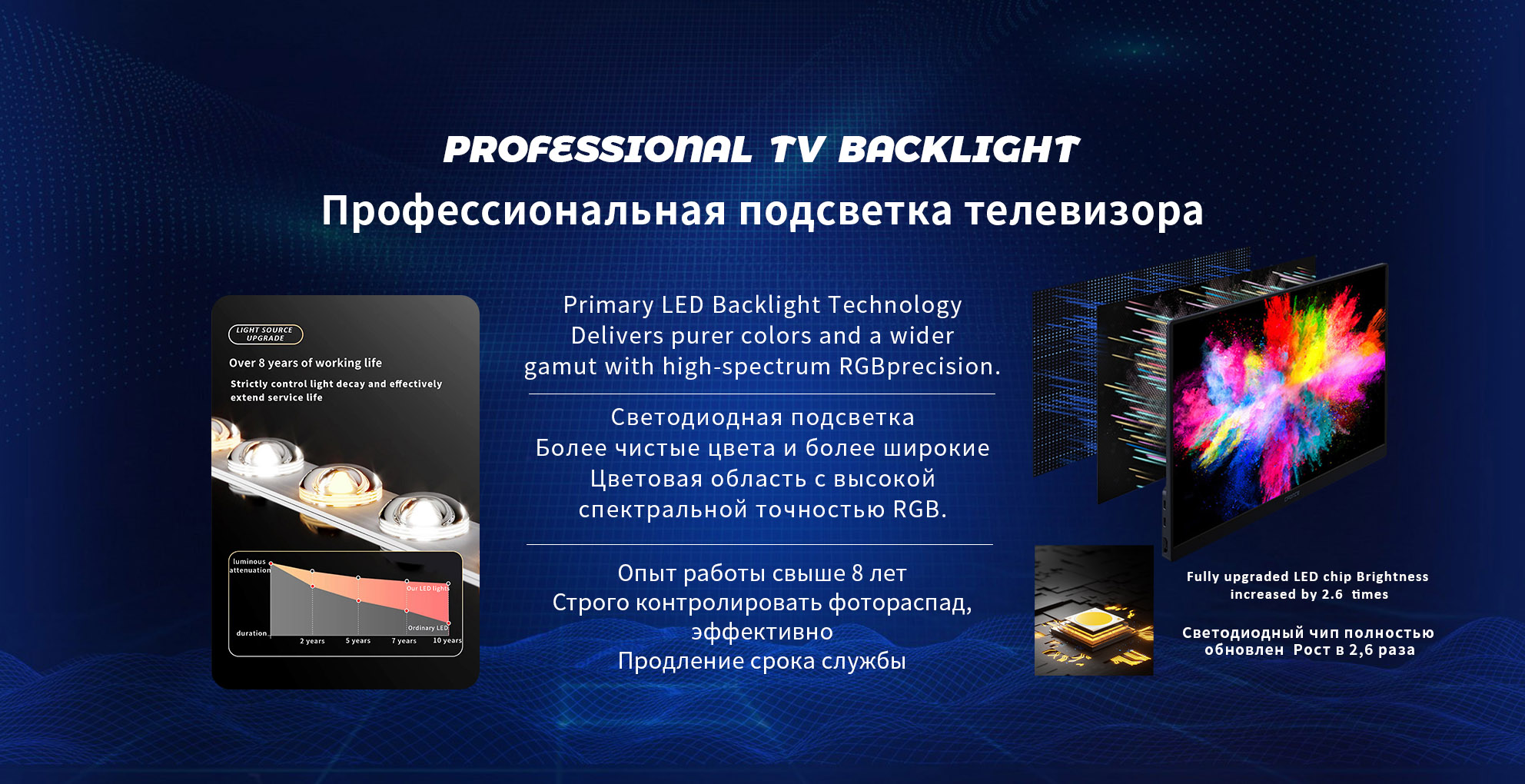
Color gamut coverage: High-quality tv led backlight strip can achieve 92% DCI-P3 or 110% NTSC color gamut coverage, restoring more realistic and vivid screen colors.
Service life: Under normal working conditions, the light decay of qualified TV backlight strips is less than 30% after 50,000 hours of use, and the continuous working stability is one of the important evaluation criteria.
Energy efficiency: The light efficiency of the latest TV backlight strips has reached more than 150 lm/W, which is far higher than the traditional light source, and effectively reduces the power consumption of the whole television.
TV backlight strip manufacturing process and quality control
The production of TV backlight strips is a highly precise manufacturing process that requires strict control of each link to ensure product consistency and reliability. A professional manufacturer has a complete eight-step production process, covering from raw material processing to finished product delivery, and each step is equipped with special testing equipment.
Printing: Precision circuit printing on the substrate, with line width and spacing controlled to micron level to ensure stable current transmission.
Lamp bead mounting: Use high-precision mounting equipment to place LED lamp beads, with the mounting position error controlled within ±0.05mm.
Reflow soldering: Adopt lead-free soldering technology to ensure the firmness of the solder joints and meet environmental protection standards.
Dispense: Coating heat conduction and protective glue on the surface of the lamp beads to improve heat dissipation performance and anti-corrosion ability.
Lens placement: Accurate installation of optical lenses to optimize light emission angle and diffusion effect.
Glue cures: Use thermal or UV curing technology to solidify the glue layer, ensuring no deformation and no degumming for a long time.
Test: Carry out full performance testing on the finished semi-finished products, including brightness, color temperature, voltage, current and other more than 20 test items.
Packaging and shipping: Adopt anti-static and moisture-proof packaging to avoid product damage during transportation.
Quality control runs through the entire production process. Professional manufacturers have obtained ISO9001 quality management system certification and ROHS environmental protection certification, and the content of harmful substances such as lead and cadmium in products is strictly in line with international standards. The cadmium content is controlled below 0.01%, and the content of lead and mercury is below 0.1%. All products must pass 100% performance testing before leaving the factory, and the unqualified rate is controlled below 0.03%.
Industry development and manufacturing advantages of TV backlight strips
The global TV backlight strip market is showing a steady growth trend driven by the upgrading of display technologies such as Mini LED. In 2025, the global Mini LED backlight display equipment market scale reached 143 billion US dollars, a year-on-year increase of about 20%, and the demand for high-precision TV backlight strips is growing rapidly. As a leading enterprise in the TV backlight strip manufacturing industry, StarSharp has formed core competitive advantages in product research and development, production capacity, quality control and global supply through ten years of deep cultivation.
Core advantages of StarSharp in TV backlight strip manufacturing
| Advantage Category | Specific Strengths |
|---|
| Product diversity | More than 5000 different specifications and models of TV backlight strips, covering direct-lit, side-entry and commercial display special types |
| Production capacity | 10 automated production lines, with a daily output of up to 100,000 TV backlight strips and an annual production and sales capacity of more than 26 million units |
| Precision manufacturing | Adopt industry-leading assembly equipment, the assembly tolerance is controlled within ±0.05mm, and the product consistency is at the industry leading level |
| Quality certification | Complete ISO9001, ROHS and patent certifications, all products meet international environmental protection and quality standards |
| Global supply capacity | Products are exported to more than 60 countries and regions, with a complete global supply chain and after-sales service system |
| R&D innovation | Focus on the research and development of new technologies such as Mini LED tv led backlight strip, and keep pace with the industry's technological upgrading |
StarSharp adheres to the customer-centric concept, takes service, quality and innovation as the core of development, and can provide customized TV backlight strip solutions according to different product requirements. The company's production process fully realizes automation and intelligence, which not only improves production efficiency but also effectively reduces production costs, providing high-cost-performance products for the global display industry.
Daily maintenance and performance optimization of TV backlight strips
The service life of a TV backlight strip is closely related to its use and maintenance conditions. Scientific use and regular maintenance can effectively extend its service life. For television manufacturers, optimizing the matching design of TV backlight strips and display modules can further improve the overall performance of the product.
Temperature control: The working temperature of the TV backlight strip should be controlled below 50℃. It is necessary to optimize the heat dissipation structure of the television to avoid light decay caused by high temperature.
Current stability: Use a constant current drive power supply to ensure that the working current of the TV backlight strip is stable, and avoid the damage of lamp beads caused by current fluctuation.
Anti-static protection: In the assembly process, anti-static operation must be carried out to avoid the breakdown of LED lamp beads by static electricity.
Optical matching: Reasonably match the TV backlight strip with the light guide plate, diffusion film and other optical components to optimize the light utilization rate and screen display effect.
With the continuous development of display technologies such as 4K, 8K and Mini LED, the technical requirements for TV backlight strips are constantly improving. High brightness, high color gamut, low power consumption and high reliability have become the main development directions of the industry. Professional manufacturing enterprises are constantly innovating in raw material selection, process optimization and R&D design, and promoting the continuous upgrading of TV backlight strip products. As an important part of the display industry chain, the TV backlight strip manufacturing industry will continue to play a core role in the future, and high-quality manufacturing capacity will become the key core competitiveness of enterprises in the market competition.