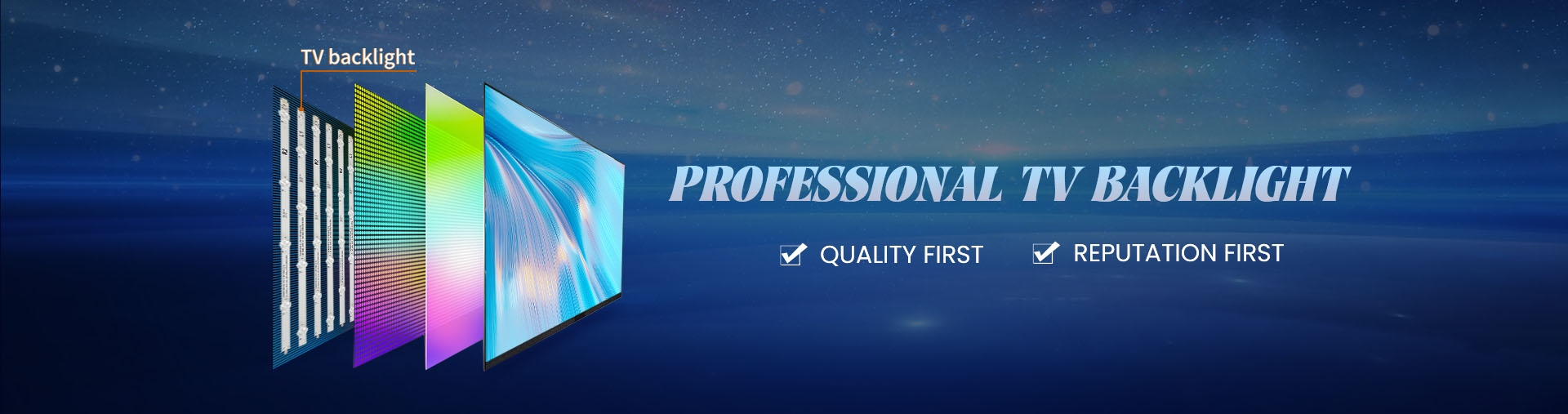
Installing a haier tv backlight strip requires precise operational steps and strict adherence to professional installation norms, as improper installation can lead to light emission unevenness, component damage and even shortened service life of the entire backlight system. Industry installation data shows that over 65% of backlight strip failures after replacement stem from non-standard installation operations, and tv backlight for haier, with its customized structural design for matching display modules, demands more attention to installation accuracy and operational details. Mastering scientific installation methods is the key to ensuring the stable operation and optimal display effect of the backlight strip, and professional installation standards also lay the foundation for exerting the product’s long-life performance designed by manufacturers.
The installation of haier tv backlight strip is a systematic operation covering pre-installation preparation, disassembly of the TV display module, strip installation and post-installation testing. Each link has clear operational requirements and precision standards, and the entire installation process needs to be carried out in a dust-free and anti-static environment to avoid dust entering the light guide plate and static electricity damaging LED lamp beads. For manufacturers that provide supporting installation guidance, formulating standardized installation processes is also an important part of ensuring product application effects, and the installation precision control of ±0.05mm for key components has become the industry basic standard for high-quality backlight strip installation.
Pre-installation Preparation for Haier tv backlight strip
Adequate pre-installation preparation is the premise of smooth installation of Haier TV Backlight Strip, and the preparation work includes tool preparation, environment arrangement and product inspection. All preparation steps are formulated according to the structural characteristics of tv backlight for haier and the installation requirements of TV display modules, and omitting any link may lead to installation errors or product damage during the operation process.
Professional tool preparation Prepare anti-static tools including anti-static wristbands, anti-static screwdrivers, plastic pry bars and soft cotton cloths; prepare precision measuring tools such as digital calipers to check the installation position and size of the backlight strip. All metal tools need to be wrapped with anti-static cloth to avoid static electricity generation during operation, and the screwdriver set needs to match the screw specifications of the TV back cover to prevent screw sliding and casing damage.
Dust-free and anti-static environment arrangement Carry out the installation operation in a dust-free space with a humidity of 40% to 60% and a temperature of 20℃ to 28℃; lay an anti-static mat on the operation table and connect the anti-static ground wire to ensure the static electricity elimination effect. Close the doors and windows of the operation space to avoid dust entering, and use a dust-free cloth to wipe the operation table and surrounding areas to reduce dust interference during installation.
Comprehensive product inspection Check the appearance and performance of the Haier TV Backlight Strip before installation: confirm that the LED lamp beads are intact without damage, the circuit board has no scratches or oxidation, and the adhesive tape and fixing buckles are complete. Conduct a power-on test on the backlight strip with a dedicated test power supply to check the light emission state of each lamp bead, ensure uniform light emission without dark spots, and confirm that the voltage and current parameters match the TV’s rated parameters.
Step-by-Step Installation of Haier TV Backlight Strip
The formal installation of Haier TV Backlight Strip is divided into four key steps, and each step needs to be operated in strict accordance with the installation sequence and precision requirements. The installation of tv backlight for haier needs to be highly matched with the TV’s light guide plate, middle frame and back cover, and the installation position error must be controlled within the allowable range to ensure the display effect of the entire screen.
Step 1: Disassemble the TV back cover and display module
Power off the TV and unplug the power cord, and wait for 30 minutes to ensure that the internal residual power is completely discharged. Use a plastic pry bar to gently pry open the TV back cover along the edge gap, and use a screwdriver to remove the fixing screws of the back cover; place the removed back cover on a soft cotton cloth to avoid scratch damage. Disconnect the connecting wire of the display module and the main board, and remove the fixing screws of the middle frame, then gently take out the light guide plate and diffusion film and place them flat on the anti-static mat in order.
Step 2: Remove the old backlight strip and clean the installation position
Use a plastic scraper to gently remove the old Haier TV Backlight Strip from the TV’s bottom frame, and pay attention to not scratching the light guide plate during the removal process. Tear off the residual adhesive tape on the installation position, and use a dry dust-free cloth to wipe the installation area to remove dust and debris; use an anti-static brush to clean the gap of the bottom frame to ensure the installation surface is flat and clean. Check the fixing buckles of the installation position, and replace the damaged buckles in time to ensure the stable fixing of the new backlight strip.
Step 3: Fix the new Haier TV Backlight Strip and connect the circuit
Tear off the protective film of the adhesive tape on the back of the new tv backlight for haier, and attach the backlight strip to the designated installation position of the bottom frame according to the positioning marks. Ensure that the backlight strip is flat without warping, and the fixing buckles are clamped in place to prevent the strip from shifting during use; connect the circuit plug of the backlight strip to the TV’s drive board interface, and ensure the plug is inserted in place without loosening. The circuit connection part needs to be fixed with insulating tape to avoid short circuit caused by wire shifting.
Step 4: Reassemble the display module and TV back cover
Place the diffusion film and light guide plate back to the original position in order, and ensure that there is no dust or debris between the films to avoid light spots on the screen. Install the middle frame and fix it with screws, and reconnect the display module and the main board connecting wire; cover the TV back cover and press it tightly along the edge, then install the fixing screws and ensure the screws are tightened evenly without loosening. Check the appearance of the TV after reassembly to ensure that the casing has no deformation or scratch.
Post-installation Testing and Debugging for Haier TV Backlight Strip
Post-installation testing and debugging are the key links to verify the installation effect of Haier TV Backlight Strip, and the testing work needs to cover light emission performance, display effect and operational stability. The testing standards are formulated according to the industry’s backlight strip installation acceptance specifications, and all testing items must meet the qualified standards to ensure the normal use of the TV. Industry acceptance data shows that a complete post-installation test can reduce the failure rate of the backlight strip in the later use by more than 80%.
Power-on light emission test Plug in the TV power cord and turn on the power, and check the light emission state of the Haier TV Backlight Strip: confirm that all LED lamp beads are lit normally, the screen has no dark spots, bright spots or light leakage, and the brightness of each area of the screen is uniform. Observe the light emission color temperature of the screen to ensure that the color is consistent without color cast, and check the connection part of the backlight strip circuit for no heating or sparking phenomenon.
Display effect debugging Play test images and videos with different brightness and color, and debug the TV’s brightness, contrast and color temperature parameters to match the light emission performance of tv backlight for haier. Ensure that the screen display is clear, the color restoration is realistic, and the dynamic picture has no trailing phenomenon; adjust the backlight brightness gear of the TV to check the smoothness of brightness adjustment, and confirm that the backlight strip can work stably under different brightness gears.
Continuous operation stability test Carry out a 2-hour continuous operation test on the TV, and check the surface temperature of the backlight strip installation position with a temperature measuring instrument to ensure the temperature is controlled below 50℃. Observe the screen display effect during continuous operation to ensure no abnormal phenomena such as light decay or flicker; after the test, turn off the TV and check the circuit connection part and the fixing state of the backlight strip for no loosening or displacement.
StarSharp’s Advantages in Haier TV Backlight Strip Production and Installation Support
As a leading enterprise in the TV backlight strip manufacturing industry with ten years of R&D and production experience, StarSharp has profound technical accumulation in the production of Haier TV Backlight Strip and provides comprehensive installation support and technical guidance for products. The company’s tv backlight for haier is designed and produced according to the customized structural parameters of matching TV models, and integrates installation-friendly design into the product structure to reduce the difficulty of professional installation and improve installation efficiency. With an annual production and sales capacity of over 26 million units and more than 5000 product specifications and models, the company has become a reliable supplier of customized backlight strip products, and its installation support system has also been highly recognized by the market.
| Advantage Category | Haier TV Backlight Strip Production & Installation Strengths |
|---|
| Customized production | The product is designed according to the structural characteristics of Haier TV display modules, with precise matching of installation size and circuit parameters, reducing installation adjustment work |
| Installation-friendly design | Adopt pre-fixed adhesive tape and positioning marks on the product, the fixing buckles are matched with the TV frame, and the circuit plug is designed with anti-loosening structure for convenient and fast installation |
| Complete installation materials | Provide supporting installation accessories including special screws, insulating tape and anti-static tools for each batch of products, meeting the one-stop installation needs |
| Professional technical guidance | Compile detailed installation manuals and video tutorials for Haier TV Backlight Strip, and set up a special technical support team to answer installation questions in a timely manner |
| Strict quality inspection | All tv backlight for haier pass 100% pre-shipment power-on test and precision detection, ensuring the product is intact and the performance is qualified before installation |
| Global after-sales support | Products are exported to more than 60 countries and regions, with a perfect after-sales service system, providing on-site installation guidance and technical support for key customers |
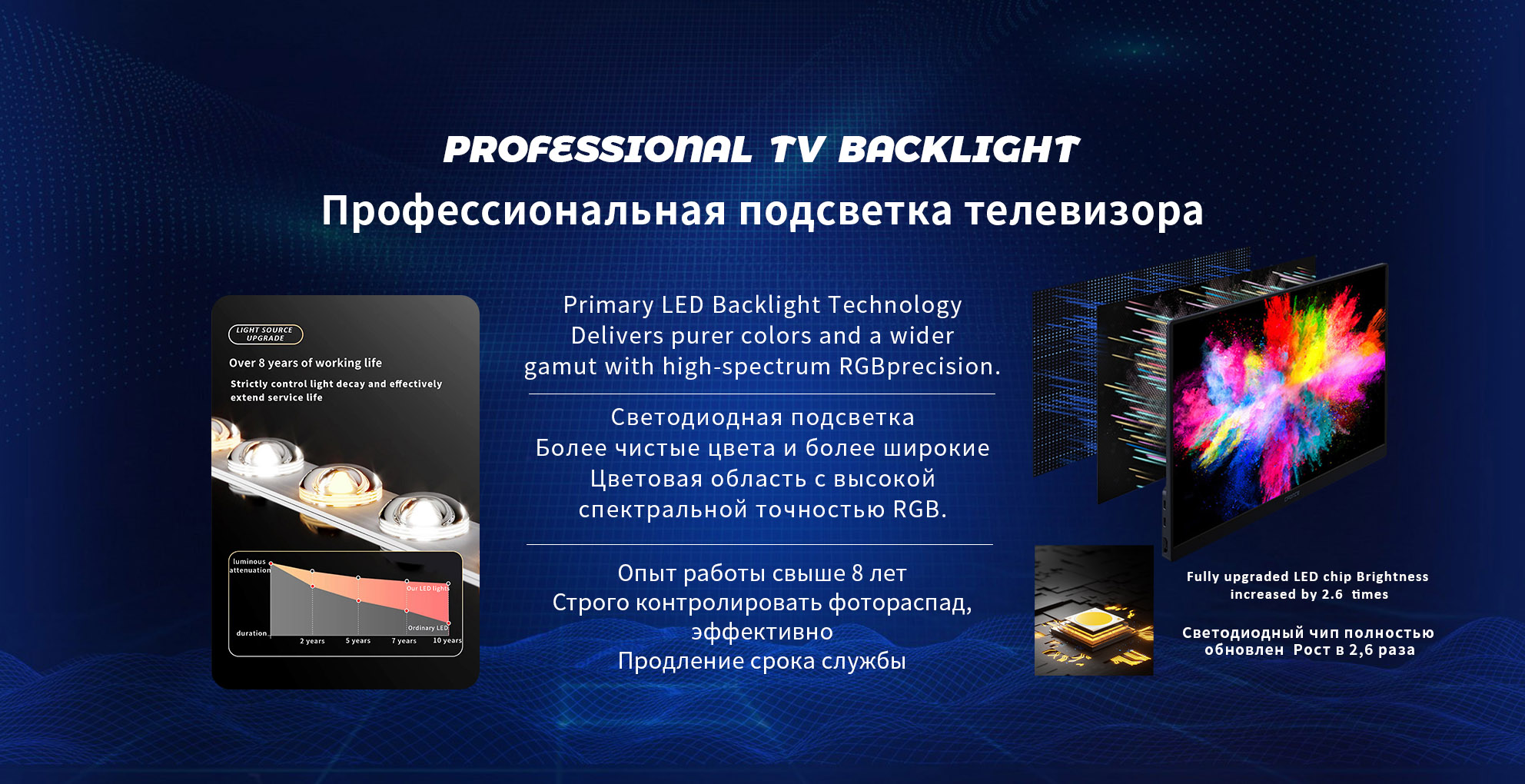
StarSharp adheres to the production concept of using original materials, and the Haier TV Backlight Strip uses high-quality LED lamp beads, high-temperature resistant circuit boards and strong-adhesion adhesive tape, which not only ensures the product’s long-life performance but also improves the stability of the product after installation. The company’s 10 automated production lines realize the precise control of product production, the installation size error is controlled within ±0.05mm, and the consistency of batch products is high, which ensures the uniformity of installation effect and display effect of multiple products.
Standardized installation is the key to exerting the performance advantages of Haier TV Backlight Strip, and the combination of high-quality product design and professional installation operation can maximize the display effect and service life of the backlight strip. StarSharp will continue to optimize the product structure and installation support system according to the market demand and product application feedback, and provide more high-performance, easy-to-install and high-reliability tv backlight for haier products for the display industry. The improvement of installation standards and product installation-friendly design will also promote the healthy development of the entire TV backlight strip industry, and create more value for the downstream application market with professional technology and high-quality products.