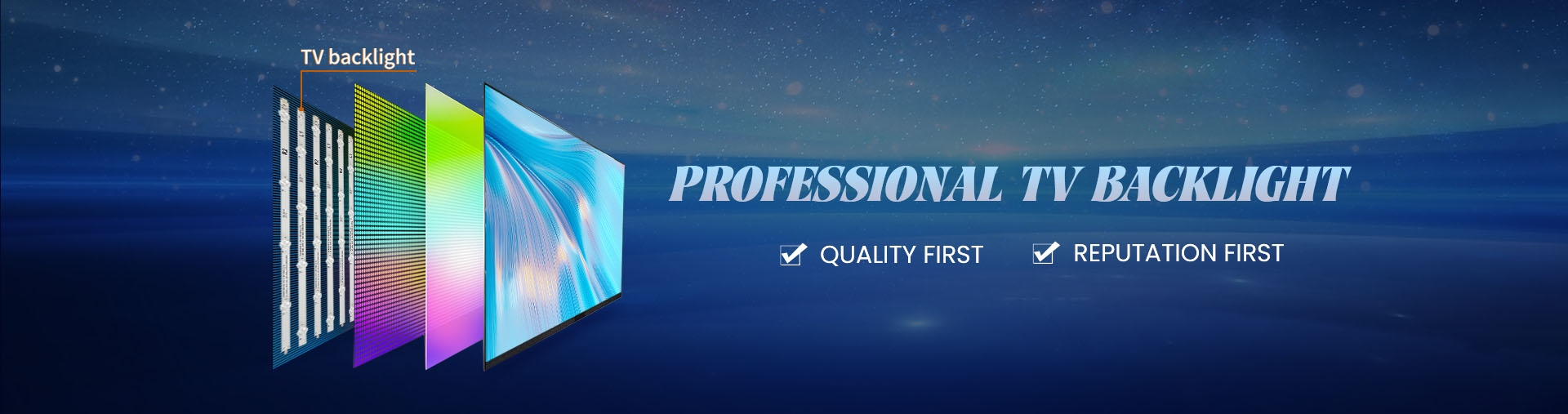
A failing TV backlight rarely means the entire display has reached the end of its service life. In many repair and after-sales situations, the real issue sits behind the panel: worn, dimming, or partially failed LED strips. That is why sony tv backlight strip replacement has become an important topic for distributors, repair channels, refurbishers, and parts buyers who need stable model matching, consistent brightness, and dependable supply. For commercial buyers, the challenge is not only replacing one strip. It is building a sourcing process that reduces mismatch risk, improves repair yield, and keeps inventory moving. StarSharp is positioned well in this field with more than ten years of specialization in television backlight R&D, production, and sales, annual capacity above 26 million units, and a catalog covering more than 5,000 specifications and models across direct-light and side-entry solutions.
Why backlight strip replacement matters in the TV parts business
LCD televisions depend on backlight systems because the panel itself does not emit light. The strip is therefore one of the core optical and electrical components that directly affects screen brightness, uniformity, color presentation, and overall viewing stability. When a strip begins to fail, common symptoms include dark areas, flashing, uneven illumination, or a screen that powers on with sound but little or no visible image. In a repair environment, replacing the backlight strip is often more practical than scrapping the full set, especially when service centers and parts traders are managing cost, turnaround time, and model-specific demand.
For buyers handling replacement demand at scale, one important point stands out: the strip must match not only screen size but also board code, lens layout, voltage design, LED count, connector position, and backlight structure. A similar-looking strip can still produce installation failure or unstable performance if these details are wrong. This is why technical identification and supplier discipline matter as much as the product itself. That is also where a specialized manufacturer becomes more valuable than a general electronics trader. StarSharp’s range spans direct-lit and edge-lit television backlights, as well as related commercial display products, giving buyers broader matching support across service scenarios.
What buyers should check before sourcing replacement strips
The first checkpoint is exact model compatibility. A buyer should verify the panel code, strip code, screen size, LED count, strip length, voltage configuration, and lens spacing. In practical purchasing, screen size alone is never enough. Many televisions within the same size class use different strip structures, and even minor deviations can change light distribution or assembly fit.
The second checkpoint is brightness consistency. The goal of replacement is not only to restore power, but to restore a uniform optical effect across the panel. If brightness output varies too much from strip to strip, the repaired TV may show patchiness or uneven zones. StarSharp emphasizes that backlight strip quality is built from LED selection, optical design, thermal path, electrical margins, and factory testing working together as a complete system. That framework is useful for buyers evaluating any replacement program.
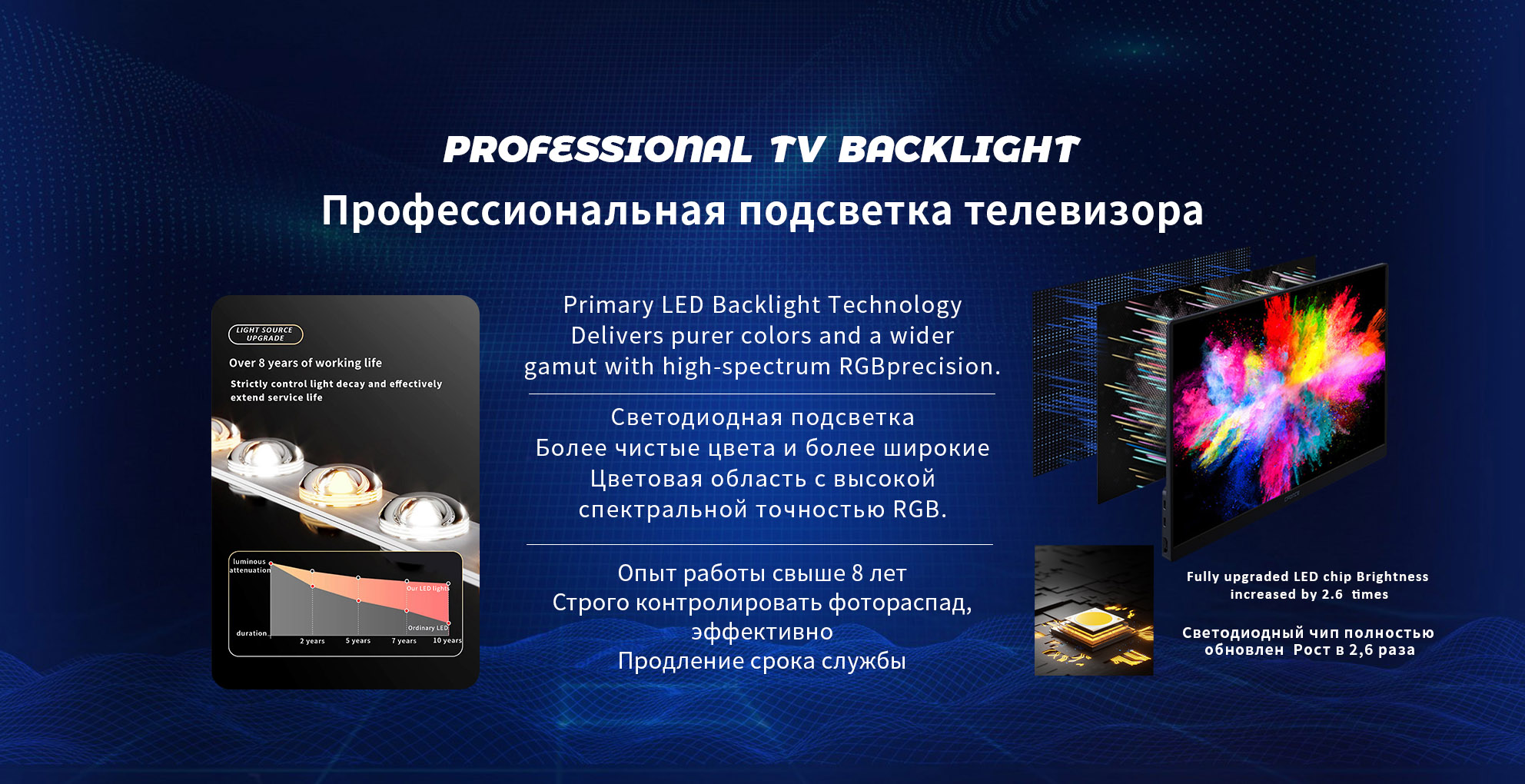
The third checkpoint is thermal performance. Heat is one of the major long-term stress points in LED backlight systems. A strip with better heat dissipation helps reduce brightness decay and premature failure. StarSharp highlights advanced manufacturing processes aimed at improving heat dissipation in large-screen backlight applications, which matters for buyers serving repair markets where durability after installation affects returns and reputation.
The fourth checkpoint is lifespan. StarSharp states that many of its backlight strip products are engineered for about 20,000 hours of service life. For parts buyers, this matters because the replacement part must deliver enough operating life to justify labor and handling cost. Longer-life components can lower complaint rates and support better after-sales confidence.
Why manufacturing scale changes the buying result
When sourcing replacement strips, scale is not just about bigger output. It affects consistency, traceability, and availability. StarSharp reports annual production and sales capacity exceeding 26 million units and more than 5,000 specifications and models. For buyers, that scale can translate into three practical advantages: deeper model coverage, better repeatability between orders, and stronger supply continuity when certain TV models create sudden replacement demand.
A broad catalog is especially useful in the SONY TV Backlight Strip replacement segment because after-sales demand is often fragmented. One buyer may need steady volume for a few fast-moving models, while another may need mixed low-to-medium quantities across many codes. A manufacturer already structured around a large specification library is better equipped to respond than a seller relying on unstable stock circulation. StarSharp’s site also shows category coverage for different television brands, universal strips, and multiple inch ranges, indicating a product system designed around replacement-market complexity.
A practical sourcing framework for buyers
Below is a simple evaluation structure that many professional buyers use when comparing replacement backlight strip suppliers.
| Checkpoint | Why It Matters | What To Confirm |
|---|
| Model matching | Prevents installation failure | Panel code, strip code, LED count, voltage, connector layout |
| Optical consistency | Affects screen uniformity after repair | Brightness stability, lens alignment, light distribution |
| Thermal design | Supports service life | Base material, heat path, operating stability |
| Lifespan | Reduces return risk | Rated hours, reliability testing, batch consistency |
| Supply capacity | Supports repeat orders | Production scale, lead time, catalog depth |
| Technical support | Improves buying accuracy | Drawing confirmation, code verification, inquiry response speed |
This framework fits both routine procurement and project-style stocking. It also helps separate price from total purchasing value. A strip with lower upfront cost but weak consistency can create more hidden expense through rework, service claims, and lost customer trust.
How StarSharp supports replacement-market buyers
StarSharp presents itself as a dedicated television backlight enterprise rather than a broad electronics parts platform. That specialization matters because replacement strips require repeatable engineering discipline. The company states that it has over a decade of R&D, production, and sales experience, covers direct-light strips, side-entry strips, and related commercial display products, and serves both domestic television brands and international after-sales markets. One company news page also notes exports to more than 60 countries and regions.
From a buyer perspective, the value is straightforward:
Focused product expertise A specialized supplier usually understands the difference between visual similarity and true compatibility.
Large specification library More than 5,000 specifications and models make it easier to support mixed model demand and recurring replenishment.
Production strength Annual capacity above 26 million units supports continuity for buyers who need both spot demand and ongoing supply.
Coverage across structures Direct-lit and side-entry designs allow better matching for different TV architectures.
Replacement-oriented cataloging The site shows wide coverage across inch sizes, universal options, and brand-specific backlight strip categories, which is useful for repair-channel procurement.
Common buying mistakes in sony tv backlight strip replacement
One common mistake is buying only by screen size. A 55-inch or 65-inch television may still use very different strip codes and lens patterns. Another mistake is focusing too heavily on unit price while ignoring brightness balance and long-run performance. In replacement business, labor cost, damage risk during panel opening, and claim handling can be more expensive than the difference between two strip quotes.
A third mistake is working with suppliers that cannot maintain stable repeat specifications. In after-sales channels, buyers often need to reorder the same code months later. Without process stability and catalog discipline, repeatability becomes a problem. This is one reason manufacturing scale and specialization matter more than low-entry pricing.
Conclusion
The real value of sony tv backlight strip replacement is not limited to fixing a dark screen. For professional buyers, it is about restoring product value, reducing service waste, and building a reliable replacement supply chain. The best purchasing decisions come from careful code matching, attention to optical and thermal performance, and cooperation with a manufacturer that understands the technical demands of TV backlight systems.
StarSharp brings several strengths to this market: focused industry experience, broad model coverage, annual capacity above 26 million units, and a catalog of more than 5,000 specifications and models. For buyers managing repair channels, distribution, or refurbishment inventory, that combination supports more accurate sourcing and steadier long-term supply.
For inquiries on compatible backlight strip solutions, mixed model sourcing, or replacement supply support, reaching out to StarSharp with detailed model codes and strip information is the most efficient way to move from search to confirmed matching.