Uneven brightness on a TV screen is usually not a single visible problem, but the result of several hidden factors inside the backlight system. For repair distributors, refurbishing factories, and spare parts buyers, the real concern is not only how to solve one uneven backlight case, but how to reduce repeated failure, customer complaints, and model mismatch during batch replacement. A tv backlight uneven brightness issue may come from aged LED beads, poor optical lens alignment, unstable current, damaged diffuser sheets, or incorrect strip specifications. As a focused tv backlight manufacturer, StarSharp supports replacement sourcing with broad model coverage, batch testing, and stable supply for repair and wholesale channels.
Common Reasons Behind Uneven Backlight
Led Backlight Strips work as a group system. When one strip, one bead, or one optical lens performs differently, the final screen brightness becomes inconsistent. The most common cases include partial dark zones, bright spots, cloud-like shadows, vertical dim areas, or edge brightness differences.
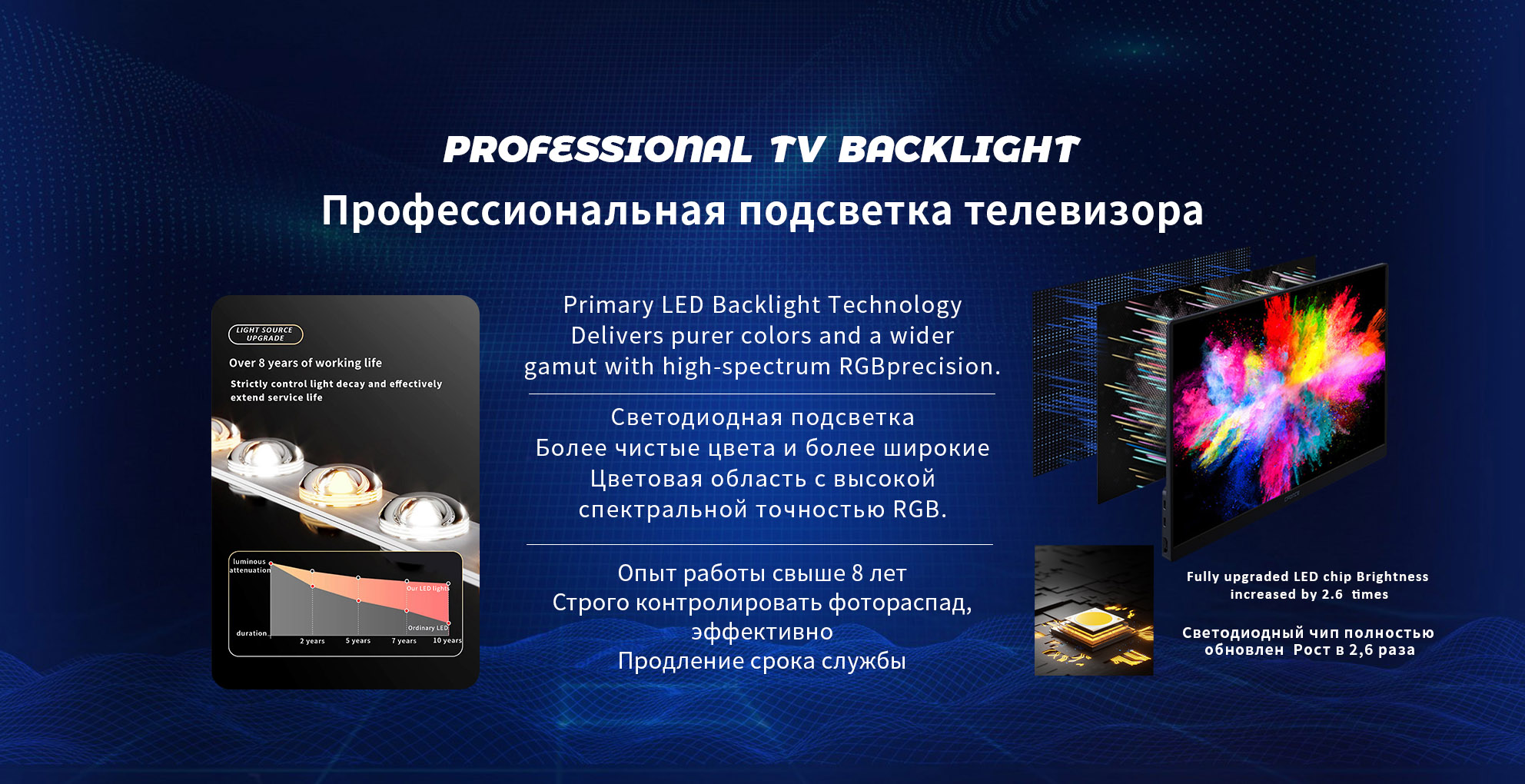
LED lumen maintenance is usually described by the L70 concept, which means the LED output has decreased to 70% of its initial brightness. Industry lighting references use this value to explain useful LED light output over time, so brightness loss is a normal aging pattern rather than sudden failure only.
Main Failure Factors
| Cause | Screen Symptom | Procurement Risk |
|---|
| LED bead aging | Dark area or low brightness | Shorter repair life |
| Lens displacement | Bright spot or halo | High return rate |
| Wrong strip version | Uneven distribution | Model mismatch |
| Poor heat dissipation | Fast brightness decay | Repeated warranty issue |
| Unstable current | Flicker or partial dimming | Difficult diagnosis |
Why Model Matching Matters
Many TV models look similar from the outside, but the backlight strip may differ in length, LED quantity, voltage, connector position, optical lens pitch, and left-right layout. Using an approximate replacement can light up the panel, but it may not restore uniform brightness. This is why a professional led parts supplier should confirm model code, strip code, panel size, LED voltage, and set quantity before shipment.
StarSharp has more than 5,000 product specifications and supports broad TV backlight replacement needs. Its public company information also states 10 automated production lines, daily output up to 100,000 strips, ISO9001 and RoHS-related quality control, and export experience to 60+ countries.
Heat Control and Optical Consistency
Heat is one of the main reasons behind uneven brightness. When LED beads run at high temperature for a long time, brightness decay becomes faster. Aluminum-based backlight structures are commonly used because aluminum has much better thermal conductivity than ordinary insulating board materials. Technical PCB references commonly place aluminum around 200 W/mK, while many plastic or FR-4 materials are far lower, which explains why thermal design directly affects LED stability.
Optical consistency is another key point. Lens height, glue position, reflector sheet condition, and strip straightness all affect light spread. During mass repair supply, a small optical deviation can cause visible screen complaints after installation.
How StarSharp Helps Reduce Uneven Brightness Risk
StarSharp focuses on tv led backlight strip production and replacement supply. For common repair channels, we check strip length, LED count, voltage, connector direction, screw hole position, lens type, and set matching before arranging production or shipment. For bulk orders, sample confirmation can be arranged before full batch delivery.
Our process also focuses on brightness inspection, visual checking, continuity testing, packaging protection, and model labeling. This helps reduce the chance of receiving mixed versions, bent strips, damaged lenses, or unstable batches.
Procurement Suggestions
Before ordering replacement strips, prepare the TV model, panel code, original strip code, quantity per set, LED voltage, and clear photos of the strip front and connector area. For higher-volume repair businesses, building a model-based purchasing list is more reliable than ordering only by TV size.
A stable replacement program should not only solve one screen problem. It should help repair teams reduce repeated diagnosis, shorten sourcing time, and maintain consistent after-service quality. StarSharp can support model checking, sample supply, and wholesale backlight strip production for long-term replacement demand.