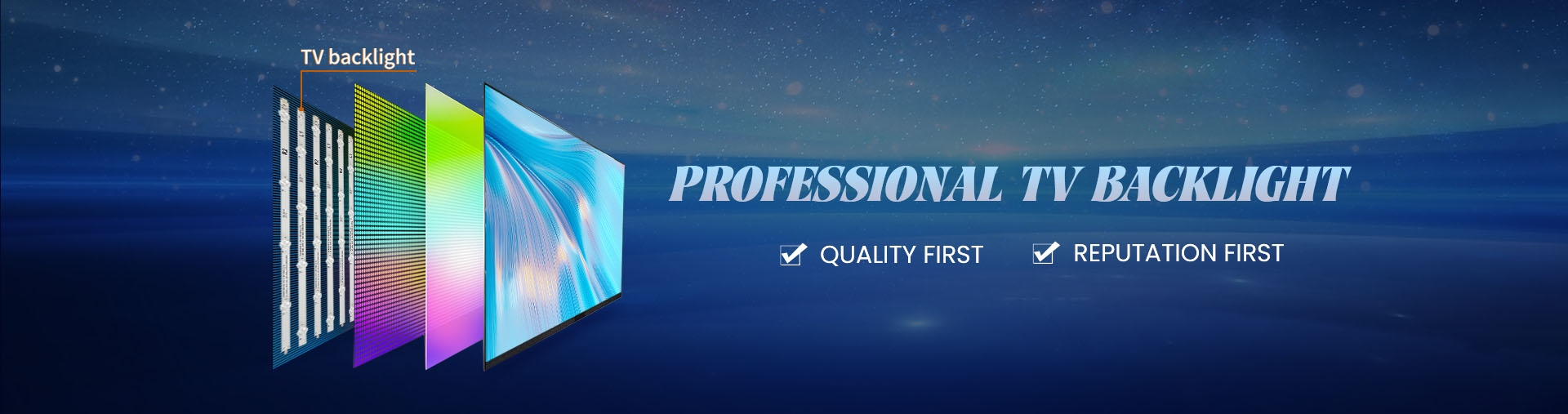
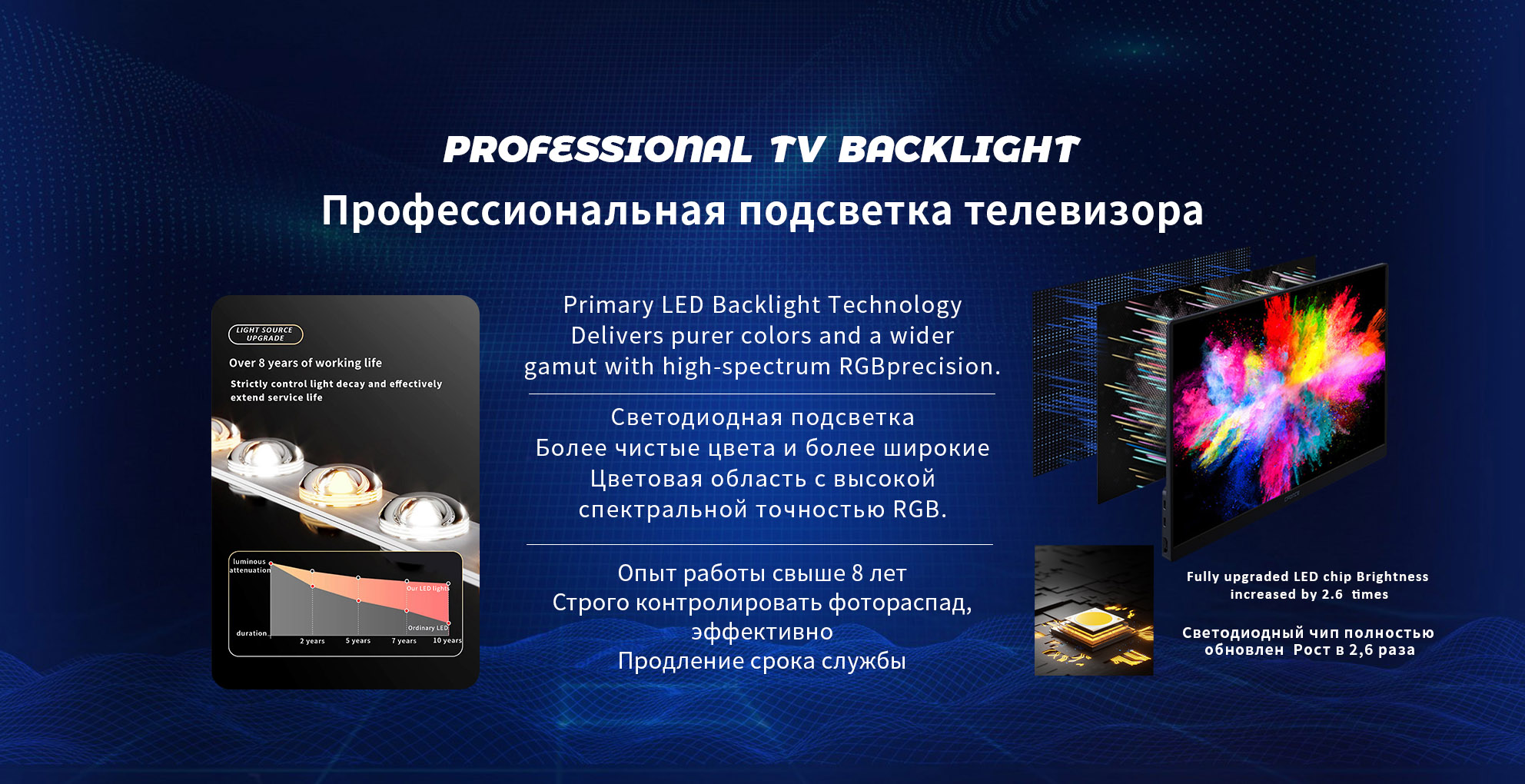
led tv backlights are commonly designed around edge-lit or direct-lit illumination structures. Edge-lit systems position LEDs near the edge of the display and distribute their light across the panel, while direct-lit systems place LEDs behind the viewing area. This structural difference affects strip shape, LED arrangement, optical components, replacement identification and the way light is distributed.
Where Are the LEDs Located?
The easiest distinction is their physical position.
Edge-lit backlights place LEDs along one or more edges of the display. Light travels through an optical structure that distributes illumination across the screen.
Direct-lit backlights arrange LEDs behind the LCD panel. Individual LED lenses help spread light over a wider area before it reaches the display layers.
This fundamental edge lit direct lit difference means their strips are not selected or replaced in the same way.
Edge-lit products may use longer, narrower strips containing LEDs placed relatively closely along an edge. Accurate LED positioning and interaction with the optical structure are important for uniform illumination.
Direct-lit systems can use multiple strips distributed across the rear of the panel. Each strip may have fewer LEDs, while optical lenses spread light into the space between LEDs.
Consequently, judging two products simply by screen size provides very little information about whether their backlight systems are compatible.
Which Design Requires More Strips?
There is no fixed answer.
A direct-lit television can use multiple separate PCBs across the panel, while an edge-lit assembly may use fewer long strips. Exact quantity depends on the panel design.
Buyers sourcing replacement parts should check the complete strip set instead of assuming a standard quantity for either backlight type.
What Specifications Matter for Replacement?
Regardless of design, several product characteristics should be confirmed:
| Specification | Edge-Lit | Direct-Lit |
|---|
| PCB dimensions | Critical | Critical |
| LED configuration | Critical | Critical |
| Optical position | Edge structure | Rear panel layout |
| Lens arrangement | Design dependent | Commonly important |
| Mounting position | Panel specific | Panel specific |
| Electrical matching | Required | Required |
A tv backlight solution supplier needs the actual application reference because backlight category alone cannot identify the required strip.
Does One Type Produce Better Picture Quality?
Backlight structure influences thickness, illumination behavior and panel design, but overall television image quality depends on much more than the position of the LEDs.
LCD characteristics, optical films, electronics, LED control and panel construction all contribute to the final display.
For replacement purchasing, compatibility is therefore more useful than attempting to rank one backlight architecture as universally superior.
Why Should Buyers Know the Difference?
Understanding the backlight architecture makes product identification faster. It helps buyers recognize why a long edge strip cannot be replaced with a visually unrelated rear-mounted strip even when both belong to televisions of the same size.
The best sourcing practice is to identify the original backlight type first, then verify PCB references, dimensions, LED configuration and electrical characteristics. That process reduces selection errors and makes repeat orders easier to manage across different display designs.