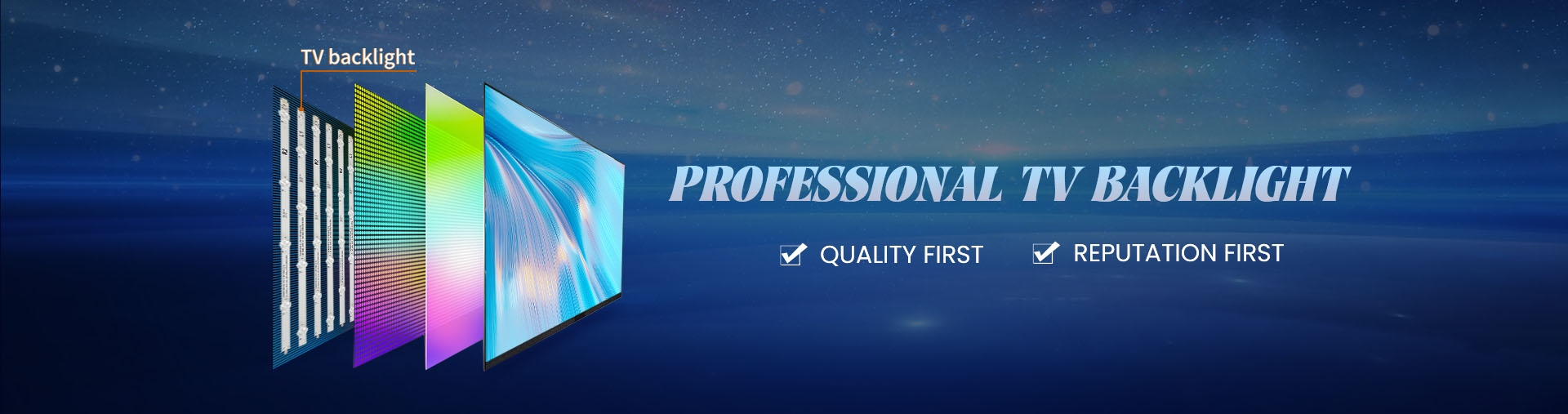
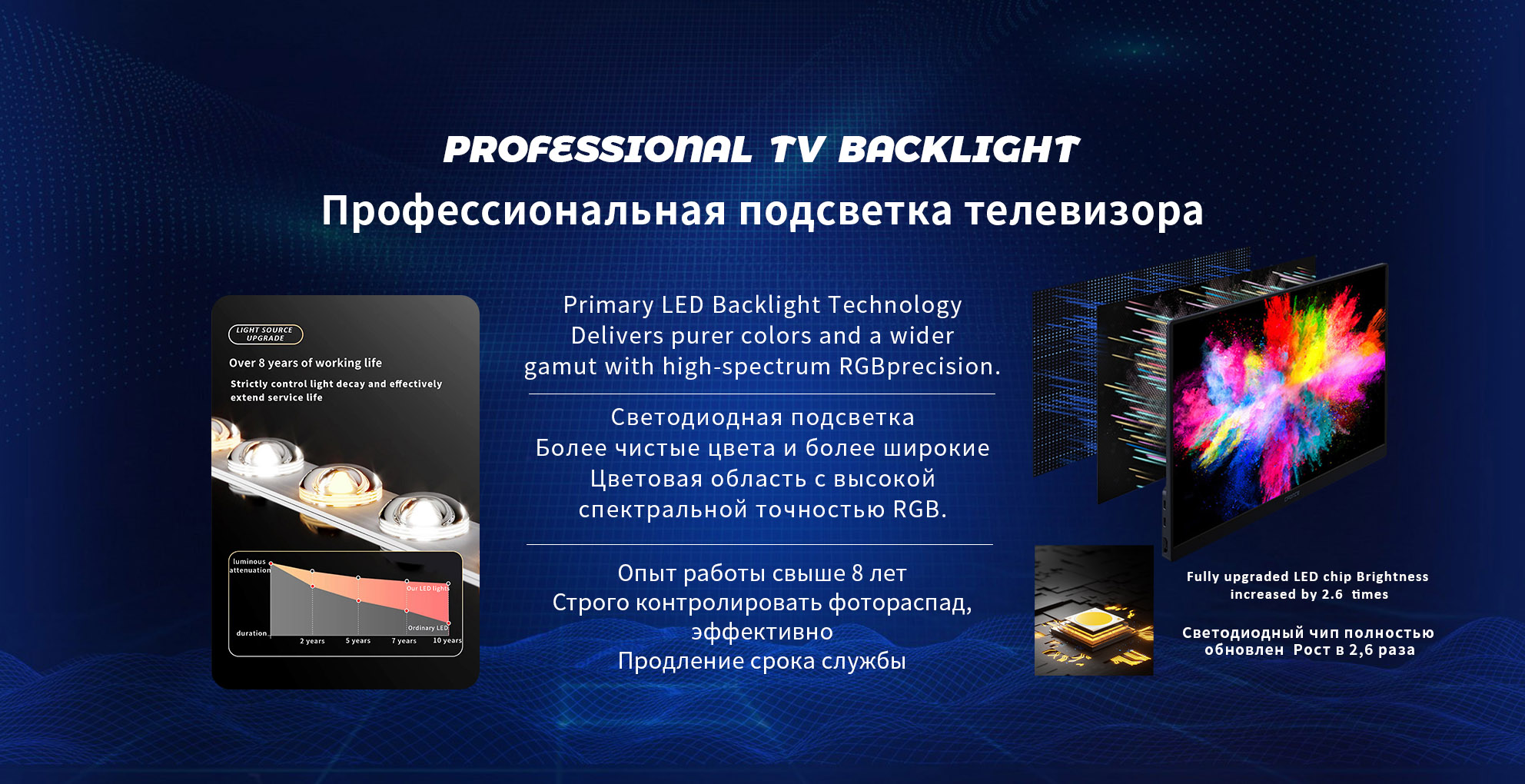
When it comes to selecting the proper voltage for a TV Led Backlight Strip, several factors must be considered. This article explains the key considerations, typical values, how to evaluate a strip’s electrical requirements, and highlights how partnering with a trusted specialist such as StarSharp can simplify sourcing the right components.
Typical voltage values for TV backlight strips
In most modern LED-backlit TVs, the backlight consists of multiple LED chips arranged in series (and sometimes parallel) on a strip. Because of the series arrangement, the total voltage required is the sum of the forward voltage drops of all the individual LEDs in that string.
At the individual LED level, white LEDs used in backlight applications typically have a forward voltage around 3.2 V to 3.8 V.
When those LEDs are arranged in series, the supply voltage will be higher. For example, one forum observed that with 9 LEDs in series, a supply voltage near 30–35 V was present.
Some TV backlight driver boards indicate significantly higher voltages — e.g., 50 V for a given strip arrangement was noted.
In edge-lit or large-format TVs, driver voltages may even reach over 100 V for long series strings.
Thus, while generic LED strips (for lighting) are commonly 12 V or 24 V, TV backlight strips often operate at custom higher voltages due to series chains of many LEDs.
How to determine what voltage your backlight strip uses
To safely determine the correct voltage for a tv led backlight strip, follow a structured approach:
1. Count the number of LED chips in the series string
On the strip look for the individual diodes and note how many are connected in series (in one string). Note if there are multiple strings in series or parallel.
2. Estimate based on forward‐voltage per LED
Multiply the number of LEDs in that string by the typical forward voltage per LED (3.2 V–3.8 V). For example, if 12 LEDs are in series:
Voltage ≈ 12 ×3.5 V = 42 V
3. Check driver board markings or service manual
Often the TV’s power-supply board will have printed output ratings for the backlight connector (e.g., “50 V 0.4 A”). This gives a reliable clue.
4. Use a constant-current driver or limiting resistor for testing
Because LED strips are current-driven, applying only voltage can lead to uncontrolled current and risk damage. As an electronic forum post notes, “small error calculating voltage can result in a large error in current” when driving LEDs with a constant‐voltage supply.
5. Be aware of heat, series wiring and driver type
The driver may be a constant‐current type which will adjust voltage as needed to maintain the current. For example, one TV board indicated 118 V at 260 mA for the LED connector.
Practical guidelines and safety notes
Never assume a backlight strip uses 12 V or 24 V simply because many lighting strips do. TV backlights often use far higher voltages based on series strings of LEDs.
Always match the supply/driver to the strip’s requirements in terms of voltage and current. Overvoltage or excess current will shorten life or cause failure.
When replacing or sourcing new strips, ensure they match the number of LEDs, series‐string layout, connector pinout, and rated voltage of the original.
Heat is the leading cause of LED backlight strip failure — ensure the strip has proper heat sinking, adhesive to the metal chassis, and the driver is not overloaded.
If you are unsure of the exact series arrangement, you may measure the voltage across a functioning strip (while powered under normal conditions) and use that as guidance.
Why partnering with a specialist like StarSharp matters
StarSharp is a manufacturer specialising in led tv backlight strips for a wide range of panel sizes (32″ up to 82″) and configurations. Their product listings include edge-lit and direct-lit LED backlight strips tailored for specific TV models. By working with such a specialist:
You gain access to strips already engineered for correct series/parallel configuration and matching voltage characteristics.
You minimise risk of mismatch — incorrect voltage or string layout may lead to failures or uneven brightness.
You benefit from detailed product listings and model compatibility which simplifies procurement for independent service or replacement boards.
Summary
Choosing the right voltage for a TV LED backlight strip is not simply about picking 12 V or 24 V. It requires understanding the series arrangement of LEDs, estimating or measuring their combined forward voltage, and ensuring the driver supplies the correct current and voltage. Many TV backlight strips operate at tens or even over a hundred volts due to long series strings. By counting the number of LEDs, checking board markings, and using proper driver hardware, you can ensure a safe and proper install. For sourcing and replacements, leveraging experienced manufacturers such as StarSharp ensures better match and reliability.
By following these guidelines, you can select or replace LED backlight strips with confidence, ensuring correct voltage, proper lighting performance, and longevity.