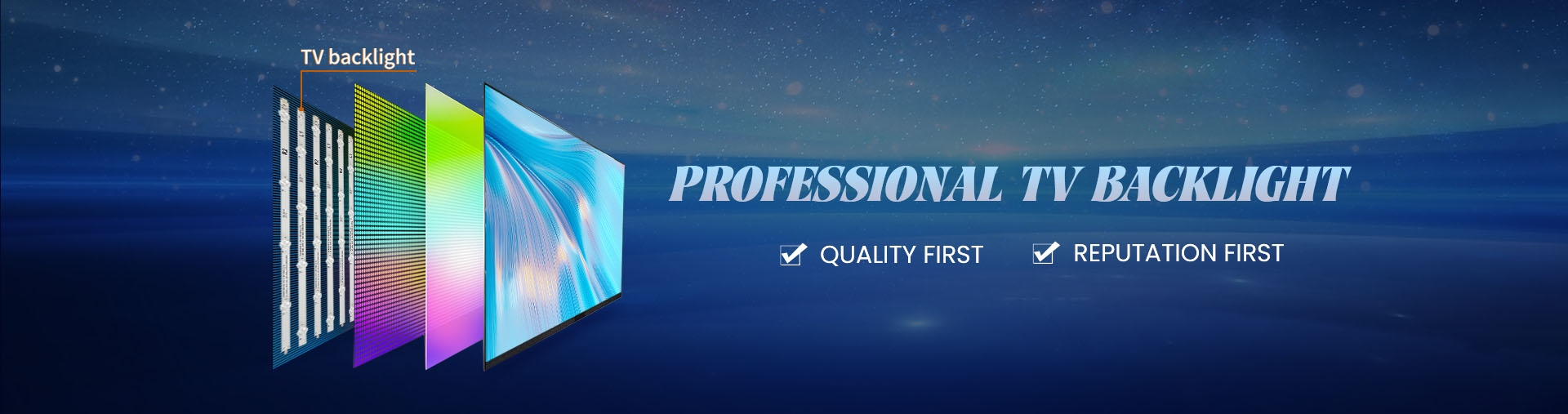
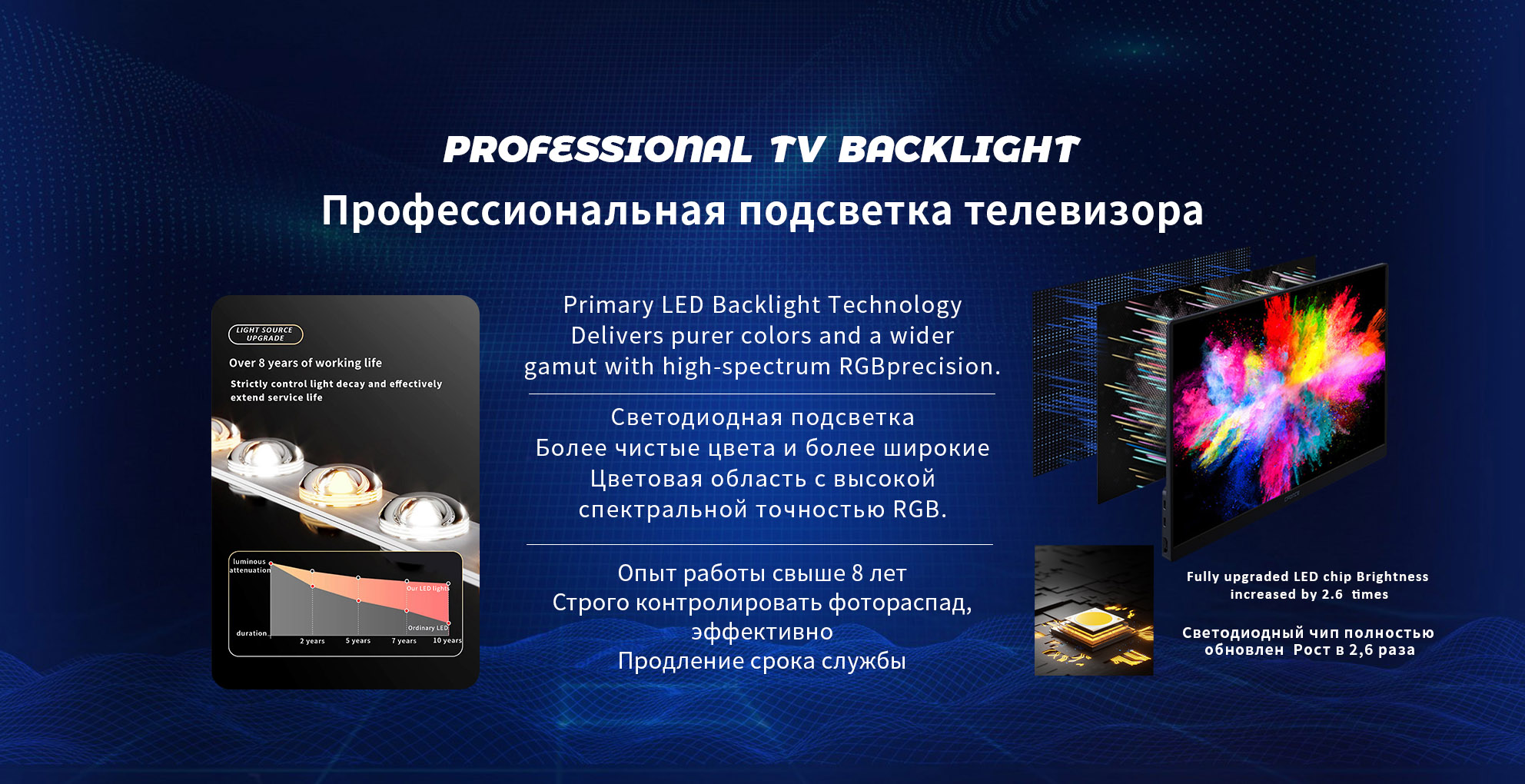
A tv backlight strip looks simple, but for buyers handling replacement parts, after-sales supply, or display repair channels, it is one of the most technical components in the whole screen structure. A wrong match can cause flicker, hot spots, weak brightness, or full startup failure. A good match supports stable light output, cleaner color performance, and lower return risk. StarSharp focuses on television backlight development and production, with more than ten years of industry experience, annual production and sales capacity above 26 million units, and a catalog covering more than 5,000 specifications and models. That gives buyers a stronger base for model matching, batch consistency, and long-term supply continuity.
Start With Exact TV Model Matching
The first step is not price. It is compatibility. Led Backlight Strips must match the screen size, panel structure, strip length, mounting position, connector layout, and full set configuration. StarSharp’s product range covers common TV backlight formats from 24 inches to 75 inches, including direct light and edge light structures, which is important for buyers handling mixed repair demand across multiple sizes and screen architectures.
For TV repair and parts distribution, a small mismatch in length or hole position can make installation unstable or push the optical sheet out of alignment. A mismatch in strip count can also change overall luminance distribution. This is why buyers should confirm the original strip code, screen size, number of LEDs, set quantity, and mechanical dimensions before confirming an order. StarSharp’s model pages show that these details are treated as standard selection data rather than optional notes, which helps reduce order errors.
Check Voltage Class And Electrical Design
Many purchasing mistakes happen at the electrical level. A strip may look similar but still fail because the LED voltage class is different. StarSharp notes that the most common mismatch is mixing 3V and 6V backlight strips. If the driver and strip voltage do not match, the TV may show no backlight, uneven brightness, flicker, or shortened service life.
This matters even more in volume procurement. One StarSharp product page lists 3V operation, 497 mm length, 4+4 LED configuration, aluminum material, and 600 to 700 nits brightness for a specific strip design. Another page describes a 21V strip system built from 3V LEDs in series with copper-clad aluminum PCB for better conductivity and heat control. These examples show why buyers should confirm not only TV size but also forward voltage, series design, substrate structure, and current behavior before ordering.
Quick evaluation points
| Item | Why it matters | What to verify |
|---|
| LED voltage class | Affects startup and driver compatibility | 3V or 6V |
| Series structure | Influences total load and protection behavior | LEDs per strip and full set count |
| PCB material | Affects heat dissipation and stability | Aluminum or copper-clad aluminum |
| Strip dimensions | Determines installation fit | Length, width, hole position |
| Brightness target | Influences visual uniformity | Nits range and lens design |
The value of this checklist is practical. It helps buyers move from appearance-based sourcing to parameter-based sourcing.
Focus On Heat Management, Not Just Brightness
Brightness sells fast, but thermal stability keeps warranty claims under control. In LED backlight systems, heat is one of the main reasons light output drops and failures increase over time. The IEC 62717 standard notes that lumen maintenance includes not only light depreciation but also failures of individual LED packages within a multi-LED light source. The IES also states that LM-80 and TM-21 are useful for evaluating LED components, but total product reliability also depends on circuitry and optical design.
Recent accelerated longevity testing by RTINGS found that backlight issues were the most common failure point among tested LED TV models, with 34 percent experiencing at least one failed LED after about 18,000 hours of runtime. For commercial buyers, that is an important signal. It shows that backlight reliability is not a minor detail. It is often the core risk item in long-use TV environments.
This is why substrate material, lens quality, drive balance, and thermal design deserve close attention during supplier evaluation. StarSharp highlights aluminum-based construction and long service life across many strip models, which is relevant for buyers looking for better heat transfer and more stable long-term performance.
Ask For Reliability Evidence, Not Only Lifetime Claims
Many LED products in the market are sold with long-life claims, but professional buyers should separate marketing life from test-based life. The U.S. Department of Energy advises purchasers to require data behind lifetime claims, to understand warranty coverage clearly, and to confirm whether compatible replacement parts will still be available when needed.
The IES position is also clear. LM-80 and TM-21 help evaluate LED component lumen maintenance, but they do not by themselves guarantee the reliability of the complete finished product. That means buyers should ask a supplier about batch consistency, incoming material control, thermal structure, and model continuity, not just nominal hours on a data sheet.
A practical supplier review should include these questions:
Can the supplier provide stable model mapping across repeated orders
Is the same strip available for future replenishment
Are brightness and voltage ranges controlled by batch
Is there traceability for strip code, lens type, and substrate version
Can the supplier support both common and hard-to-find models
StarSharp’s large specification base and established focus on television backlights make it easier for buyers to manage these requirements across broader after-sales or distribution programs.
Evaluate Optical Consistency For Display Quality
A backlight strip is not only an electrical part. It directly affects screen performance. Poor optical consistency can lead to bright spots, dark areas, edge shadow, or unstable white balance. One StarSharp product page specifically notes that precise voltage and optical parameters affect brightness uniformity, color accuracy, and overall display quality.
For buyers serving repair markets, this means selection should include lens alignment, LED spacing, brightness grade, and reflector compatibility. If a strip meets basic startup requirements but produces uneven luminance, the final repair result may still be rejected by the end user. Good sourcing decisions therefore combine mechanical fit, electrical fit, and optical fit in one review process.
Look At Supply Depth And Response Capability
For many buyers, the challenge is not finding one strip. The challenge is supporting many models with fast response. StarSharp states that its products cover direct-light TV strips, side-entry light strips, and related commercial display products, with more than 5,000 specifications and models. That scale matters for importers, repair-channel distributors, and project buyers who need broader catalog support rather than one-off procurement.
A supplier with deeper model coverage can help in three ways:
Faster cross-reference for old and new screen versions
Better support for mixed batch purchasing
More consistent replenishment after the first order
That is especially useful when your business has to handle multiple screen sizes, regional repair demand, and unpredictable reorder frequency.
A Practical Buying Framework
| Priority | What to check first | Why it should come first |
|---|
| 1 | Original model code and TV application | Prevents wrong physical selection |
| 2 | Voltage class and strip structure | Prevents startup and driver mismatch |
| 3 | Brightness and optical consistency | Protects screen appearance after repair |
| 4 | PCB material and heat path | Supports service life and lower failure risk |
| 5 | Catalog depth and replenishment ability | Supports long-term procurement continuity |
| 6 | Data support and warranty logic | Reduces after-sales uncertainty |
Conclusion
To choose an LED backlight strip for TV, buyers should go beyond size labels and focus on exact model matching, voltage class, optical consistency, heat management, and supply continuity. The market often treats backlight strips as simple replacement parts, but the real purchasing risk sits in hidden details such as 3V and 6V mismatch, unstable brightness, poor thermal control, and weak replenishment support. StarSharp stands out through its focused television backlight expertise, broad specification coverage, and large-scale production capacity, giving buyers a more reliable path for stable sourcing and repeat supply.
If your team is comparing multiple TV backlight strip options, a structured review based on model code, voltage, strip design, and batch consistency will help you reduce returns and improve sourcing efficiency.