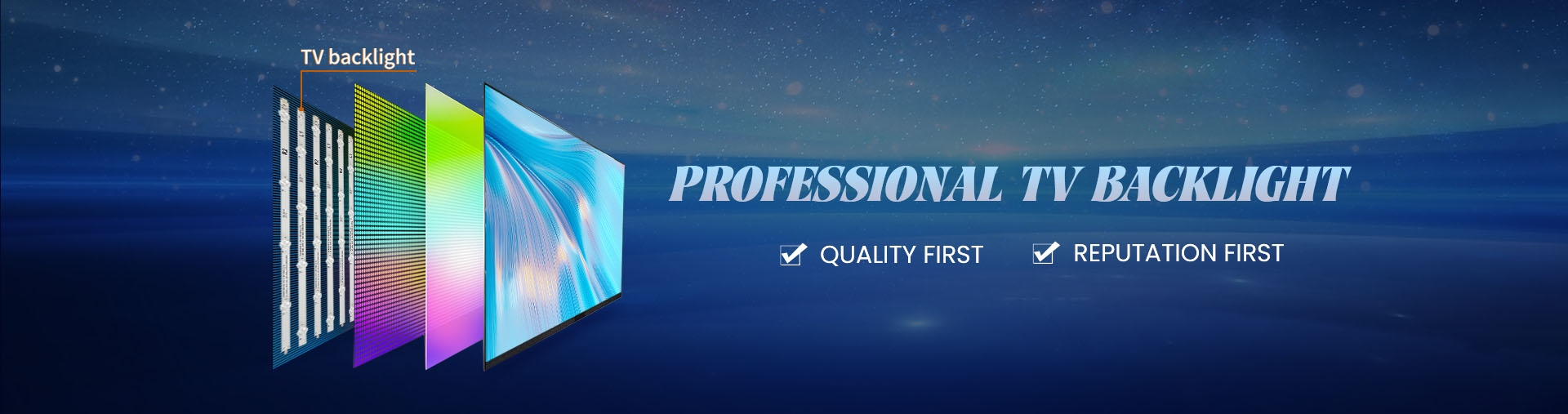
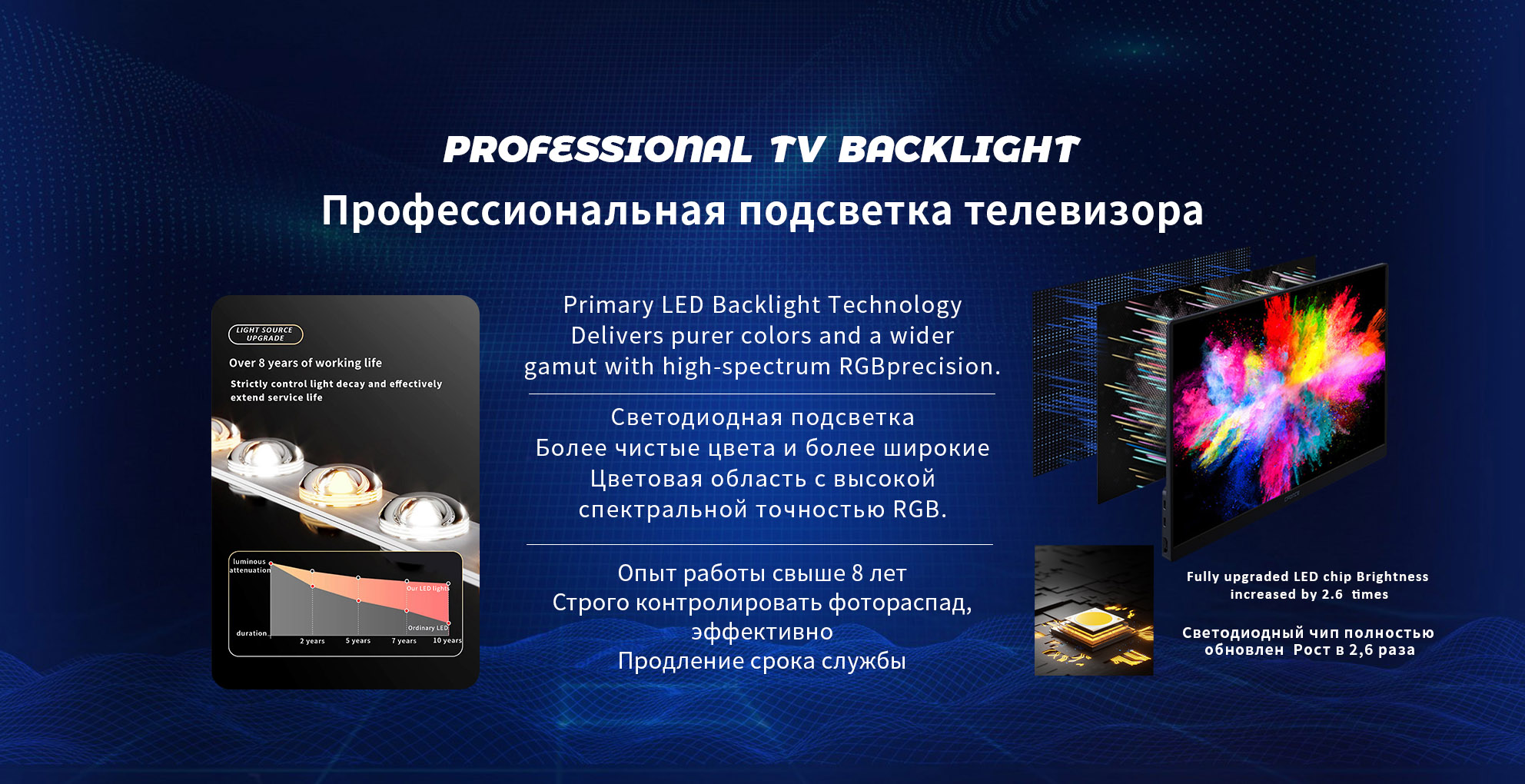
Backlight structure has a direct effect on display thickness, brightness distribution, thermal control, service life, and total procurement cost. For buyers sourcing tv backlight strips or display backlight solutions, the difference between edge lit and direct lit backlight is not just a technical detail. It affects how the final product performs in the field, how easy it is to maintain, and how stable the supply chain remains over time. In general, edge lit designs place LEDs along the sides of the panel and guide light across the screen, while direct lit designs place LEDs behind the panel to deliver light more evenly across the display area.
Starsharp has built its position around this category with more than ten years of backlight R&D, production, and sales experience. According to its official company information, the business has annual production and sales capacity exceeding 26 million units, more than 5,000 specifications and models, and exports to over 60 countries and regions. Its product range includes both direct-light and side-entry backlight strips for tv and commercial display applications, which gives buyers a practical advantage when comparing architectures across multiple projects instead of relying on a single solution type.
What Edge Lit Backlight Means
An edge lit backlight places LED light sources along one or more sides of the panel. Light is then pushed through a light guide plate and optical films so it can spread across the display surface. This structure is widely used when slim profile and lower material weight are priorities. Because the LEDs are concentrated at the edges rather than distributed behind the whole panel, edge lit systems can reduce cabinet thickness and simplify some mechanical layouts. The tradeoff is that optical uniformity depends heavily on light guide quality, diffuser design, and strict process control.
For buyers, edge lit is often attractive when the target product needs a thinner body, lighter weight, or more aggressive cost control on larger production runs. It can also be a suitable choice for displays where ultra-high brightness and deep local light control are not the main priorities. However, if optical design is not well balanced, edge brightening, corner light concentration, or mild luminance gradients may appear more easily than in direct lit structures.
What Direct Lit Backlight Means
A direct lit backlight places the LEDs behind the screen area so light is emitted more directly through the optical stack. Because the light sources are distributed across the back of the panel, this design typically achieves stronger brightness uniformity and better control over large screen illumination. It is commonly selected for bigger displays, applications requiring stable luminance, and products where image consistency matters more than ultra-thin construction.
Direct lit structures usually require more depth inside the product because the LEDs need spacing from the diffuser layers to blend light correctly. That extra internal space can make the product thicker than an edge lit equivalent, but it also gives engineers more freedom to optimize brightness distribution and thermal design. In many commercial and television applications, this translates into a more robust balance between optical performance and long-term operating stability.
Core Difference Between Edge Lit And Direct Lit Backlight
The most important difference is LED placement. Edge lit uses LEDs around the perimeter, while direct lit uses LEDs behind the panel area. That single structural difference changes almost every downstream performance factor, including thickness, brightness consistency, heat distribution, power profile, and repair approach.
Quick Comparison
| Factor | Edge Lit Backlight | Direct Lit Backlight |
|---|
| LED position | Along panel edges | Behind display area |
| Product thickness | Usually thinner | Usually thicker |
| Brightness uniformity | More dependent on light guide precision | Typically more even |
| Peak brightness potential | Moderate | Usually higher |
| Thermal distribution | Heat can concentrate near edges | Heat spreads more broadly |
| Large-size suitability | Acceptable with strong optical design | Usually better for larger panels |
| Maintenance focus | Edge strip matching and guide quality | Full-array strip layout and spacing |
The overall pattern across industry sources is clear. Direct lit systems are generally favored for stronger brightness uniformity and larger display formats, while edge lit systems are favored for slim mechanical design and improved energy efficiency in many use cases.
Brightness And Uniformity
For many procurement teams, brightness alone is not the real decision point. Uniformity is often more important. A display with high peak brightness but poor light consistency can create visible hot spots, uneven corners, or poor visual balance. Direct lit structures usually perform better here because the LEDs are spread behind the panel instead of relying on side injection and long-distance light transfer. Several industry comparisons note that direct lit displays offer more stable luminance and more even light distribution, especially on large screens.
Edge lit can still perform well when the optical stack is carefully engineered, but the margin for error is narrower. Light guide plate accuracy, reflector quality, diffuser balance, and assembly precision all have a stronger effect on final output. This means supplier capability matters more than the structure alone. Buyers comparing quotations should not assume all edge lit solutions are equal, because production consistency is a major part of performance stability.
Thickness, Weight, And Mechanical Design
When product industrial design targets a slim body, edge lit usually has the advantage. Since the LEDs sit on the perimeter, internal space behind the panel can be reduced. This makes edge lit attractive for thinner TV formats and space-sensitive display products. Direct lit systems generally require more internal depth so the light can blend before it reaches the panel, which increases cabinet thickness.
That said, thinness is not always the top priority in procurement. In many commercial display or replacement-part scenarios, buyers care more about stable output, easier thermal management, and fewer field complaints than about making the housing as slim as possible. In those cases, the added depth of direct lit may be acceptable if it supports better optical consistency and more dependable long-term operation.
Heat Management And Reliability
Thermal design has a direct impact on lumen maintenance and component life. Industry discussions comparing the two structures often note that direct lit consumes more power but can offer strong luminance stability, while edge lit is often more energy-efficient and generates less heat overall. Even so, heat concentration patterns also matter. In edge lit systems, LEDs are grouped near the edges, which can place more thermal stress in concentrated areas if heat sinking is not strong enough.
Recent longevity testing from RTINGS found a clear trend that thin edge-lit LCD TVs failed earlier under prolonged use than LCD TVs using other backlighting technology. That does not mean all edge lit products are unreliable, but it does show that ultra-thin architecture can create durability pressure when thermal and structural margins become too tight. For buyers, the real lesson is to evaluate not just light type, but also substrate material, heat-conducting design, LED grade, and validation process.
This is where Starsharp’s manufacturing details matter. On its official product pages, the company highlights original lamp beads, precision lenses, heat-conducting aluminum base materials, and rigorous testing. It also states that it operates five automatic production lines with daily output above 100,000 units. For sourcing teams, that points to a supplier that is not only selling backlight strips, but also managing production repeatability, thermal structure, and scale.
Cost Considerations Beyond Unit Price
Buyers often ask which structure is cheaper. The better question is which structure gives the lower total cost over the product life cycle. Edge lit can reduce material use in some designs and help achieve thinner products, which may support shipping efficiency and certain industrial design goals. Direct lit may bring a higher structural cost or larger enclosure requirement, but it can lower the risk of uniformity complaints and may support more stable large-screen performance.
For after-sales and replacement-part business, compatibility and consistency are just as important as first cost. Starsharp emphasizes OEM-matched interface shapes, voltage compatibility, optical replication, and large specification coverage across its catalog. That can help buyers reduce time spent on cross-referencing models and simplify replenishment for high-volume service markets.
Which One Is Better For Buyers
There is no universal winner. The right answer depends on the display size, brightness target, industrial design requirement, thermal margin, and market positioning of the final product.
Edge lit is often a better fit when:
a thinner display body is important
energy efficiency is prioritized
the application does not demand the highest uniformity across a large panel
the supplier has strong light guide and optical film control
Direct lit is often a better fit when:
large display sizes are involved
brightness uniformity is a higher priority
the product needs more robust luminance consistency
structural thickness is acceptable in exchange for optical stability
Why Supplier Capability Matters As Much As Backlight Type
A weak edge lit design can create visible non-uniformity, but a weak direct lit design can also cause thermal imbalance, poor diffusion, and inconsistent brightness. That is why experienced buyers look beyond the label and examine manufacturing depth. Starsharp’s official information shows long-term specialization in television backlight production, both direct-light and side-entry structures, high model coverage, and export experience across dozens of markets. For sourcing teams, that combination helps shorten evaluation time and improves the chance of matching the right architecture to the right application.
Conclusion
The difference between edge lit and direct lit backlight comes down to structure, but the sourcing decision comes down to performance goals. Edge lit supports slim design and can improve efficiency in suitable applications. Direct lit usually delivers stronger brightness uniformity and is often the safer choice for larger or more demanding display formats. Buyers who compare only the unit price may miss the larger picture, including thermal behavior, optical consistency, maintenance complexity, and replacement compatibility.
For companies evaluating tv backlight strips or display backlight solutions, Starsharp offers the practical advantage of experience in both direct-light and side-entry systems, broad specification coverage, scaled production, and a manufacturing process built around testing and consistency. That gives procurement teams a stronger base for selecting the backlight structure that truly fits their product line.