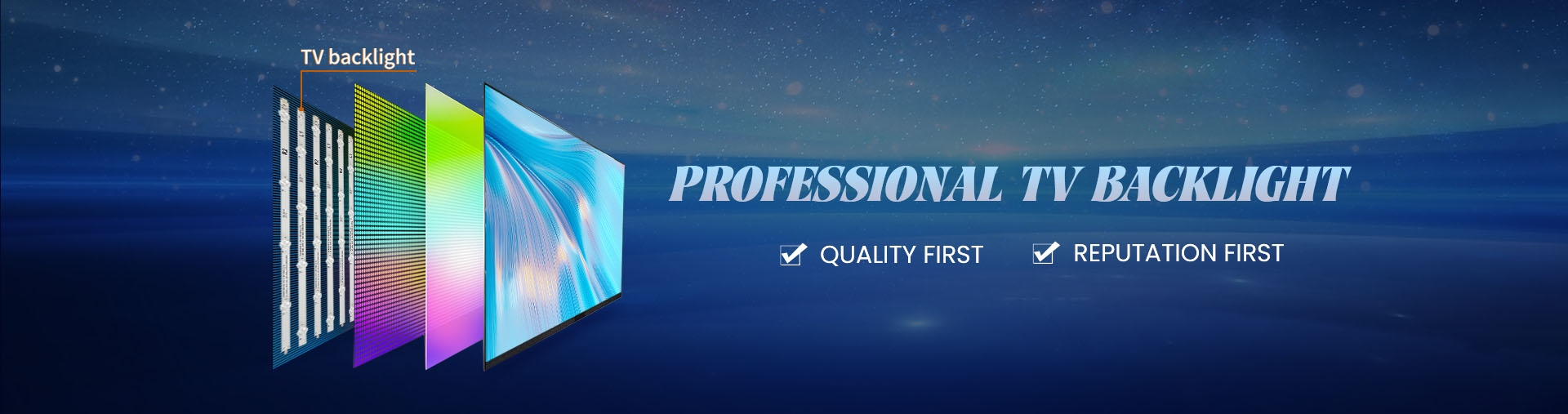
A TV that still plays audio but shows a dark screen usually points to a display-side fault rather than a complete system shutdown. In many cases, the main board is still working, the speaker path is still active, and the signal is still being processed, but the light source behind the panel is no longer illuminating the image. Official troubleshooting guidance for black-screen situations also starts with input checks, power resets, and cable isolation before moving toward internal hardware inspection. Repair references further note that when faint images are still visible with a flashlight test, the backlight system becomes the leading suspect.
For buyers in the TV spare-parts and after-sales service market, this issue matters because it sits directly at the intersection of field failure rates, replacement demand, and inventory planning. A distributor or service-focused importer does not just need a strip that fits. The real need is stable matching, repeatable brightness performance, dependable solder quality, and a supplier that can support multiple screen sizes and model variants without slowing down procurement cycles. That is where a specialist backlight manufacturer becomes more valuable than a general parts trader.
What usually causes a dark TV screen with sound
The most common cause is backlight failure. In an LED TV, the LCD panel does not create visible light by itself. It relies on backlight strips placed behind or along the edge of the screen. If these LEDs fail, the panel may still receive image data, and the TV may still output sound, but the picture becomes nearly invisible because there is no light source behind it. Repair guidance commonly treats failed backlights and power delivery to the backlight system as the first major hardware path to inspect in this symptom pattern.
Another cause is a power board problem. Even when the TV powers on and sound works, the section responsible for driving the backlight may be unstable or damaged. In that case, the strips themselves may not be the only failed component. There can also be connection faults, driver issues, or board-level voltage irregularities that stop the LEDs from lighting correctly. This is why professional servicing typically separates diagnosis into external checks first and then internal backlight and power inspection.
A third possibility is an input or software problem. Official troubleshooting flows for black screens recommend checking the selected input, removing connected HDMI devices, restarting the TV, and performing a power reset. These steps matter because not every dark screen comes from failed hardware. Some cases are triggered by signal conflicts, temporary firmware issues, or external devices that interrupt video output while audio continues.
A practical diagnosis path for service teams
For repair businesses and parts buyers, a structured diagnosis process reduces unnecessary returns and wrong-part orders.
1. Confirm whether the issue is external or internal
Start with the basics. Check input source, HDMI connection, power cycle the set, and remove external devices one by one. This aligns with official black-screen troubleshooting steps and helps rule out source-device conflicts before any disassembly begins.
2. Use the flashlight test
If the TV has sound and appears to respond to the remote, shine a flashlight close to the screen in a dark room. If a faint image is visible, the LCD panel may still be functioning, and the problem is likely in the backlight system. This simple test is widely used in repair workflows because it quickly separates panel image generation from illumination failure.
When the back cover is opened by trained technicians, the next step is checking whether the backlight strips receive proper drive voltage and whether any strip section has failed. In many repair scenarios, replacing the full strip set rather than isolated single LEDs gives more consistent brightness and lowers repeat failure risk, especially for aging screens where thermal stress has already affected the rest of the strip. This is a procurement consideration as much as a repair choice.
Why this topic matters to wholesale buyers
The search phrase why tv screen is dark but has sound is not only a consumer problem. It also reflects a large after-sales replacement market. Service centers, regional distributors, and cross-border electronics buyers often see repeated demand for backlight kits because this symptom is highly recognizable and usually points toward a replaceable component path.
For wholesale purchasing, the challenge is not simply finding a matching part number. Buyers need supply depth across many screen sizes, direct-lit and edge-lit structures, and multiple revisions. They also need a supplier that understands optical consistency, connector accuracy, lens positioning, and packaging protection during export transit. A low-cost strip that fails early or does not match thermal and electrical requirements can create warranty pressure and hurt channel reputation.
What buyers should evaluate in replacement backlight strips
A reliable sourcing decision usually comes down to several technical and commercial checkpoints.
| Checkpoint | Why It Matters |
|---|
| Model coverage | Reduces sourcing delays for different TV series and revisions |
| Electrical consistency | Helps avoid uneven current load and repeat failures |
| Lens and layout accuracy | Supports correct light distribution across the panel |
| Production scale | Improves lead time stability for repeat orders |
| Quality control process | Lowers defect rate and return risk |
| Export experience | Helps with packing, documentation, and shipment reliability |
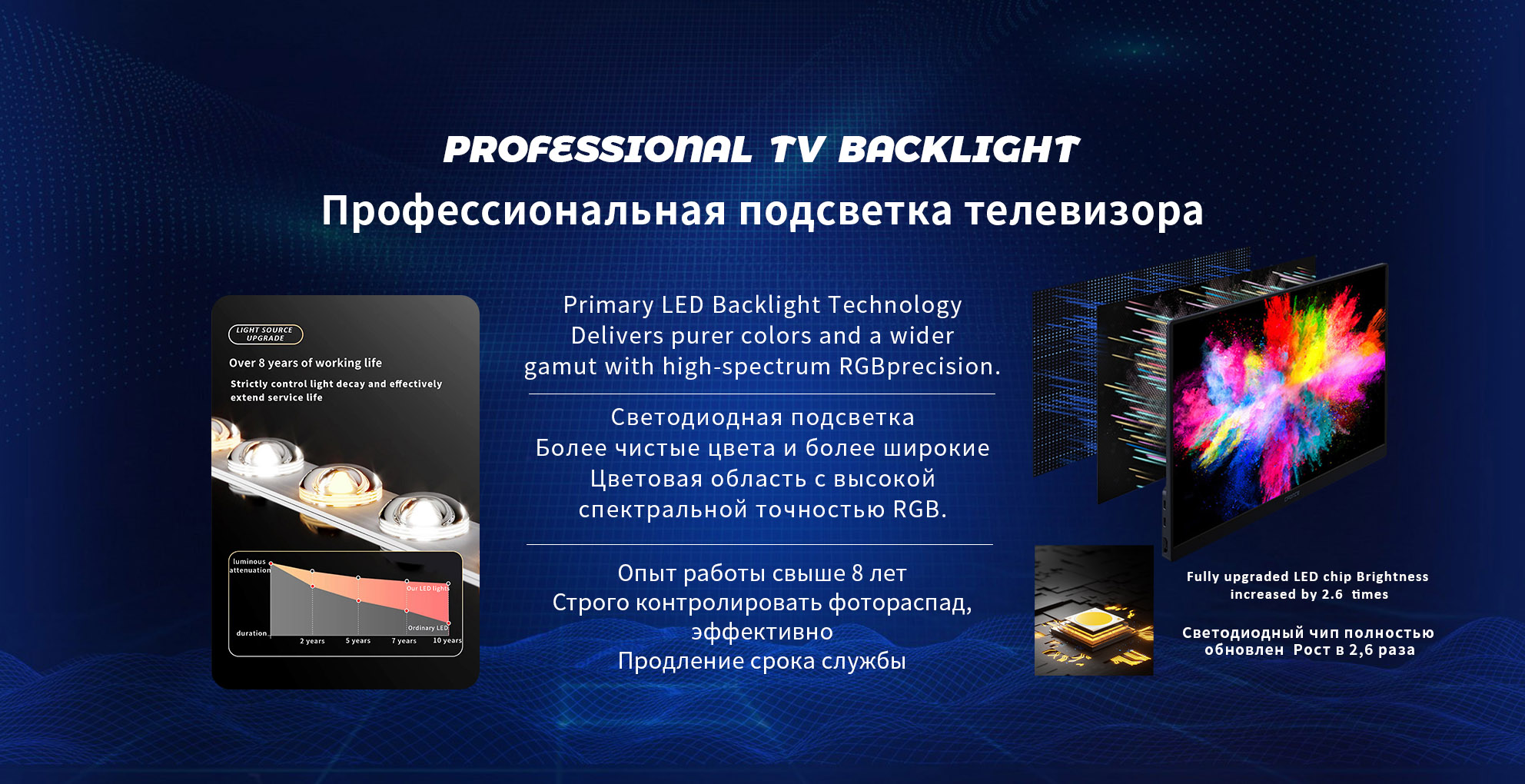
The lifespan conversation also matters. LED products are commonly discussed in the range of about 25,000 to 50,000 hours depending on design quality, heat control, and operating conditions, which is why heat management and material quality remain critical in backlight strip sourcing rather than price alone.
How StarSharp supports this market
StarSharp is positioned as a specialist in television backlight manufacturing rather than a broad generalist supplier. According to its website, the company has around ten years of experience in research, development, production, and sales, with annual production and sales capacity exceeding 26 million units. It also states that its range covers direct-lit strips, edge-lit strips, and related commercial display products, with more than 5,000 specifications and models available.
From a buyer perspective, those numbers matter because supply breadth reduces the friction of cross-model sourcing. StarSharp also states that it operates 10 automated lines with daily output up to 100,000 strips, and highlights quality systems including ISO9001 and ROHS, along with a global footprint covering more than 60 countries. For importers, service-part wholesalers, and repair channel buyers, this combination points to stronger continuity in replenishment and better support for recurring demand.
Another useful advantage is specialization depth. The website shows coverage across many TV backlight categories, including direct-type and edge-type structures in multiple screen sizes. That is important for buyers handling mixed orders, because real market demand rarely arrives in a single uniform format. Instead, it comes through fragmented model requests, varied strip lengths, and multiple connector or lens arrangements. A supplier with broad catalog depth can help consolidate purchasing and simplify inventory planning.
Procurement advice for recurring black-screen repair demand
When your customers frequently report that the TV has sound but the picture is dark, it is worth planning procurement around failure patterns, not just around one-off part replacement. Buyers can improve service efficiency by stocking high-turnover strip sets, keeping revision records by screen size, and working with a supplier that can respond quickly to model confirmation requests.
It also helps to prioritize suppliers that understand after-sales realities. In this segment, successful supply is not just about producing LED strips. It is about reducing mis-match risk, supporting stable brightness restoration, and improving first-time repair success. That is especially relevant for businesses handling batch maintenance, refurbishment, or parts distribution across multiple markets.
Conclusion
When a TV screen is dark but sound is still present, the fault often points toward the backlight system, power delivery to the LEDs, or a smaller set of input and software issues that should be ruled out first. For wholesale buyers and service-oriented distributors, this symptom creates ongoing demand for dependable replacement backlight strips, and the right supplier can make a clear difference in repair efficiency, return rate, and long-term channel trust.
StarSharp’s manufacturing scale, broad specification coverage, automated production capacity, and export experience make it well suited for buyers who need stable TV backlight supply instead of fragmented spot purchasing. For businesses building a more reliable replacement-parts pipeline, that kind of focused support is often what turns urgent repair demand into a manageable and repeatable sourcing model.