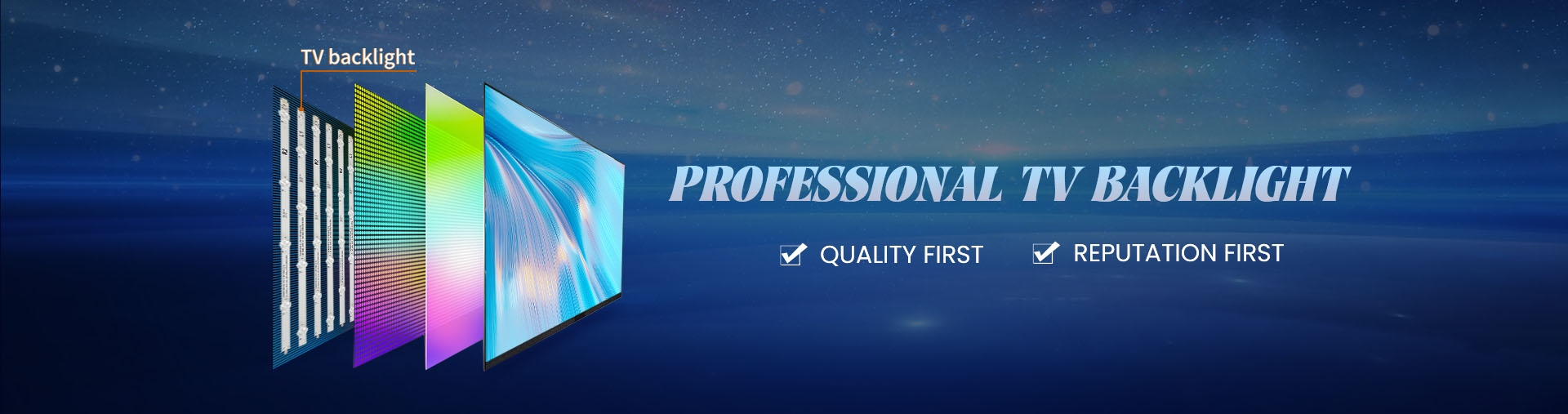
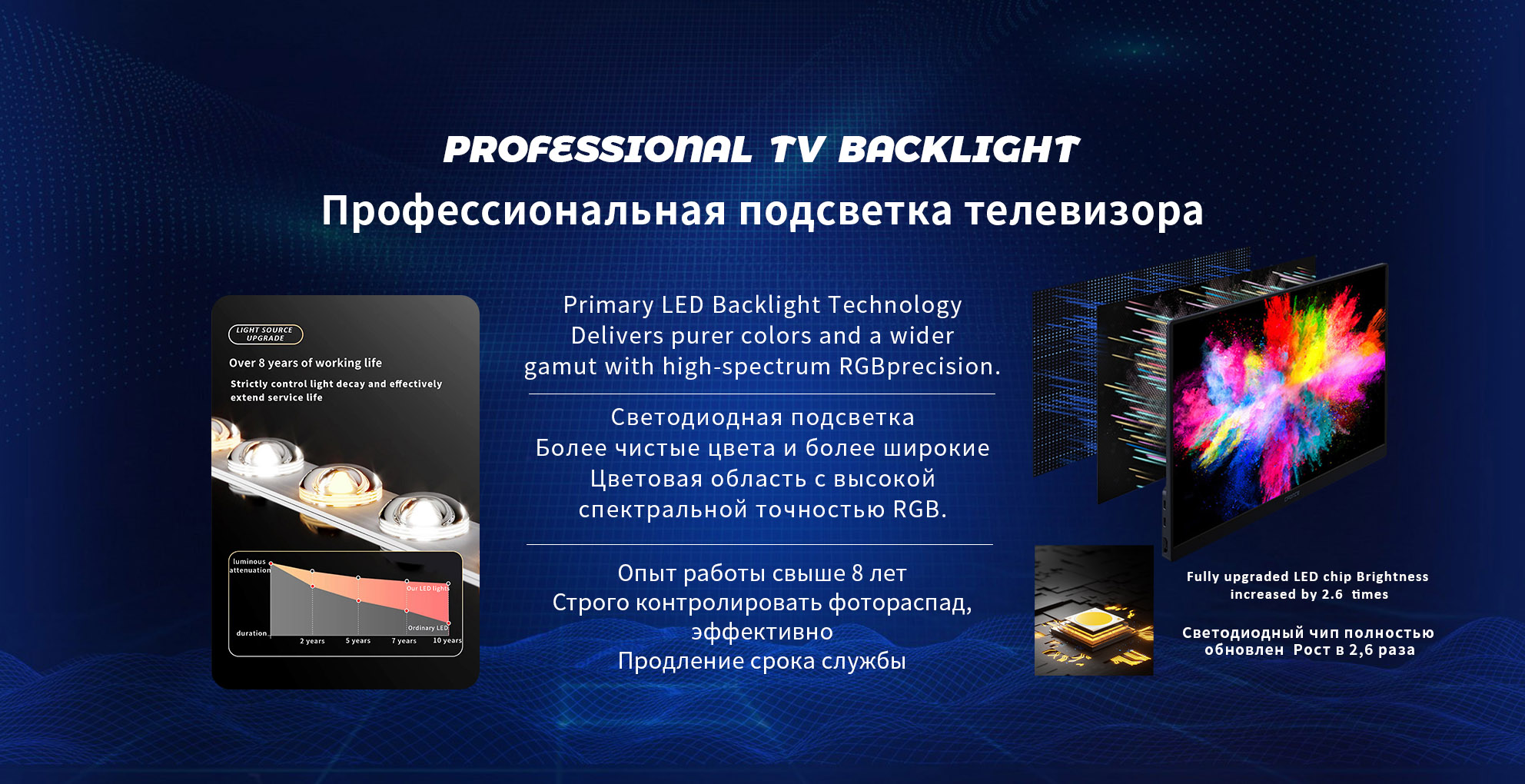
For LCD televisions and many commercial display panels, the backlight strip is not a secondary component. It is one of the key factors behind visible image performance. The screen may show the content, but the backlight strip determines how effectively that content is illuminated across the panel. Brightness stability, contrast presentation, color consistency, edge uniformity, and dark-scene control are all influenced by backlight design and execution. In practical sourcing terms, a weak backlight system can limit the performance of an otherwise acceptable panel, while a well-built strip can help the display deliver a cleaner and more reliable picture over time.
The Short Answer
Yes, a backlight strip affects picture quality. It does not create the image data itself, but it strongly affects how the image is seen. In LCD display architecture, the backlight is the light source behind the liquid crystal layer. That means any variation in light output, optical consistency, dimming behavior, or thermal stability will show up on screen as brightness differences, uneven color, washed blacks, halo artifacts, or reduced clarity in demanding scenes.
How A Backlight Strip Influences What Viewers See
Brightness And Uniformity
A stable backlight strip helps the panel maintain even luminance from corner to corner. If the strip quality is poor, viewers may notice bright spots, shadow areas, edge leakage, or inconsistent screen illumination. Direct backlit structures are often chosen when stronger and more uniform brightness is required, while edge-lit structures are typically used when a thinner product profile is needed. The tradeoff matters because uniformity is a visible part of picture quality, especially on larger screens and commercial displays.
Contrast And Black Performance
Backlight design also affects contrast. LCDs need a backlight to be visible, so dark areas are never completely independent from the light source behind them. When the backlight can dim effectively, black areas appear deeper and highlights stay more controlled. Local dimming improves contrast by adjusting brightness in different zones, but if the control is coarse, the screen may show blooming around bright objects on dark backgrounds. This means backlight technology can improve picture quality, but only when the strip layout and dimming strategy are well matched to the panel.
Color Accuracy And White Balance
Picture quality is not only about brightness. The spectral quality of the backlight affects how red, green, and blue filters reproduce color. If the backlight has a biased white point or unstable output, colors can drift and white balance can look too cool, too warm, or inconsistent across the screen. That is why backlight quality matters in televisions, teaching screens, advertising displays, and other commercial applications where visual consistency directly affects user perception.
Motion And Visual Comfort
Backlight stability can also affect perceived smoothness and viewing comfort. Flicker, unstable current control, and heat-related brightness fluctuation may not change the source signal, but they can reduce visual comfort and make the screen feel less refined in long viewing sessions. For buyers handling after-sales service, these issues are especially important because they influence complaint rates and replacement demand after installation.
When The Backlight Strip Becomes A Real Quality Risk
backlight strips are especially critical in the following situations:
Large-size TV assemblies where uneven illumination becomes easy to notice
Edge-lit models where optical balance must be carefully controlled
Commercial displays that run for long hours each day
Repair and replacement markets where compatibility and consistency matter
High-brightness use cases where thermal management directly affects service life
In these cases, sourcing only by price can create downstream issues. A low-cost strip may meet the basic size requirement but still create visible non-uniformity, shortened lifetime, or unstable brightness after extended operation. For volume buyers, that usually leads to higher service cost than the initial savings justify.
What Professional Buyers Should Check
A practical procurement review should focus on more than basic model matching. Buyers usually benefit from checking LED consistency, optical uniformity, thermal reliability, aging performance, welding quality, circuit stability, and batch repeatability. If the supplier can support testing with spectral analysis, high-voltage inspection, aging verification, and automated production control, the risk of picture-quality inconsistency becomes much lower. This is particularly important for repeated orders, service stock planning, and commercial display maintenance channels.
Why StarSharp Is Relevant For Buyers In This Market
StarSharp focuses on television backlight strips and related display backlight products, covering both direct light strips and side-entry light strips. According to its official website, the company has more than ten years of experience, annual production and sales capacity of over 26 million units, more than 5,000 specifications and models, and shipments to more than 60 countries and regions. The site also states that StarSharp operates highly automated production lines and presents equipment such as reflow systems, dispensing machines, high-voltage testers, spectral radiation analyzers, and aging-room testing resources. These capabilities matter because picture quality depends not only on design, but on production consistency and inspection discipline across batches.
Backlight Strip Factors And Their Picture Quality Impact
| Backlight factor | Visible effect on screen | Why buyers should care |
|---|
| Luminance consistency | More even picture across the panel | Reduces bright spots and dark areas |
| Dimming capability | Better contrast in mixed scenes | Improves dark-scene performance |
| Spectral stability | More accurate color rendering | Supports better white balance |
| Thermal performance | More stable brightness over time | Helps reduce early degradation |
| Production consistency | Fewer batch-to-batch differences | Improves repair and reorder reliability |
These checkpoints are useful because picture quality is evaluated by the end user, but it is largely protected at the component sourcing stage.
Conclusion
So, does backlight strip affect picture quality? Absolutely. In LCD display products, the backlight strip shapes how bright, uniform, accurate, and stable the final image appears. It influences contrast, color behavior, dark-scene control, and long-term reliability. For buyers, this means the backlight strip should be treated as a performance component, not just a replacement part. A supplier with broad model coverage, automated production, testing capability, and export experience can help reduce picture-quality risk and improve purchasing confidence. StarSharp presents these strengths clearly in its product range and manufacturing profile, making it a practical option for buyers who need dependable backlight strip supply for TV and commercial display applications.