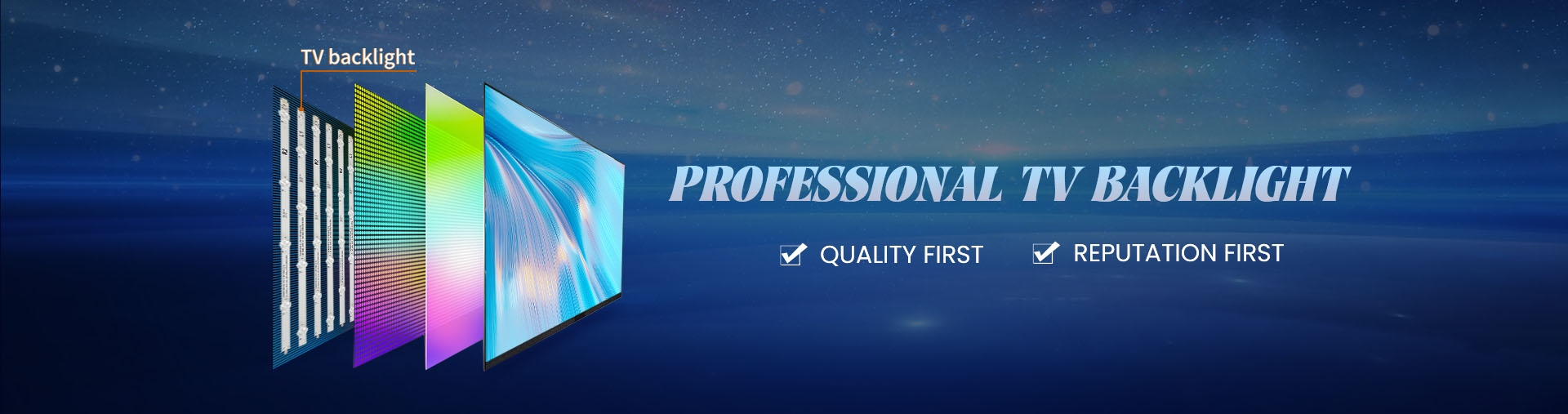
Dark screens, half-lit panels, bright spots, and sudden black display issues often point to one core area inside the television: the led backlight system. When this part starts to degrade, image quality drops fast even if the main board and LCD panel are still functional. For buyers who source replacement strips or service parts, understanding failure mechanisms is the first step toward reducing returns, improving repair success rates, and choosing a more reliable manufacturing partner.
StarSharp focuses on television backlight production with more than 5,000 specifications and models, annual production and sales capacity of over 26 million units, 10 automated lines, daily output up to 100,000 strips, and exports to more than 60 countries. That scale matters because backlight reliability is closely tied to process control, model matching accuracy, and consistency across batches.
Why tv backlights fail before the whole TV fails
In many televisions, the display panel itself may still work after the lighting system weakens. This is why users can sometimes hear sound and even see a faint image with a flashlight test. iFixit notes that backlight failures commonly show up as dark areas, dark half-screen conditions in edge-lit units, or bright spots when optical parts shift or fail.
From a technical sourcing perspective, the most common led tv backlight failure causes usually fall into five categories: heat buildup, overdriving current, long-hour operation at maximum brightness, power instability, and material inconsistency in strips or optical components. These factors rarely act alone. In actual field use, one weakness often accelerates another.
Heat is usually the biggest long-term enemy
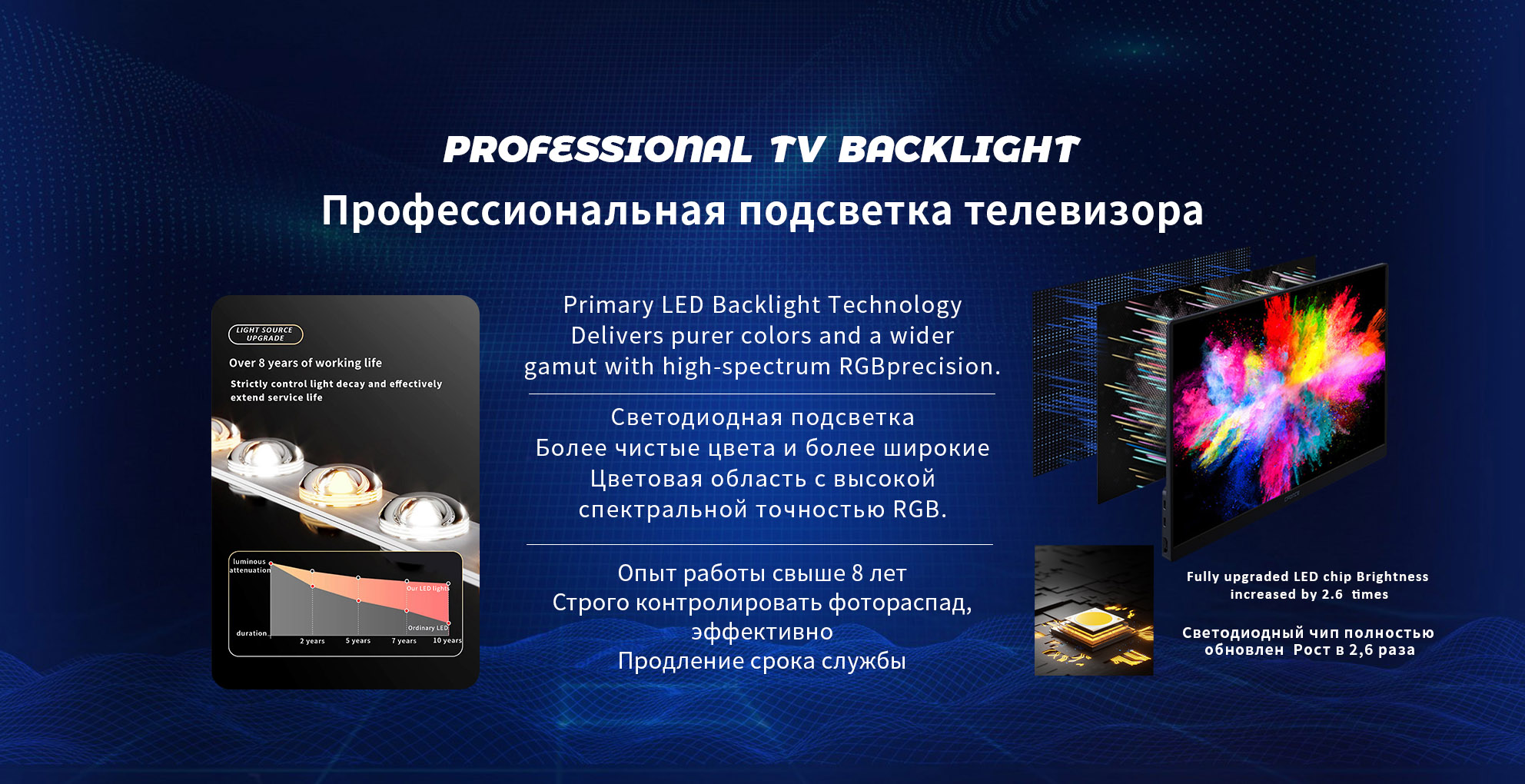
LEDs are efficient, but they still generate waste heat. The U.S. Department of Energy has noted that increased LED junction temperatures reduce performance and reliability, and that useful life discussions for LEDs are commonly tied to lumen maintenance standards such as LM-80 and TM-21. DOE also explains that lifetime claims should consider the whole system, not just the chip itself.
For TV backlights, this matters a great deal. When thermal design is weak, heat accumulates behind the panel, especially in slim televisions with limited airflow. Over time, excessive temperature can accelerate lumen depreciation, discolor lenses, weaken solder joints, and push driver-side components toward failure. A strip may still power on, but its brightness uniformity drops, causing visible banding or localized dark zones.
That is why manufacturing control should not stop at chip selection. Heat dissipation path, aluminum substrate quality, lens bonding stability, current matching, and aging tests all influence service life.
Current stress and full-brightness usage shorten life
Even a good LED can age quickly when driven too hard. DOE guidance on LED lifetime highlights the importance of keeping temperature within limits and avoiding excessive drive current change. In practical TV applications, constant high-brightness operation raises thermal load and current stress together.
This is one reason some televisions fail after long use in retail display areas, hotel rooms, or households that keep brightness set near maximum for extended periods. The strip may meet initial brightness targets, but poor current balance across the light bar can create hotspots. Once one diode weakens inside a series string, the whole section may dim or shut down.
Driver boards and capacitors also play a major role
Not every backlight complaint starts from the diode itself. Power delivery problems can produce the same symptom. Nichicon states in its technical guidance for aluminum electrolytic capacitors that life expectancy can be calculated by Arrhenius theory and generally doubles for each 10 degree C drop in temperature. This is highly relevant for TV driver boards because capacitor aging speeds up sharply in hot environments.
When capacitors lose stability, output ripple and voltage behavior can change. That may lead to flicker, repeated startup failure, intermittent shutdown, or insufficient drive to the strips. For repair buyers and importers, this means a dark screen does not always mean the LCD is dead. The correct supplier should understand both the strip side and the circuit-side stress relationship.
Mechanical and optical issues should not be ignored
Backlight failure is not always electrical. Lens detachment, adhesive aging, poor reflector alignment, and inconsistent diffuser interaction can all create bright spots or uneven lighting. iFixit specifically identifies lens failure as a cause of bright spots while the screen remains lit.
For this reason, buyers should pay attention to more than LED count and strip length. The real quality difference often appears in lens positioning accuracy, substrate flatness, adhesive durability, solder cleanliness, and aging consistency. These details directly affect how the television looks after installation and how long the replacement lasts in the field.
What buyers should check before sourcing replacement strips
A dependable electronics parts supplier should be able to support model identification, structure matching, voltage confirmation, lens layout verification, and stable batch production. The goal is not simply to sell a strip that lights up. The goal is to deliver a strip that matches the original light distribution and survives real operating conditions.
Here is a practical screening view for procurement:
| Check point | Why it matters |
|---|
| Model and size matching | Prevents installation mismatch and uneven illumination |
| Thermal substrate quality | Helps reduce heat concentration and premature decay |
| LED bin consistency | Improves brightness uniformity and color stability |
| Aging and lighting tests | Screens out early failures before shipment |
| Certification and QC process | Supports more stable repeat orders |
| Production capacity | Reduces supply risk for ongoing service demand |
StarSharp presents clear strengths in this area, including ISO9001 and ROHS coverage, a dedicated QC process, large specification coverage, and automated production that supports consistency across repeat orders. The company also serves both television backlight and related commercial display fields, which helps buyers handling broader display spare-parts demand.
How manufacturers reduce failure risk
A stronger led tv backlight solution usually comes from disciplined manufacturing rather than a single material upgrade. Effective control includes proper LED selection, current matching, substrate stability, lens bonding consistency, aging tests, and inspection across each production stage. It also requires fast response when customers need exact replacements across many screen sizes and strip structures.
For distributors, repair channels, and service-part importers, the best sourcing result comes from balancing compatibility, reliability, and supply continuity. Backlight failures in TVs are often caused by heat, current stress, driver-side aging, and optical structure issues, but the impact of those risks can be reduced significantly when the supplier has deep model coverage and strong process control.
A stable backlight supply chain helps turn common TV failures into faster repairs, lower complaint rates, and better repeat business.