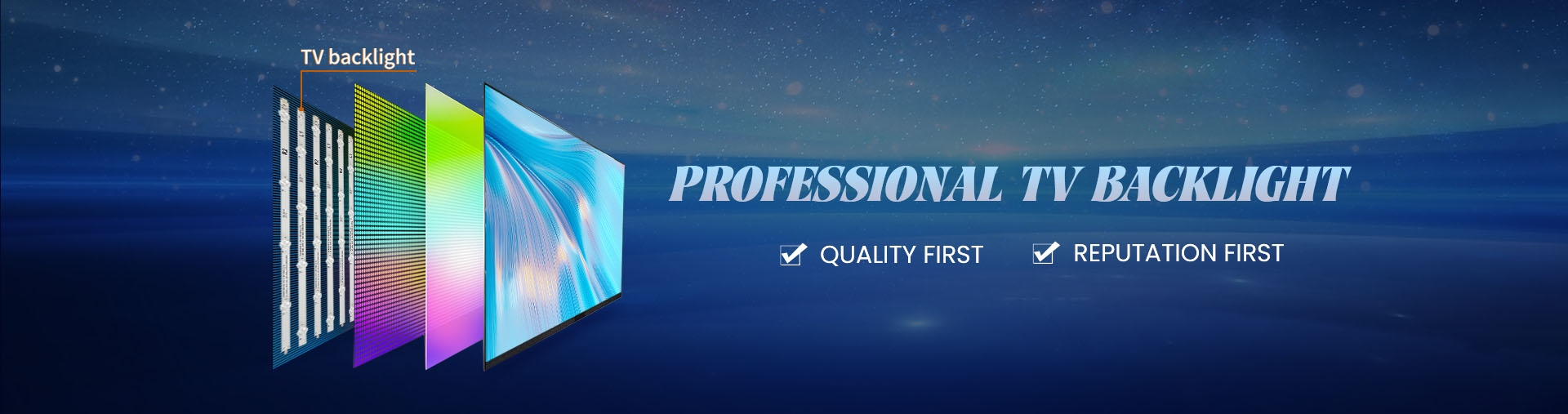
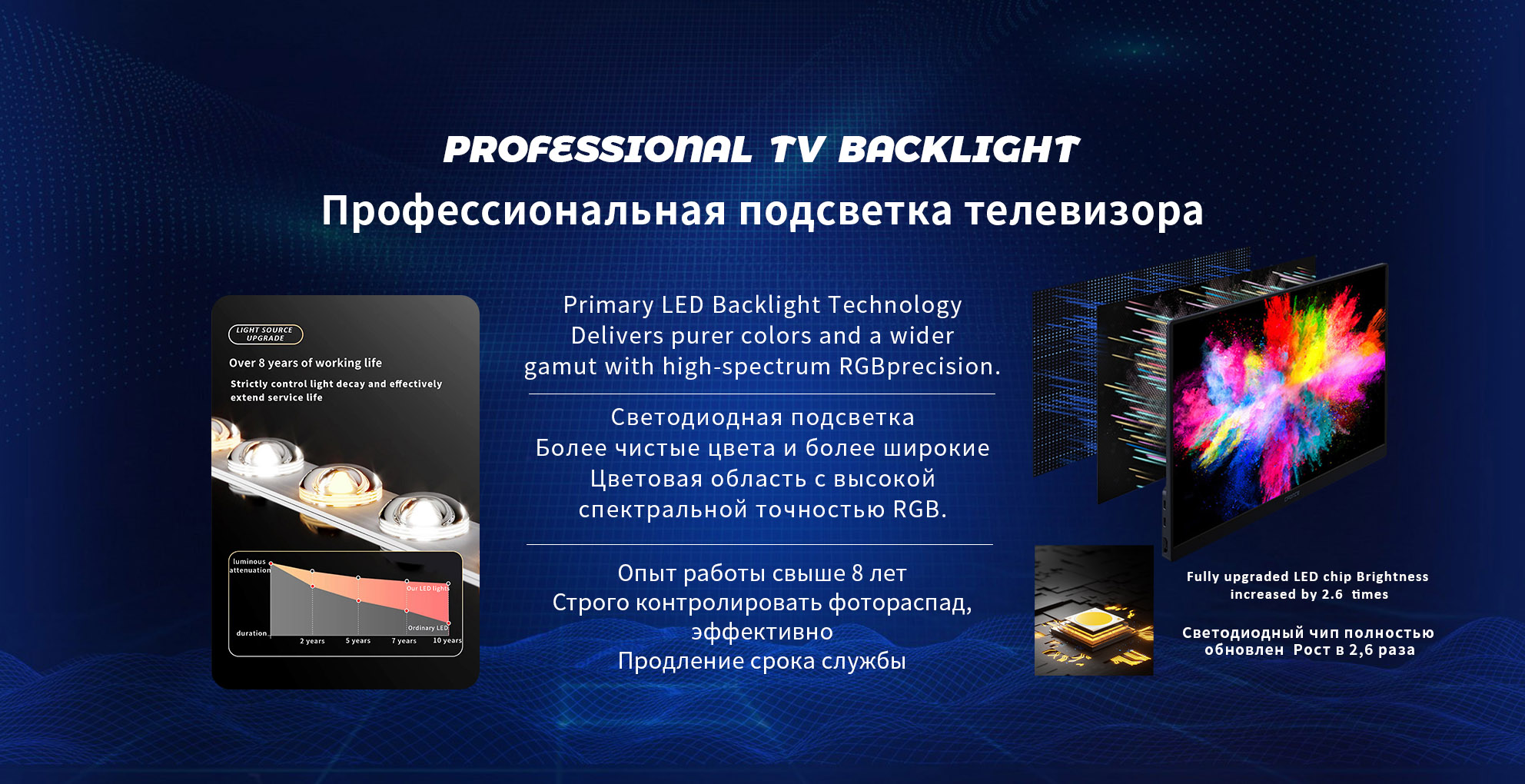
TV backlight systems play a critical role in display performance, directly influencing brightness uniformity, color consistency, and overall viewing experience. In LED television manufacturing and repair markets, selecting the correct backlight strip model is essential for ensuring compatibility, efficiency, and long-term reliability.
Different panel sizes, resolutions, and structural designs require different LED strip configurations. Understanding the classification of these models helps streamline procurement, reduce mismatch issues, and improve production efficiency.
1. How tv backlight strip models are generally classified
backlight strips are typically categorized based on panel size, LED quantity, voltage design, and optical structure. These parameters determine how light is distributed across the display panel.
Key classification factors include:
TV screen size compatibility (32”, 40”, 55”, 65”, 75” etc.)
LED chip spacing and density
Voltage and current configuration
Lens or diffuser structure type
Side-lit vs direct-lit design
In production environments, engineers often rely on standardized backlight models to ensure consistent brightness performance across different TV assemblies.
Across global production and repair markets, several standardized structures dominate due to their wide compatibility and stable performance.
Typical model categories:
Single-row LED strip (basic linear design)
Double-row LED strip (higher brightness output)
Lens-type LED strip (focused light distribution)
Aluminum substrate LED strip (better heat dissipation)
Flexible LED strip (curved panel compatibility)
Each structure is designed to match different panel architectures, making selection dependent on both electrical and optical requirements.
3. Common tv backlight strip models list (by application size)
The following table summarizes widely used configurations in modern LCD TV systems:
| TV Size Range | Typical Model Structure | LED Configuration | Application Type |
|---|
| 32–43 inch | Single-row straight strip | 6–10 LEDs per strip | Entry-level TVs |
| 43–55 inch | Double-row aluminum strip | 10–14 LEDs per strip | Mid-range displays |
| 55–65 inch | Lens-type high brightness strip | 12–18 LEDs per strip | High brightness panels |
| 65–75 inch | Reinforced multi-strip array | 18–24 LEDs per strip | Large-screen TVs |
| Commercial displays | Custom modular strip system | Variable layout | Digital signage |
This common tv backlight strip models list helps manufacturers and maintenance teams quickly identify compatible replacement parts and production configurations.
4. Structural differences affecting performance
Not all backlight strips are designed the same way. Structural variations significantly influence brightness uniformity and heat management.
Important structural factors:
LED spacing consistency
PCB thickness and copper density
Lens angle design for light diffusion
Thermal conductivity of substrate material
Poor structural control often leads to uneven brightness, hot spots, or early LED degradation.
In mass production environments, consistent design control ensures better long-term output stability and reduces failure rates during extended operation.
5. Electrical design and voltage configuration
Voltage configuration plays a critical role in determining how efficiently a backlight system operates. Incorrect matching can lead to flickering, dimming, or complete failure.
Typical configurations include:
6V LED systems for compact panels
9V LED systems for mid-size TVs
12V LED systems for high-power applications
Stable current control is essential for extending LED lifespan and maintaining consistent brightness levels across large displays.
6. Why model standardization is important in production
Standardized backlight strip design improves manufacturing efficiency and reduces inventory complexity. When production teams adopt unified specifications, replacement and scaling become significantly easier.
Benefits of standardization:
Reduced production errors
Faster assembly line setup
Lower maintenance complexity
Improved compatibility across panel series
In large-scale TV manufacturing, consistent model architecture ensures stable output quality across different batches.
7. Common failure factors in backlight strips
Even well-designed LED strips can experience performance degradation over time due to environmental and electrical stress.
Main failure causes include:
Overheating due to poor heat dissipation
Voltage instability from driver circuits
LED chip aging under continuous operation
Adhesive or mounting degradation
These issues often result in dim sections or uneven lighting across the display panel, requiring replacement or recalibration.
8. Selection considerations for procurement and replacement
Choosing the correct backlight strip model requires careful evaluation of both physical and electrical compatibility.
Key selection criteria:
Panel model matching accuracy
LED voltage and current rating
Thermal design compatibility
Connector and layout alignment
Brightness requirement consistency
Incorrect selection can lead to installation failure or reduced display performance.
9. Role of manufacturing consistency in quality control
Reliable LED backlight systems depend heavily on production consistency. Even minor variations in LED binning, solder quality, or PCB layout can affect final display uniformity.
A stable production process ensures:
Consistent luminous output across batches
Reduced defect rates during assembly
Improved long-term operational stability
Better compatibility with different display systems
As demand for high-resolution displays continues to grow, precision in backlight manufacturing becomes increasingly important for maintaining competitive performance standards.
10. Summary of key model categories
| Category | Key Feature | Best Use Scenario |
|---|
| Single-row strip | Simple structure | Low-cost displays |
| Double-row strip | Higher brightness | Mid-range TVs |
| Lens-type strip | Focused light output | High-end displays |
| Aluminum base strip | Heat resistance | Long-duration usage |
| Modular strip system | Flexible layout | Commercial screens |
Understanding these configurations helps ensure stable production planning and efficient replacement decisions across different display systems.