Led Backlight Strip lifespan refers to the useful working period during which the strip can provide acceptable brightness, stable illumination, and reliable electrical performance inside a TV or display. It does not simply mean the moment when all LEDs stop working. For repair businesses and spare parts buyers, led lifespan is more closely related to brightness decay, heat control, current stability, and visible screen quality. Understanding the lifespan of tv backlight strips helps buyers evaluate replacement value, warranty risk, and supplier reliability.
LED Lifespan Is Usually About Light Decay
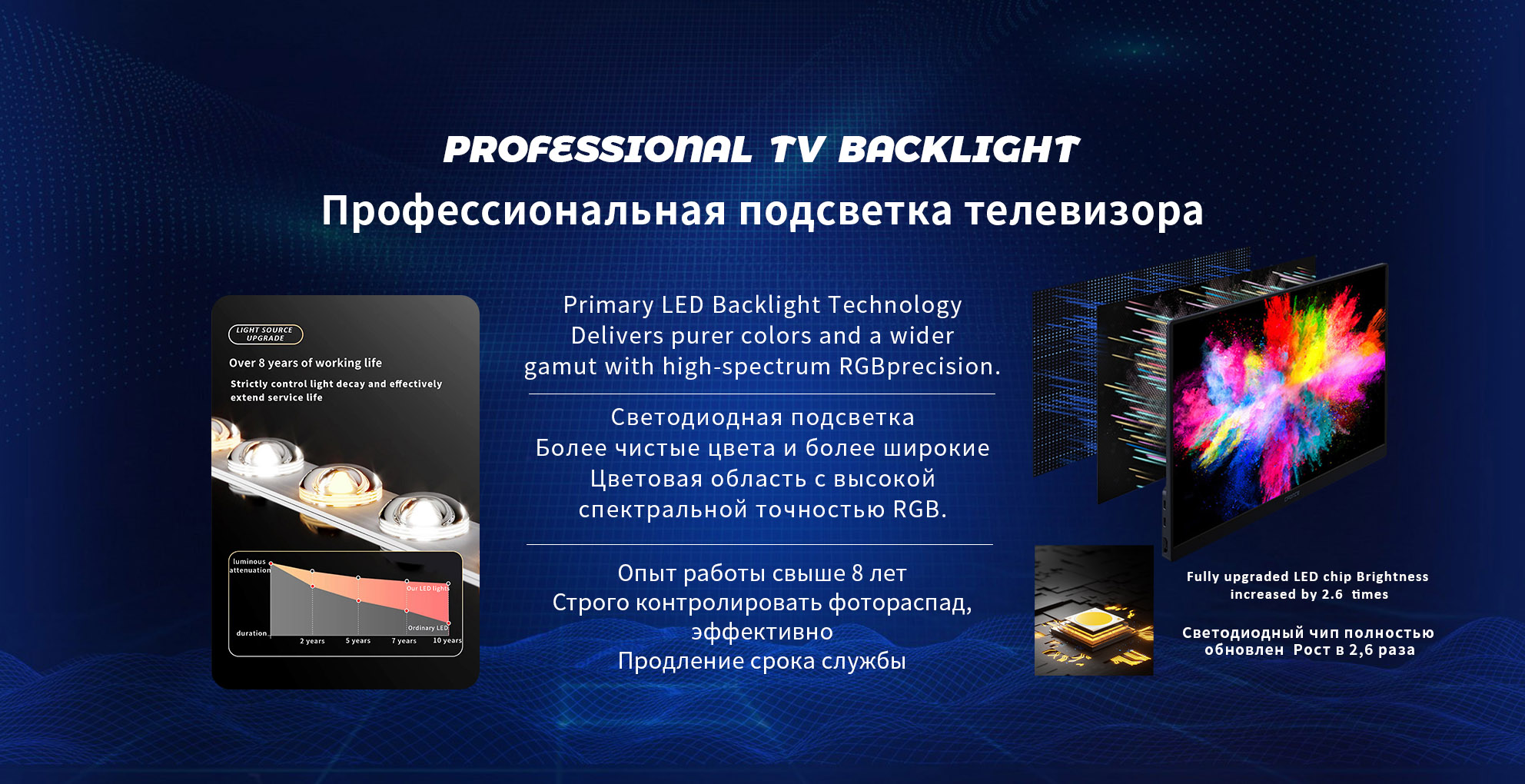
LEDs often become dimmer over time instead of failing suddenly. The L70 concept is widely used to describe LED useful life. It means the LED has reached 70% of its initial light output. A strip may still turn on at that point, but the screen may look darker, less uniform, or less acceptable for repair customers.
This is why lifespan claims should be viewed carefully. The real repair value depends on how long the strip can keep stable brightness under the actual TV working environment.
| Lifespan Factor | Good Condition | Poor Condition |
|---|
| LED quality | Stable brightness bin | Fast lumen decay |
| Working current | Controlled load | Over-driven LEDs |
| Heat dissipation | Aluminum base support | Heat trapped near LED |
| Lens bonding | Stable optical position | Bright spots appear |
| Driver matching | Correct voltage load | Protection or failure |
| Packaging | Protected during shipping | Bent strips or loose lenses |
Heat Is the Main Lifespan Pressure
tv backlight strips work inside a slim space with limited airflow. When LEDs operate at high temperature for long periods, brightness decay becomes faster. Aluminum base strips are commonly used because aluminum supports heat transfer and provides mechanical stability.
Aluminum PCB references describe aluminum boards as having better thermal performance than many traditional PCB materials, which explains why aluminum base design is widely used in LED applications where heat control matters.
Current and Voltage Matching
A replacement strip must match the original TV driver design. Incorrect LED voltage, wrong strip quantity, or unsuitable current load can shorten lifespan even when the strip lights during testing. Some failures appear only after installation, especially when the backlight runs at high brightness for many hours.
A reliable parts supplier should check LED voltage, strip code, connector direction, and set quantity before shipment. This reduces the chance of electrical mismatch and early field failure.
Material and Process Influence
The lifespan of LED backlight strips is also affected by soldering quality, lens bonding strength, reflector material, substrate flatness, and connector stability. Weak solder joints may create intermittent lighting. Poor lens glue may cause light spots. Thin or bent strips may affect diffuser distance and screen uniformity.
StarSharp’s company information states annual production and sales capacity above 26 million units, more than 5,000 specifications, 10 fully automatic production lines, and daily output up to 100,000 strips, supporting stable batch supply for replacement markets.
Practical Lifespan Expectations
There is no single lifespan number for every TV backlight strip. Usage hours, brightness setting, ventilation, TV structure, driver condition, and installation quality all influence service time. General LED references often describe rated life through lumen maintenance rather than complete burnout, so buyers should focus on stable brightness retention and correct application rather than only a large hour number.
For bulk procurement, sample testing and repeat-order consistency are more useful than relying on claims alone. A good shipment should include correct model matching, stable brightness, clear labels, and safe packaging.
How to Buy for Longer Service Value
To improve replacement lifespan, provide the original strip code, TV model, panel code, LED count, voltage, and clear photos before ordering. Replace strips as a complete set when brightness balance is important. Avoid mixing heavily aged strips with new strips in one screen.
StarSharp supports TV backlight strip supply with model checking, production control, and bulk order planning. For long-term procurement, a clear model list and sample confirmation process can help build a more reliable replacement program with fewer early failures.