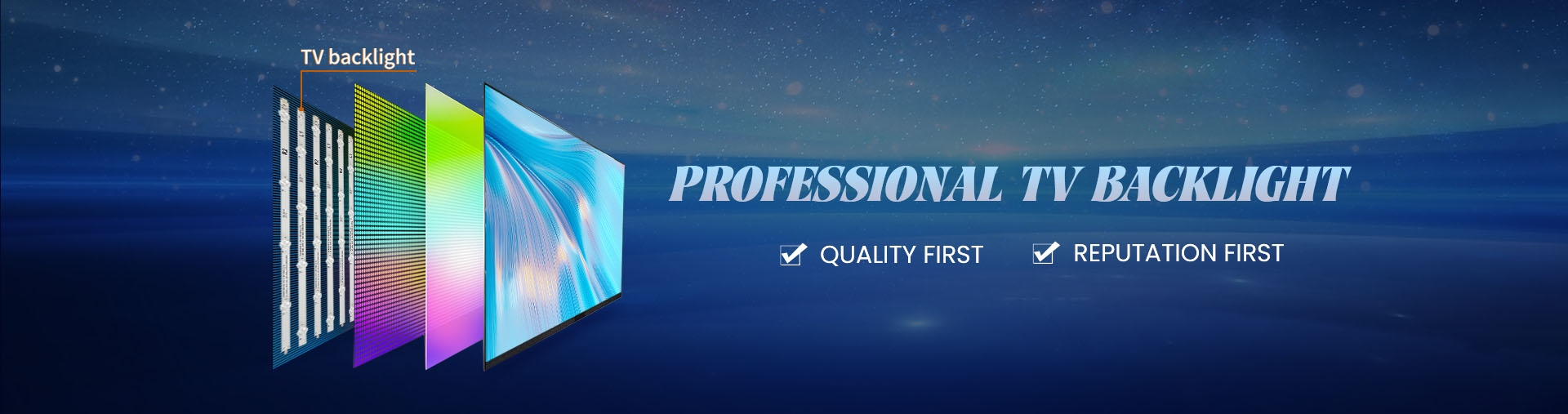
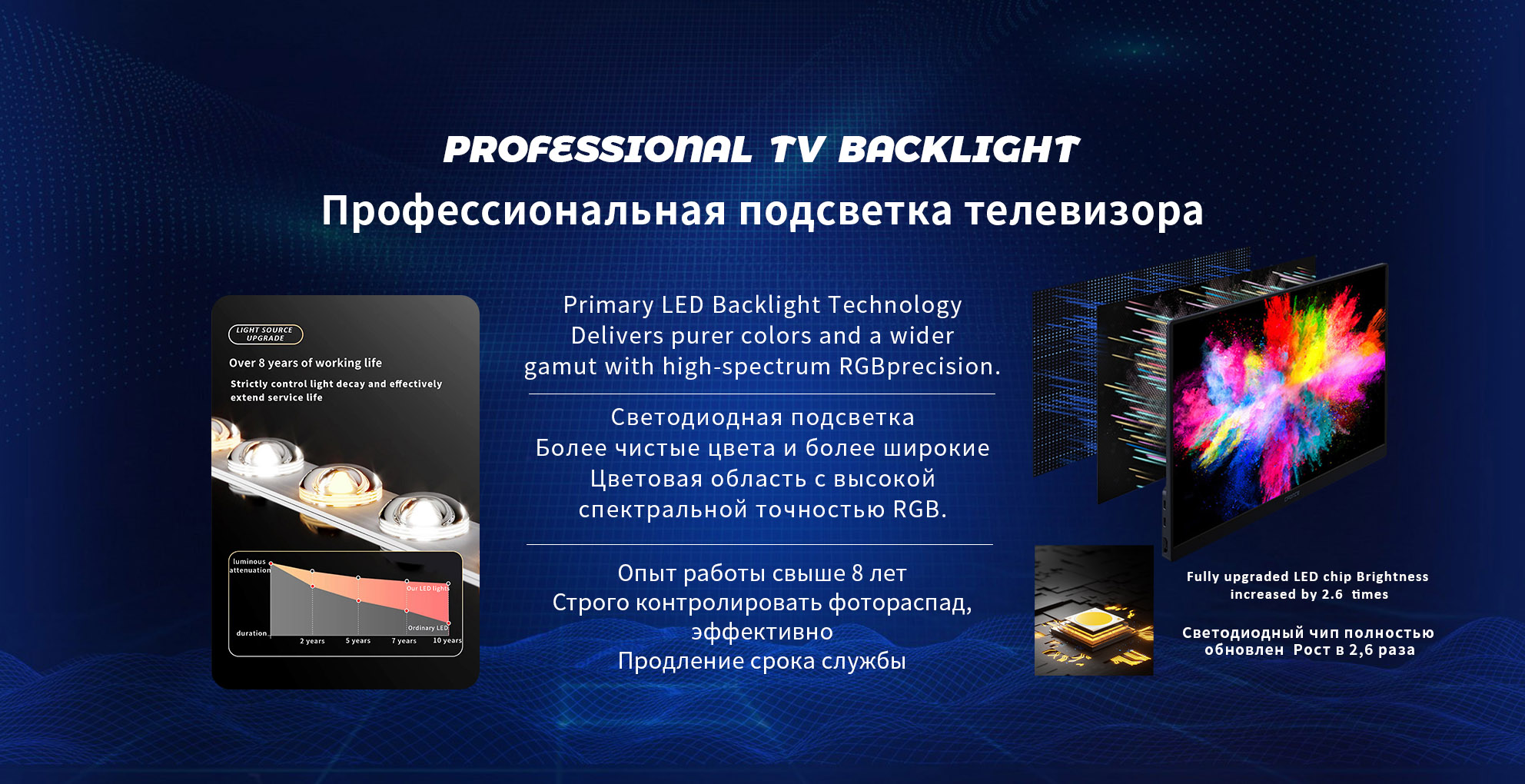
The terms 3V and 6V describe common forward-voltage categories associated with individual tv backlight LEDs. They should not be confused with the total operating voltage of an entire backlight strip. Multiple LEDs can be electrically connected within one PCB, so the voltage required by the complete backlight assembly depends on both the LED specification and circuit arrangement.
What Is the Basic Difference Between 3V and 6V LEDs?
Both types can be used for television backlighting, but their internal electrical characteristics differ.
| Comparison | 3V LED | 6V LED |
|---|
| Approximate voltage class | Around 3 volts | Around 6 volts |
| Use in strips | Design dependent | Design dependent |
| Circuit requirement | Must match PCB | Must match PCB |
| Interchangeability | Not automatic | Not automatic |
| Identification | Test or specification | Test or specification |
These values are nominal categories rather than a guarantee that every LED has exactly the same measured voltage under all conditions.
Why Does the LED Voltage Matter?
The backlight driver supplies power according to the circuit it is designed to operate. Changing the electrical characteristics of the LEDs changes the requirements of that circuit.
Using 3V 6V backlight LEDs incorrectly can therefore result in abnormal operation or failure to illuminate properly.
This is why a replacement strip should correspond with the original electrical design even when its physical shape looks identical.
Does a Strip With Six LEDs Use 18V or 36V?
Not enough information is available from LED count alone.
When LEDs are connected in series, their forward voltages contribute to the circuit voltage. Other circuit arrangements can produce different requirements.
Backlight systems may also contain several strips connected according to the television design.
Procurement teams should therefore avoid calculating compatibility from the number of LEDs without knowing the circuit structure.
How Can the LED Type Be Identified?
Printed PCB information can sometimes help identify the original strip specification. Where documentation is unavailable, appropriate LED testing equipment and technical inspection may be required.
An original working strip or verified sample is particularly useful for uncertain replacement applications.
Buyers sourcing large quantities should establish the LED specification before approving production rather than relying on visual appearance.
Why Can Two Identical-Looking LEDs Be Different?
LED packages can share similar external dimensions while containing different internal structures. Lens shape and package appearance do not reliably prove voltage specification.
The same applies to complete strips. Two products can have matching lengths, LED quantities and mounting points but different electrical characteristics.
As a TV LED strip supplier, we therefore need PCB references and applicable specification information when confirming replacement requirements.
Treat Voltage as Part of the Complete Strip Design
The electrical characteristics of tv backlight LEDs work together with current, circuit layout, heat dissipation and the television driver. No single voltage value determines overall compatibility.
For purchasing teams, the safest approach is to preserve verified strip references and electrical information for repeat orders. This makes model matching more dependable and reduces the possibility of mixing visually similar 3V and 6V configurations in replacement inventory.