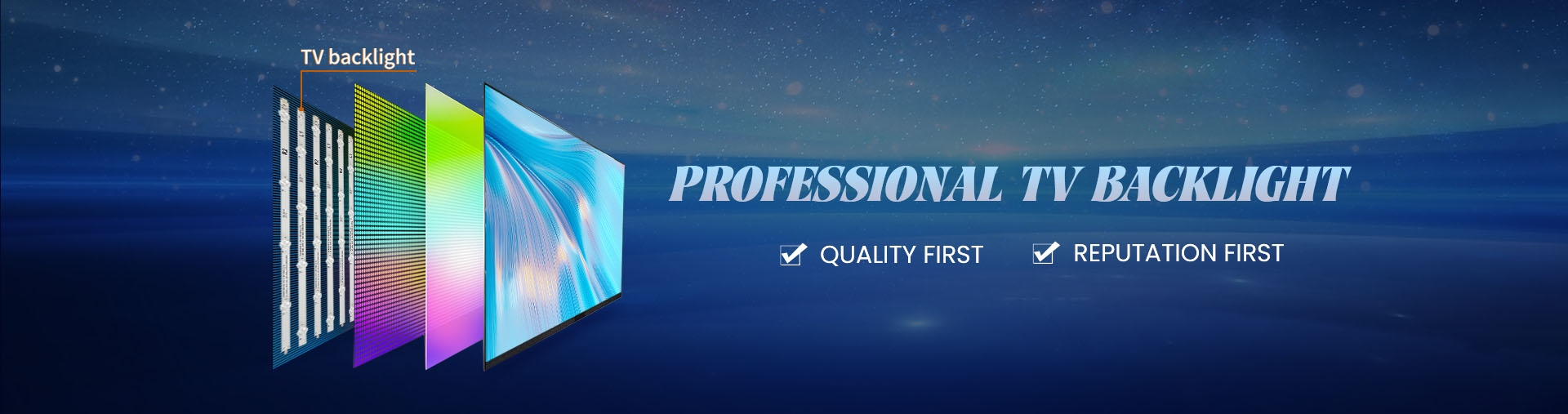
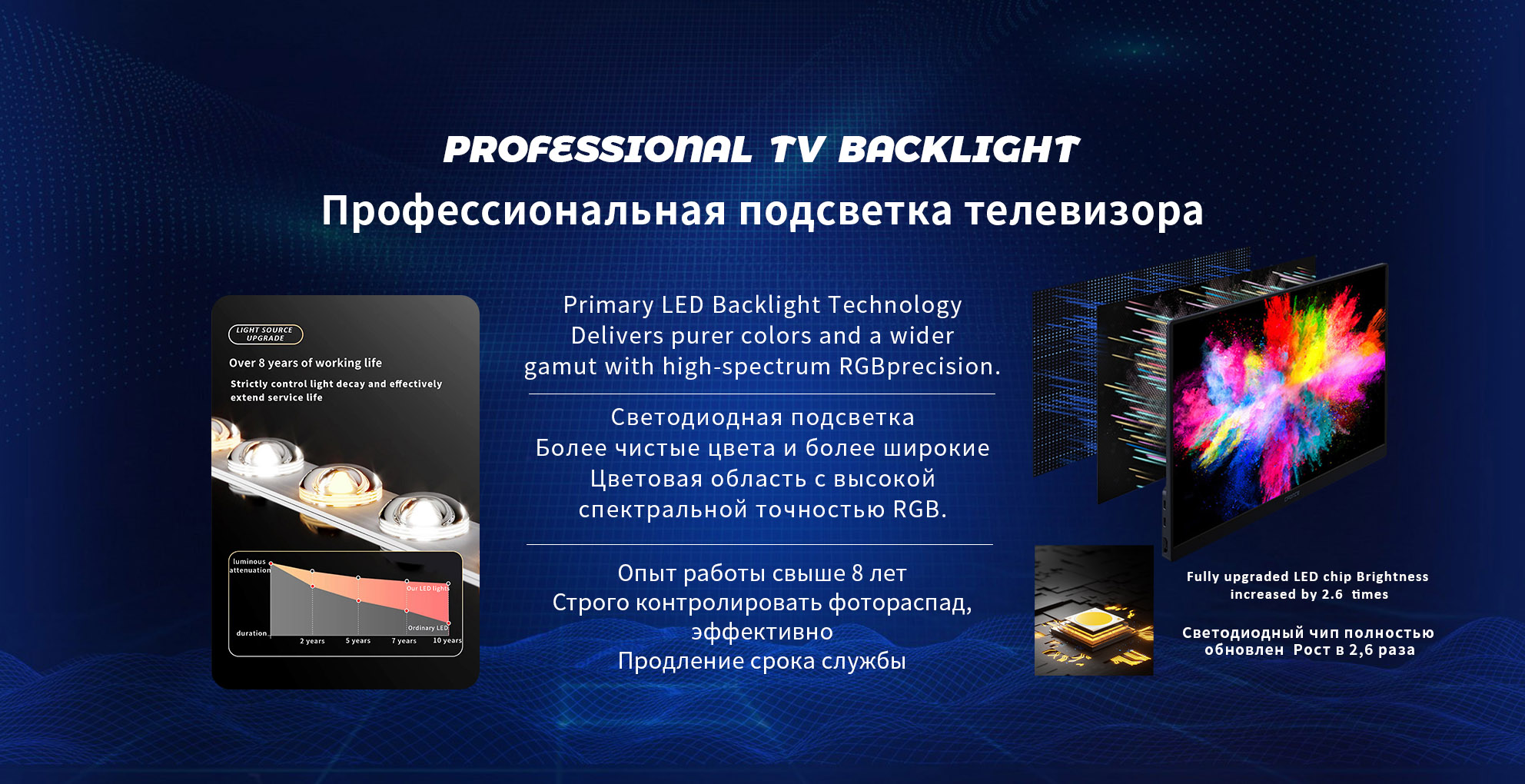
Direct Led Backlight Strips produce illumination from behind the LCD panel rather than sending light inward from the screen edge. Several strips are typically arranged across the rear area, with optical lenses spreading light from individual LEDs. The system is designed so separate light sources combine into reasonably uniform illumination before light passes through the display's optical layers.
Where Are Direct-Lit Strips Installed?
The strips are mounted behind the visible display area. Their exact number, orientation and spacing depend on the panel design.
Individual LEDs would create concentrated points of light without optical control. Lenses positioned over the LEDs widen the light distribution, while diffusion materials above the strips further blend illumination before it reaches the LCD.
This makes PCB position, LED spacing and lens geometry closely related.
How Does a Direct-Lit Backlight Produce Uniform Light?
Uniformity depends on several components working together.
The LEDs generate light. Lenses spread it across a larger area. The distance between the strips and optical layers allows neighboring light patterns to overlap. Diffusion materials then help reduce visible brightness differences.
Because of this arrangement, the performance of a direct lit tv backlight cannot be judged from LED brightness alone.
Incorrect lens spacing or LED positioning can alter the illumination pattern even when every LED is functioning.
Why Do Some TVs Use Several Different Strips?
A panel can contain multiple identical PCBs or a combination of different strip references. Some designs distinguish strips by their position within the backlight assembly.
Replacement purchasing should therefore identify the complete configuration before deciding how many strips form one set.
Useful information includes:
PCB reference
Overall strip dimensions
LEDs per strip
Number of strips per set
Lens configuration
Mounting-hole position
Connector arrangement
Photos of the original complete set can be particularly useful when individual strips have similar appearances.
What Must Match When Replacing Direct-Lit Strips?
Electrical and optical compatibility need to be checked together.
A PCB with the correct length can still contain a different LED voltage or circuit design. Similarly, an electrically suitable strip may use lens positions that do not correspond with the panel structure.
This makes cross-checking several characteristics safer than selecting products according to television size.
How Does Manufacturing Accuracy Affect Performance?
LED placement and lens positioning need controlled assembly because their locations determine how light spreads across the panel. Soldering, PCB dimensions and connectors also affect reliability and installation.
As a direct backlight strip manufacturer, we use the confirmed product specification as the basis for production and inspection rather than treating all similar-sized strips as interchangeable.
| Key Check | Main Function |
|---|
| LED operation | Confirms illumination |
| Lens position | Controls light distribution |
| PCB dimensions | Supports installation fit |
| Electrical design | Matches driver requirements |
| Strip arrangement | Matches panel layout |
Direct-lit technology is straightforward in principle, but replacement accuracy depends on the details. Confirming the complete strip configuration before bulk ordering helps maintain both correct installation and predictable illumination across repeat replacement orders.