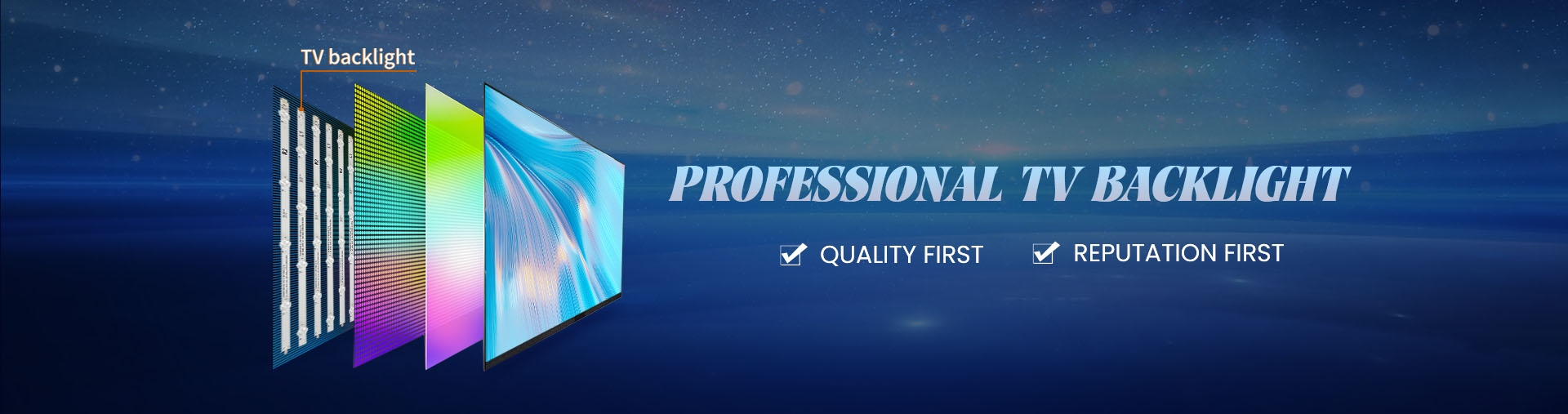
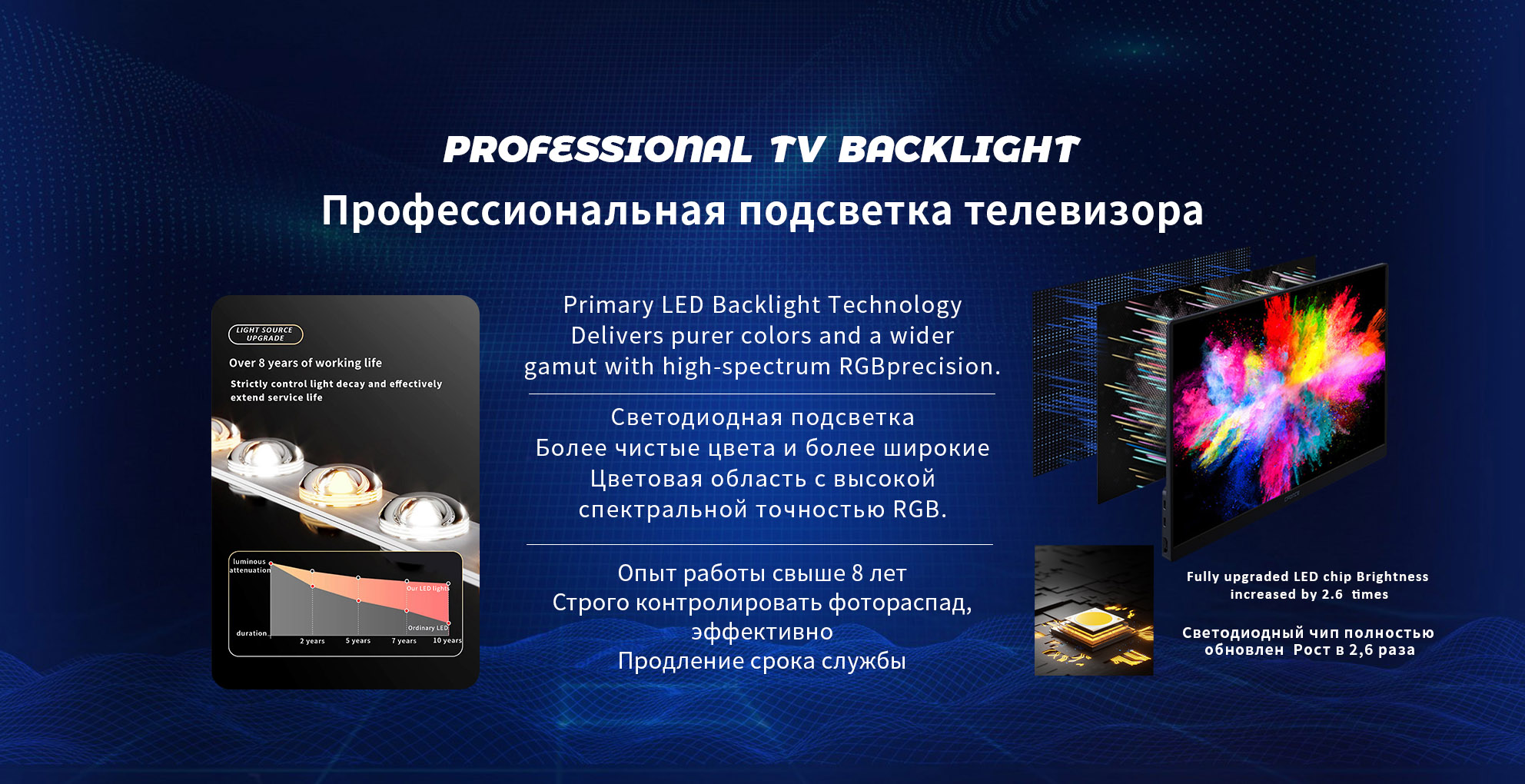
A faiLed Backlight Strip can make a television look completely dead even when the panel, main board, or power board still works. For buyers handling repair inventory, aftermarket supply, or service parts distribution, identifying the correct replacement strip is not simply about screen size. The right match depends on strip structure, lamp count, voltage, connector layout, lens spacing, mounting hole position, and the code printed on the original bar. A mismatch can cause uneven brightness, installation delay, or full incompatibility. StarSharp focuses on television backlight strips, including direct-lit and edge-lit solutions, and lists more than 5,000 specifications and models across its product range, which makes model verification and technical matching especially important in sourcing work.
Why screen size alone is not enough
Many buyers begin with a simple request such as 43 inch tv backlight strip or 55 inch TV LED bar. That is only a starting point. TVs with the same screen size may use different light bar structures because manufacturers change panel suppliers, revision numbers, lens design, or PCB layout during a product cycle. A 43 inch set from one series may use direct-lit bars, while another 43 inch set may use edge-lit bars. Even within one size category, the number of LEDs, strip length, and connector direction can differ. StarSharp’s own catalog separates products by direct light strips, side entry light strips, and size-based categories, which reflects how many structural variations exist in the market.
Start with the printed code on the original strip
The most reliable first checkpoint is the code printed directly on the removed backlight strip. This usually includes a bar code, revision mark, or alphanumeric model string. In actual replacement work, this marking is often more accurate than the television model name on the rear label. The TV model can point you in the right direction, but the strip code identifies the physical part more precisely.
Look for details such as:
On StarSharp’s product pages, many strips are identified by long printed codes such as 6916L series numbers, DRT revision numbers, or mixed code strings tied to specific television platforms. That reflects normal industry practice: the strip marking is the key reference for cross-checking correct replacement.
Confirm whether the TV uses direct-lit or edge-lit structure
The second step is to identify the optical structure. A direct-lit television usually uses multiple bars distributed behind the full panel area. An edge-lit television usually uses fewer strips mounted along one or more edges, feeding light into a guide plate. Ordering the wrong structure creates instant incompatibility even if the size appears correct.
Use this quick comparison:
| Check Item | Direct-Lit TV Backlight Strip | Edge-Lit TV Backlight Strip |
|---|
| Strip position | Behind the panel area | Along panel edge |
| Typical bar quantity | Multiple bars | Fewer bars |
| Replacement focus | LED count and full layout | Length and edge orientation |
| Common risk | Wrong lens spacing | Wrong connector side |
StarSharp explicitly groups its products into led tv backlight Strips and Edge TV Backlight Strips, which is useful for narrowing down the matching range before checking part details.
Check LED quantity and voltage rating
Two strips may look nearly identical but still fail as substitutes because the LED count and electrical design are different. Buyers should verify how many LEDs are mounted on each strip and whether the strip is built around 3V or 6V lamp beads, depending on the original specification. Mixed voltage sourcing can cause brightness imbalance, startup failure, or early burnout.
For identification, compare:
StarSharp highlights incoming inspection for lamp bead current and voltage, along with tests for wavelength, color spectrum, color temperature, and luminous flux. That is relevant because correct replacement is not only mechanical; electrical and optical consistency also matter in stable supply.
Verify strip length, hole spacing, and connector layout
Mechanical fit is one of the most overlooked checkpoints in bulk purchasing. Even when the code looks close, the strip may fail to install if the mounting holes, terminal position, or connector angle differ. For service buyers, this leads to return handling and extra labor cost.
Measure and compare these items carefully:
Lens placement also matters. If lens spacing does not align with the optical sheet and diffuser pattern, the TV may show bright spots or shadow zones after installation. StarSharp lists incoming lens specification inspection and uses digital measurement during inspection, which is an important sign for buyers who need repeatable dimensional control.
Use the TV model only as a secondary reference
The television model number still matters, but it works best as a supporting reference rather than the only reference. In practice, one TV model may have multiple panel versions. Procurement teams often reduce mistakes by combining three identifiers:
TV model number
panel code if available
printed strip code from the original part
This layered method is safer than ordering by television size or market name alone. It is especially useful for distributors and repair-part buyers managing mixed inventory across different manufacturing batches.
Pay attention to A and B strip sets
Many television backlight systems use paired strip sets such as A and B types, or left and right sets. These pairs may differ slightly in connector orientation, circuit path, or mounting design. One common sourcing mistake is ordering only one side of the set or mixing different revisions in the same repair batch.
When identifying the correct strip, confirm:
whether the set requires both A and B bars
whether the revision number is the same across the full set
whether the bar sequence matches the original installation order
Product examples shown on StarSharp’s site include A type and B type references in listing names, which shows how important paired configuration is in backlight strip identification. (StarSharp)
Optical consistency matters in aftermarket supply
A strip that powers on is not automatically the correct strip. Service buyers should also care about optical consistency. Differences in color temperature, luminous flux, lens height, or light distribution can produce visible quality problems after repair. This is especially important for commercial buyers who need low complaint rates and repeatable maintenance quality.
Key optical checkpoints include:
color temperature consistency
luminous output consistency
lens alignment
uniform diffusion after assembly
aging stability
StarSharp states that it operates an optical laboratory and aging room, supported by instruments including integrating spheres, infrared spectrometers, pressure testers, push-pull force meters, and vibration and drop testing tools. It also lists high-voltage testing for LED light strips at 3000 to 5000 volts as part of incoming inspection. These capabilities are relevant for buyers looking for stable aftermarket quality rather than simple visual similarity.
What a reliable supplier should help you confirm
For B2B sourcing, the best supplier does more than quote a price. A capable backlight strip supplier should help verify the match before shipment. That usually includes code confirmation, structure confirmation, technical photo checking, and revision matching.
A practical supplier checklist looks like this:
| Verification Point | Why It Matters |
|---|
| Original strip code check | Reduces model confusion |
| TV model and panel cross-check | Helps confirm compatibility |
| Mechanical drawing or photo review | Prevents mounting mismatch |
| Electrical data confirmation | Avoids voltage and current errors |
| Optical testing process | Supports brightness consistency |
| Batch stability | Important for repeat orders |
StarSharp’s published profile shows more than 10 years of experience, over 26 million units in annual production and sales capacity, more than 5,000 specifications and models, exports to more than 60 countries and regions, a 7,500 square meter workshop, and 10 fully automatic backlight production lines with daily output up to 100,000 units. For buyers, these points suggest useful supply-side advantages in breadth, volume, and standardization.
Common mistakes that lead to wrong orders
Several recurring mistakes cause replacement failures:
ordering only by TV size
ignoring revision number
treating similar code strings as identical
overlooking direct-lit and edge-lit difference
missing A and B strip pairing
skipping lens spacing verification
checking appearance but not voltage data
These errors often look small at order stage, but they increase service cost later through rework, returns, and installation delays. For repeat buyers, a stricter identification workflow improves both procurement efficiency and customer satisfaction.
Final thoughts
To identify the correct TV backlight strip, buyers should combine printed strip code, backlight structure, LED count, voltage, connector layout, hole spacing, lens position, and revision data instead of relying on screen size alone. That method is more accurate for both small repair orders and larger replacement-part programs.
StarSharp’s product range covers direct-lit and edge-lit TV backlight strips, supported by broad model coverage, automated production, inspection capability, and export experience across many markets.
When backlight strip matching becomes part of a long-term sourcing plan, precision at the identification stage saves far more than it costs. Buyers who send original strip photos, printed codes, and basic mechanical details usually get faster and more reliable matching results.