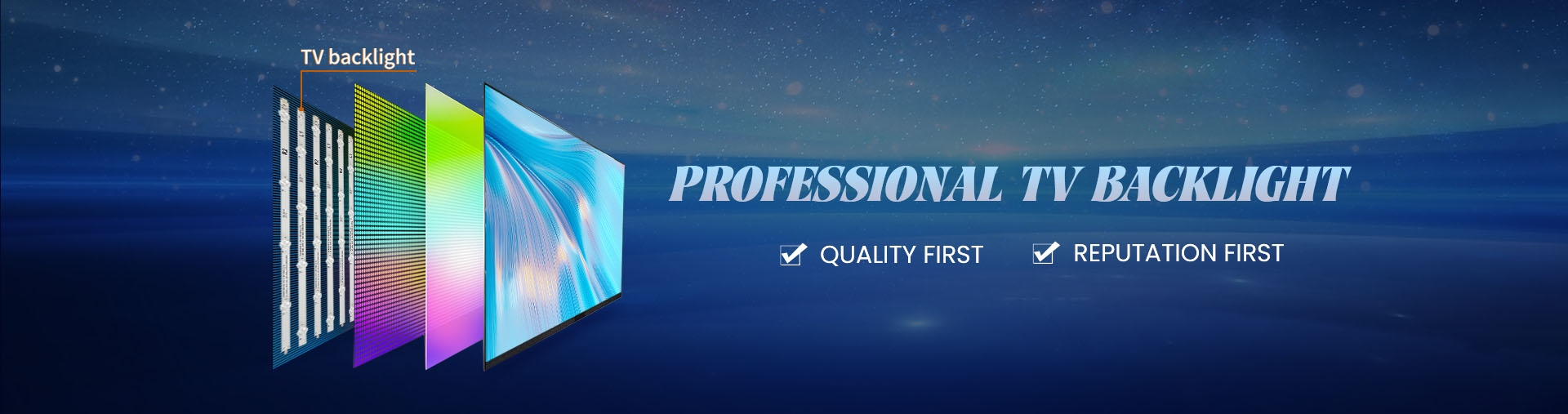
Unexpected dimming, partial black screens, or repeated failures within a short time frame often lead to one question: why Led Backlight Strips fail fast in some televisions while others run for years. The answer is rarely a single defect. Backlight lifespan is shaped by thermal design, electrical balance, usage habits, and manufacturing consistency. When several of these factors are weak, failure accelerates.
Field service reports indicate that lighting-related faults become more common after prolonged high-brightness usage and in compact TV structures where heat is difficult to dissipate. Understanding the mechanisms behind early burnout helps buyers select more reliable components and avoid repeat replacement cycles.
Thermal accumulation drives rapid degradation
Heat is the most consistent contributor to early failure. LED performance is highly sensitive to junction temperature. The U.S. Department of Energy explains that elevated temperatures accelerate lumen depreciation and reduce operational life, especially when cooling paths are limited.
In modern slim televisions, airflow is restricted and internal spacing is reduced. Heat generated by led backlight strips cannot disperse efficiently, particularly in large panels operating for extended hours. Over time, this leads to:
Reduced brightness output
Color shift across the screen
Weakening of solder joints
Premature diode failure
Once thermal stress reaches a critical level, entire sections of the strip may stop working.
Overcurrent and uneven load distribution
Backlight systems rely on precise current control. When current is not evenly distributed across LEDs, certain points in the strip experience higher stress. These hotspots degrade faster and eventually fail, interrupting the entire circuit.
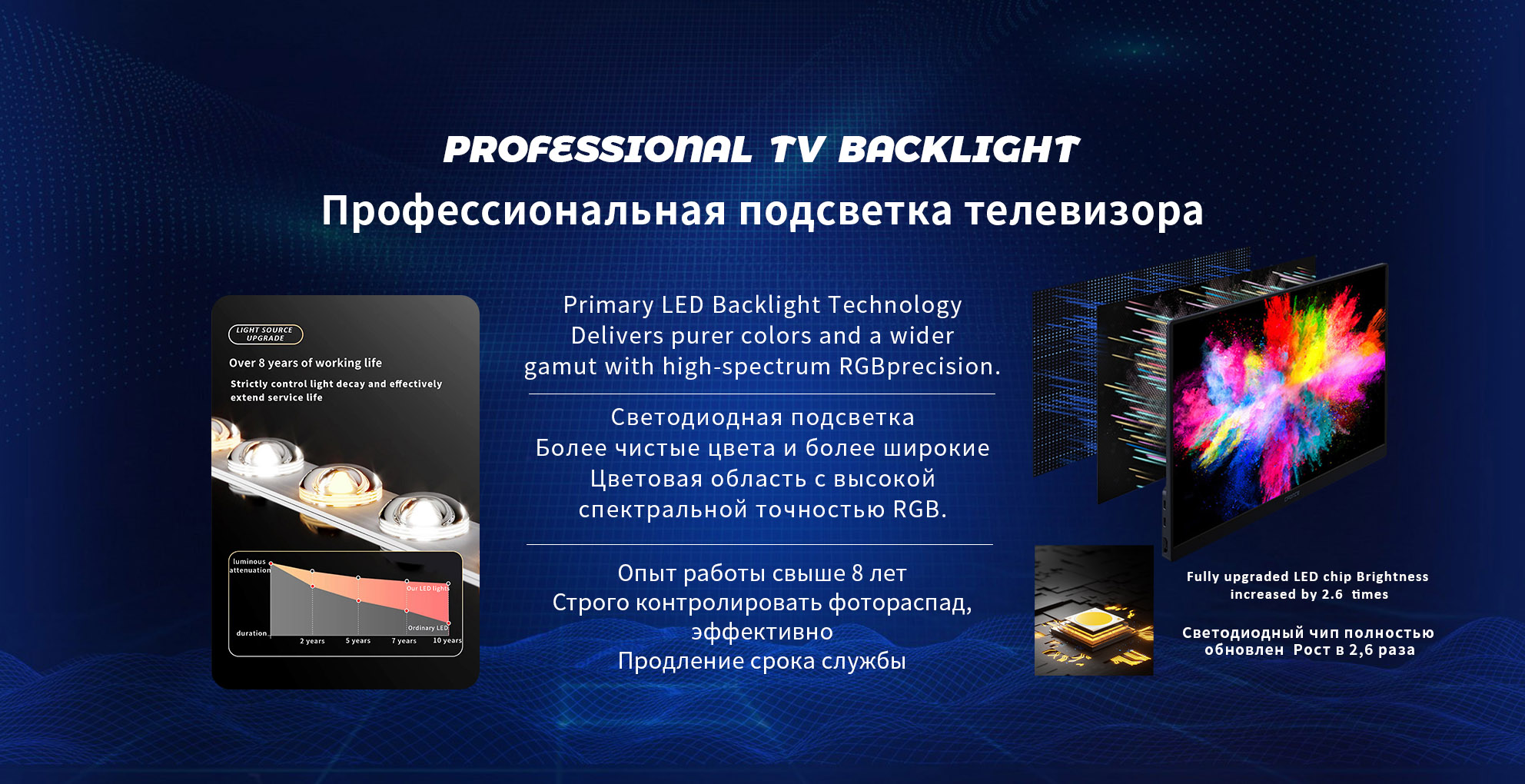
Driver boards are designed to regulate output, but instability in components can disrupt this balance. Nichicon technical data highlights that capacitor lifespan decreases significantly at higher temperatures, affecting voltage stability and increasing ripple. When power delivery becomes inconsistent, LED stress increases, shortening service life.
Continuous high-brightness operation
User settings have a direct impact on backlight durability. Televisions running at maximum brightness for long periods generate more heat and draw higher current. Retail display units and public environments are particularly exposed to this condition.
Studies on LED systems show that reducing operating temperature by 10 degree C can significantly extend component lifespan. In real-world usage, constant high brightness eliminates this margin, pushing the system closer to its limits.
Structural differences in edge-lit systems
Design structure also affects how quickly failures occur. Edge tv backlight strips rely on fewer LEDs combined with light guide plates to distribute illumination across the panel. While this design allows thinner televisions, it concentrates heat and load on a smaller number of LEDs.
When one section fails, the visual impact is more noticeable, often resulting in half-screen darkness or severe brightness imbalance. Direct-lit systems distribute load more evenly, but edge-lit systems demand higher precision in thermal and electrical design.
Material and process quality influence durability
Not all backlight strips are produced to the same standard. Substrate thickness, aluminum quality, lens bonding strength, and solder consistency all affect long-term performance.
Lower-grade materials may initially meet brightness requirements but degrade faster under real operating conditions. Weak adhesives can lead to lens detachment, causing bright spots. Poor soldering increases resistance, generating additional heat and accelerating failure.
Manufacturers with strict process control use stable materials, automated assembly, and multi-stage inspection to reduce these risks.
Environmental and voltage factors
External conditions also contribute to early burnout. Power fluctuations, unstable voltage supply, and high ambient temperatures increase stress on both the LED strips and driver circuits.
In regions with inconsistent power quality, backlight systems may experience repeated voltage spikes. These spikes can damage sensitive components or push LEDs beyond safe operating limits, leading to sudden failure.
Key factors behind fast burnout
A combination of elements usually explains why backlights fail sooner than expected:
| Factor | Impact on lifespan |
|---|
| Poor heat dissipation | Accelerates LED degradation |
| Overcurrent conditions | Causes localized overheating |
| High brightness usage | Increases thermal load |
| Weak material quality | Reduces structural stability |
| Driver instability | Creates uneven power delivery |
| Environmental stress | Adds external strain to components |
Each factor alone may not cause immediate failure, but together they significantly shorten operational life.
Importance of choosing a reliable supplier
For distributors and service providers, reducing failure rates starts at the sourcing stage. A qualified wholesale electronics supplier should provide consistent quality, stable specifications, and reliable batch performance.
StarSharp demonstrates strong capability in this area with over 5,000 backlight models, automated production lines, and annual output exceeding 26 million units. Consistent manufacturing and strict quality control help ensure that each strip performs as expected under real conditions.
Managing long-term reliability
Backlight burnout is not an unavoidable outcome. It is the result of cumulative stress across thermal, electrical, and material dimensions. By selecting well-manufactured components, ensuring proper matching with driver systems, and understanding usage conditions, the risk of early failure can be significantly reduced.
A stable supply chain combined with controlled manufacturing processes provides the foundation for longer-lasting backlight systems and fewer service issues over time.