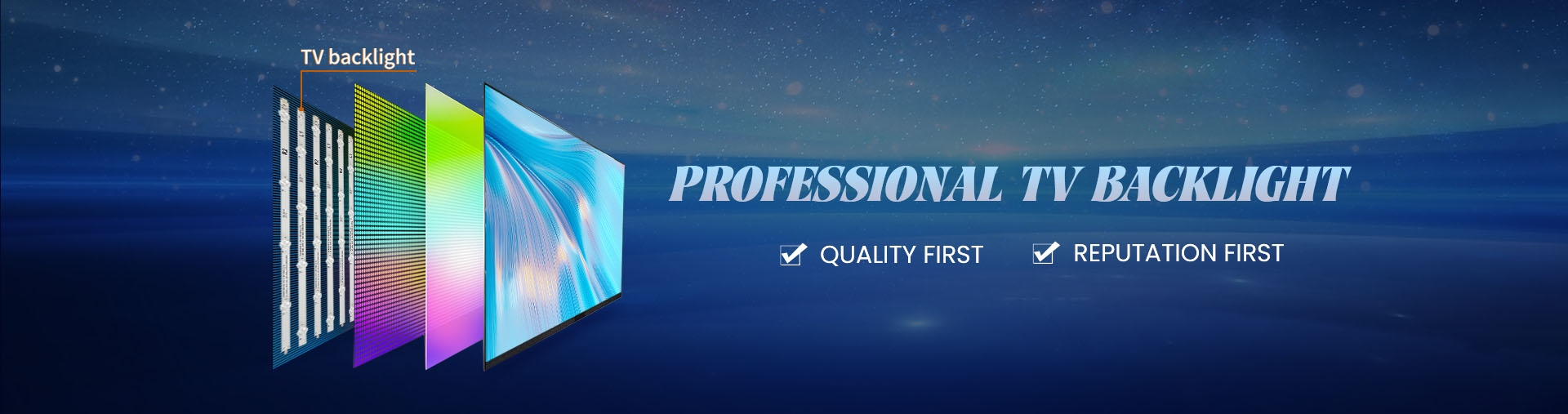
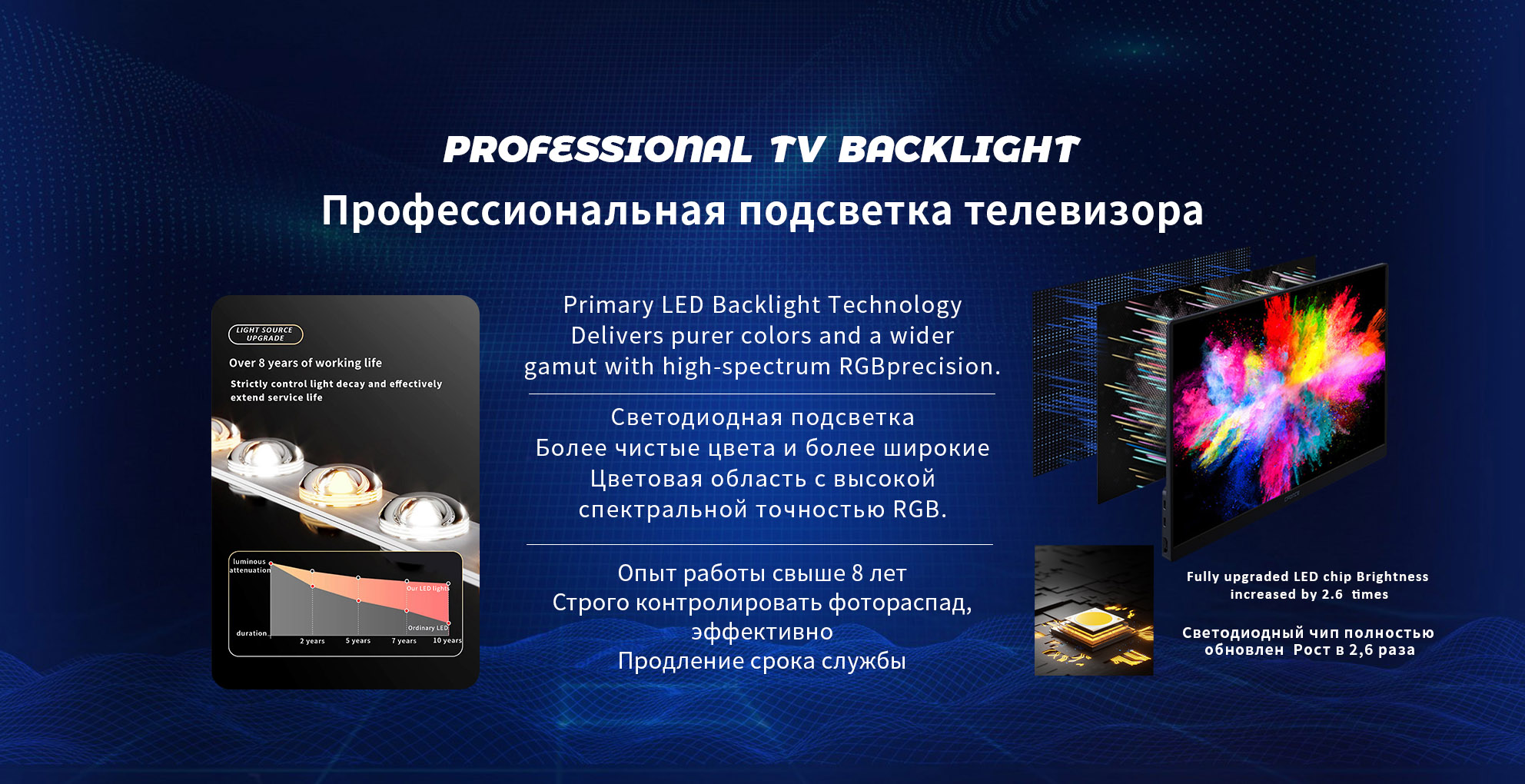
There is no fixed number of LEDs used on all TV Led Backlight Strips. The quantity changes with screen size, panel design, direct-lit or edge-lit construction, LED specification and optical requirements. Some strips contain only a few LEDs, while a complete television may use several strips arranged across the panel to produce the required illumination.
Why Does LED Quantity Vary Between TVs?
Backlight design begins with the complete optical system rather than a standard number of LEDs. Manufacturers consider panel dimensions, LED output, lens coverage, strip spacing and target brightness.
A larger screen does not automatically mean that every individual strip contains more LEDs. The design may instead use more strips across the panel.
The tv backlight LED quantity can therefore vary even between televisions with the same screen size.
Direct-Lit and Edge-Lit Designs Use LEDs Differently
Direct-lit systems place backlight strips behind the LCD panel. Light needs to be distributed across a relatively large surface, so multiple strips may be positioned across the rear structure.
Edge-lit systems position LEDs along the panel edge and use an optical structure to distribute light across the screen. Their PCB dimensions, LED spacing and optical requirements can be very different.
This is why LED count should always be considered together with backlight type.
Does More LEDs Mean Better Brightness?
Not necessarily. Total performance depends on several connected specifications.
| Design Factor | Influence |
|---|
| LED quantity | Affects overall optical layout |
| LED output | Changes light produced per LED |
| Lens design | Controls light distribution |
| LED spacing | Influences uniformity |
| Drive current | Affects operating brightness |
| Heat management | Influences stability and lifespan |
A strip with fewer higher-output LEDs may perform differently from a strip using more lower-output LEDs. Simply comparing the number of light sources does not provide enough information to judge quality.
Why Does LED Count Matter When Ordering Replacements?
LED quantity is a useful identification feature. When two backlight strips have similar PCB dimensions but different numbers or positions of LEDs, they should not automatically be considered interchangeable.
Buyers should compare the original strip reference, PCB length, LED count, lens positions, mounting points and electrical specification.
For sets containing several strips, the number and arrangement of individual PCBs should also match the required application.
How Should Buyers Describe the Required Strip?
Photos provide a fast way to show the complete LED arrangement. The printed PCB code and television or panel information should be supplied together whenever possible.
When model markings are unclear, buyers can also provide:
These details make product identification more reliable than asking for a strip based only on television size.
Treat LED Quantity as One Identification Point
As a wholesale TV backlight supplier, we use multiple specifications to confirm products before volume production. LED quantity helps narrow the model, but it cannot independently prove compatibility.
Accurate sourcing comes from combining LED count with PCB reference, electrical configuration and mechanical structure. Once a specification is verified, keeping that information linked to the purchasing SKU makes repeat orders easier and reduces the risk of mixing similar backlight strip models.