
Backlight strip failure is one of the most frequent hardware issues in LCD TVs. When a TV still has sound but shows a dark screen, uneven brightness, flashing, or shadowed areas, the backlight system is often the root cause.
TV backlight failure is one of the most common reasons an LCD TV develops a dark screen, uneven brightness, or visible shadow areas while still producing sound. This often leads to a practical question: can TV backlight strips be replaced at home?
Backlight strip size is a key design factor in 55-inch LCD TVs because it directly affects brightness, uniformity, power efficiency, and overall reliability. Unlike panel resolution or interface standards, backlight strip dimensions are not fully standardized across the industry.
TV backlight brightness is one of the most practical specifications behind a screen’s real-world viewing quality. While resolution and contrast often get the spotlight, brightness determines how clearly you can see details in different rooms, how vivid HDR content appears, and how consistently the picture looks across long viewing sessions.
LED backlight strips are a core component of modern LCD TVs, directly influencing brightness, contrast, uniformity, thermal behavior, and long-term reliability. Among current TV designs, Direct (Direct-Lit / Full-Array) and Edge backlight strips represent two fundamentally different technical routes.
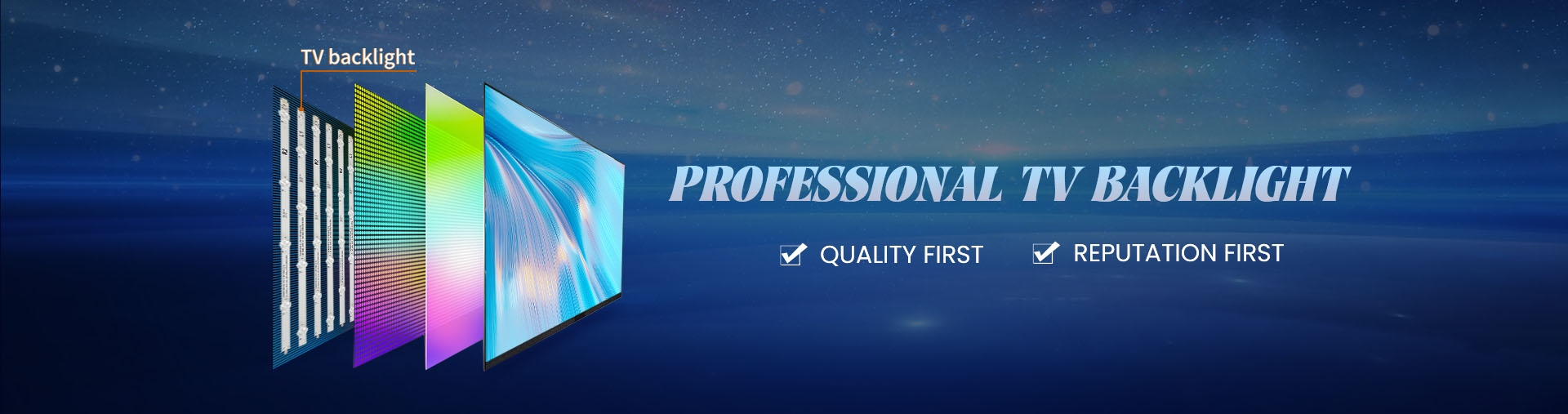
Modern LCD TVs do not create light by themselves. The picture you see is produced when an LCD panel modulates a separate light source behind it. That light source is the LED backlight system, and in many designs it is built around LED backlight strips plus an optical stack that turns many small point lights into a bright, uniform sheet of light.
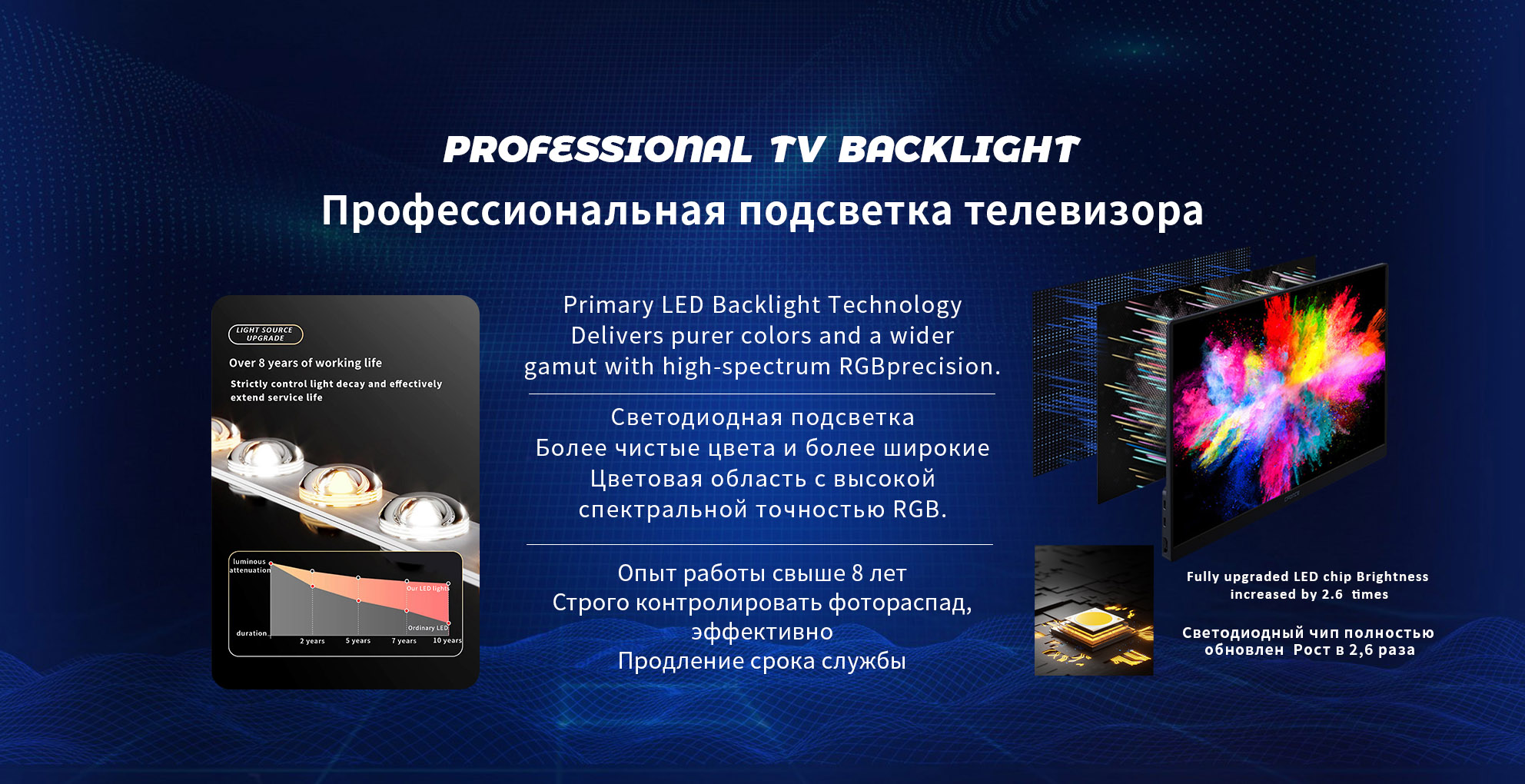
LED backlighting plays a critical role in determining how an LCD TV looks in real-world viewing conditions. While the LCD panel controls color and image structure, the backlight is responsible for brightness, contrast, uniformity, and overall visual depth.
LED backlighting refers to a lighting method that uses light-emitting diodes to illuminate display panels from behind. It is widely applied in LCD screens for televisions, monitors, laptops, digital signage, and industrial control panels.
LED panels are widely used in commercial, architectural, and industrial lighting projects. Among the most common configurations are edge-lit and back-lit LED panels. While both deliver flat, modern illumination, their internal structures and performance characteristics differ in meaningful ways.
Modern TVs may look similar on the surface, but what happens behind the screen plays a decisive role in picture quality. TV backlight technology determines brightness, contrast, black levels, and even how immersive content feels.
In everyday conversations, the terms LED screen and LCD screen are often used as if they describe two completely different display technologies. In reality, the distinction lies mainly in how the screen is backlit rather than in the core image-forming mechanism.
The evolution of display and lighting technology has been closely tied to improvements in efficiency, durability, and visual performance. For many years, fluorescent backlights were the dominant solution in LCD panels, signage, and industrial displays.